The Broadfoot Family research starts in Scotland in the late 1600’s. Below is gathered Broadfoot lore from a distant Canadian Broadfoot cousin who has spent a great deal of time on Broadfoot ancient history. I have not fact checked this information but it seems a good beginning to our story…
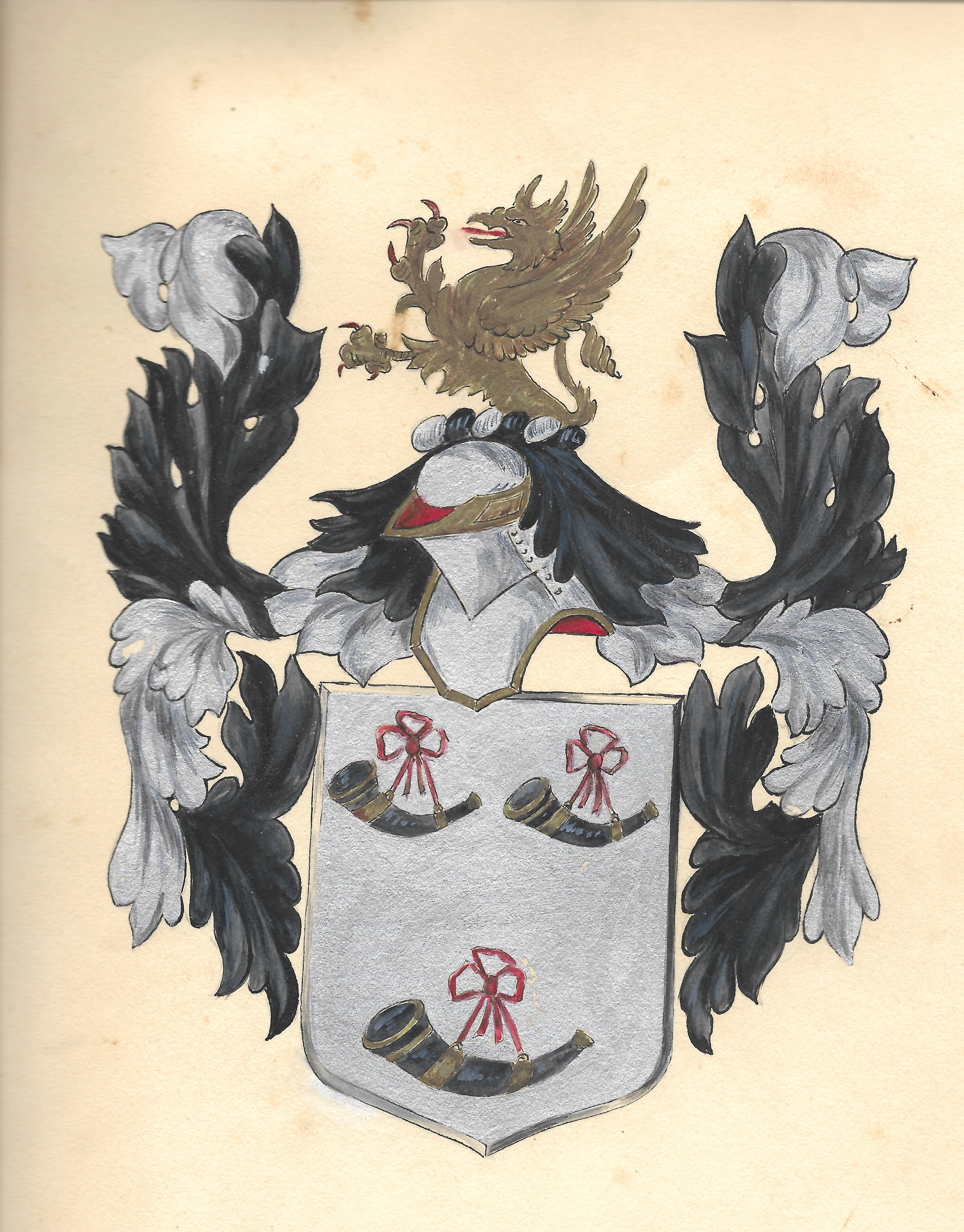
Broadfoot Family History brobstwa Posted: 20 Oct 1999 08:00AM Edited: 24 Jun 2001 11:24AM https://www.genealogy.com/forum/surnames/topics/broadfoot/95/ Surnames: BROADFOOT, BRADFUTE Perhaps someone out there would be interested in the history of my branch of the Broadfoot family. Dr. Alexander was my grandfather. You can find all of this in our on-line data base. The name “Broadfoot” dates back to at least 800 AD, to the Gaelic Celts, before the invasion by the Norse Vikings (and so we have Scandinavian blood as well). The Broadfoot Clan has never been more than a minor Scottish clan, and was found in England also. The name originally was “Bradfute” and later “Braidfoot”, means (in Scottish) “the foot of a river or plain” or “foot of hill place,.” King William’s English census of 1066 shows five Bradfoot families holding land in Yorkshire. The name “Turgis Bradfot” appears in 1157 in the Scottish Pipe Rolls of Cumberland, and Roger Bradfot in 1247 in the Assizes Rolls of Bedfordshire. By 1296, the name appears as “Bradfute”, and, by 1379, the names “Bradfotte”, “Brode fotte”, and “Braydfot” were found in northern England. A fuller description of the origin of the Broadfeet may be found in a book prepared by Rev. James R. Broadfoot for the 1984 Broadfoot Clan Reunion in Seaforth, Ontario, “Hands Across the Sea — 1834-1984 — Hands Across the Borders.” It is not available commercially. The Emperor Charlemagne was the son of Pepin “The Short”, King of France, and his wife Bertha Broadfoot of Laon, France, originally from Scotland. Charlemagne’s wife was Hildegard, the Schwabian Princess of Vinzgua. One of their children was Louis I, King of France. The beautiful Marion Bradfute, daughter of Sir Hugo Brodfute, the Earl of Lamington in 1296, was the wife of Sir William Wallace, son of Malcolm Wallace, the Scottish commoner, hero, and great liberator of Scotland in 1297 (and the hero of the recent movie “Braveheart”). They were secretly married, probably when she was about fourteen years of age, the age of adulthood in Scotland in those times. King Edward Longshanks did not tolerate marriages outside of the Church of England. Contrary to the fiction of the movie, Marion outlived William and gave birth to their daughter. In time, she was murdered by the British. Her daughter lived to adulthood and married into the Bailey Clan, and the lands of Lamington were turned over to the Baileys. That story is detailed in Rev. James Broadfoot’s reunion book. By the way, in 1314, Scotland did win its freedom from England. Robert Braidfut was Vicar of Dunnyn in 1491. In England, the name became Bradford; in Scotland it became Broadfoot. In 1638, an Agnes Broadfoot lived in Glengarne, Dumphrieshire. The modern Broadfoot Clan is clearly Scottish. The Clan originated in the Dumphrieshire lowlands region of southwestern Scotland. (In 1259, it was called “Dunfres”, named after the fort on the hill. A hundred years later, it was granted a charter as a city.) The Royal Burgh of Dumphries is the seat of the Nithsdale district of Dumphries, which lies near the border of England on the River Nith, 8 miles from the Salway Firth, an Irish Sea inlet. Robert Burns, the Scottish national poet, lived there from 1791 until his death in 1796. It should be noted that Dumfries was the birthplace of bicycling. The bicycle was invented and the first one built by a Dumfries blacksmith in 1839. James Broadfoot was born in the Dumphries village of South Mains (a few miles south of the village of Sanquar), in the beautiful hilly forests and cattle farming countryside near Galloway, Dumphrieshire, Scotland (southeast of Glasgow), probably around 1770. He married Sarah McCririck (b. 1761) in Scotland, around 1795. She died in 1857, in Seaforth, Tuckersmith Township, Huron County, Ontario. Note: A James W. Broadfoot ( 1798-1821), immigrated from Wigtownshire, Scotland, into New York around 1820 and died a year later just before the birth of his son, William Broadfoot who died in 1836 at the age of 15. Their son, Alexander “Sandy” Broadfoot, was born in 1800, in Sanquhar. He spent his childhood years on the family farm (“South Mains Estate”) before his family moved to Coylton, Ayrshire, Scotland. Later, he became a shepherd, owning a large number of sheep. As was the case with most of the Scottish farmers, he was a staunch Presbyterian. The Scots were lured to Canada and the United States by the availability of good, cheap, and fertile farmland. Many of those early Scottish farmers were neither aware, nor could the comprehend in advance, the many hardships they would face in the new land. They were ill-prepared for life in the forested wilderness. Fortunately, the soil was fertile and the productive growing of crops proved the wisdom of their choice of homesteads, even though it was an inhospitable and hostile land. Note: The first Broadfoots to come to the United States were Andrew (1765-1810) and Hetty (Mumford) Broadfoot and their family who moved in the late 1700s from Kircudbrightshire to the area of Fayetteville, North Carolina. Andrew’s brother, Charles Broadfoot, emigrated to Virginia and later North Carolina in 1787. This is where our United States Broadfoot story begins. There were five different Broadfoot families who emigrated from Scotland to Ontario, Canada, in that same time period. |
Broadfoot’s on the Isle of Whithorn
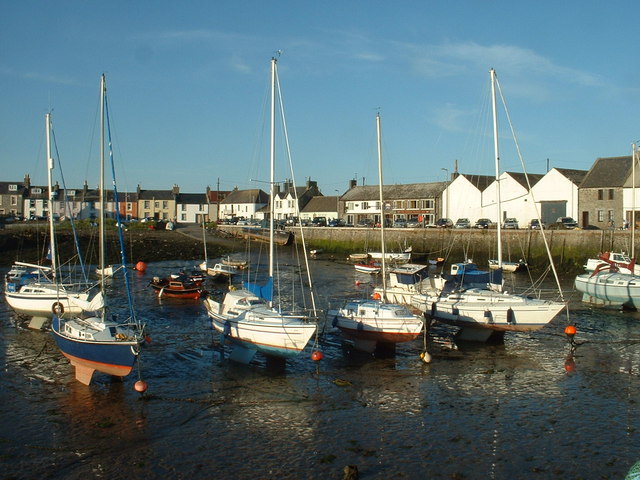
http://s0.geograph.org.uk/photos/21/41/214189_00680df9.jpg
Our story can be verified to begin on a beautiful peninsula off the southwest coast of Scotland in an area called The Machars of Galloway. The Isle of Whithorn is one of the most southerly villages in Scotland. It’s an area of Scotland rich with stories and historical significance. From evidence of stone circles larger than Stonehenge, to St. Ninian, who first brought Christianity to Scotland, to now being known as Scotland’s official book town, we should be proud of this being where our Broadfoot family began.
David Broadfoot was born in 1675 in Cruggleton, Scotland. This is the site of Cruggleton Castle.
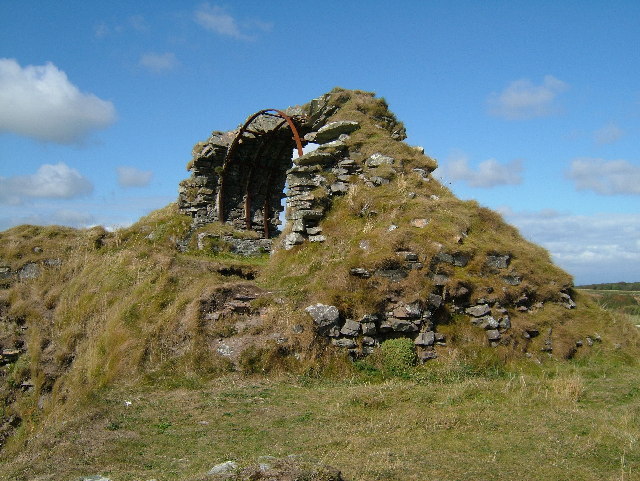
David was married twice. He first married the daughter of the Lawd of Tawhee, they had 3 sons and one daughter. He then married Grizall (Grizzel, Grizel) Stewart, born 1692, and they had 4 sons; Charles, David, George and Andrew. David died in 1730 at the age of 55. Grizel died in 1759 at the age of 67.


 Broadfoot Family

I am a long time fan of the broad foot family and was wondering if we could meet up at cruggleton castle.
LikeLike
We’re hoping for a trip there May 2023. We would love to meet up with you!
LikeLike
So interesting!
I live in Jacksonville Florida, and the only Broadfoots here, are our family. I am a Porsche Technician for 42 years, and 59 years old.
LikeLike