Be yourself; Everyone else is already taken.
— Oscar Wilde.
This is the first post on my new blog. I’m just getting this new blog going, so stay tuned for more. Subscribe below to get notified when I post new updates.
Be yourself; Everyone else is already taken.
— Oscar Wilde.
This is the first post on my new blog. I’m just getting this new blog going, so stay tuned for more. Subscribe below to get notified when I post new updates.
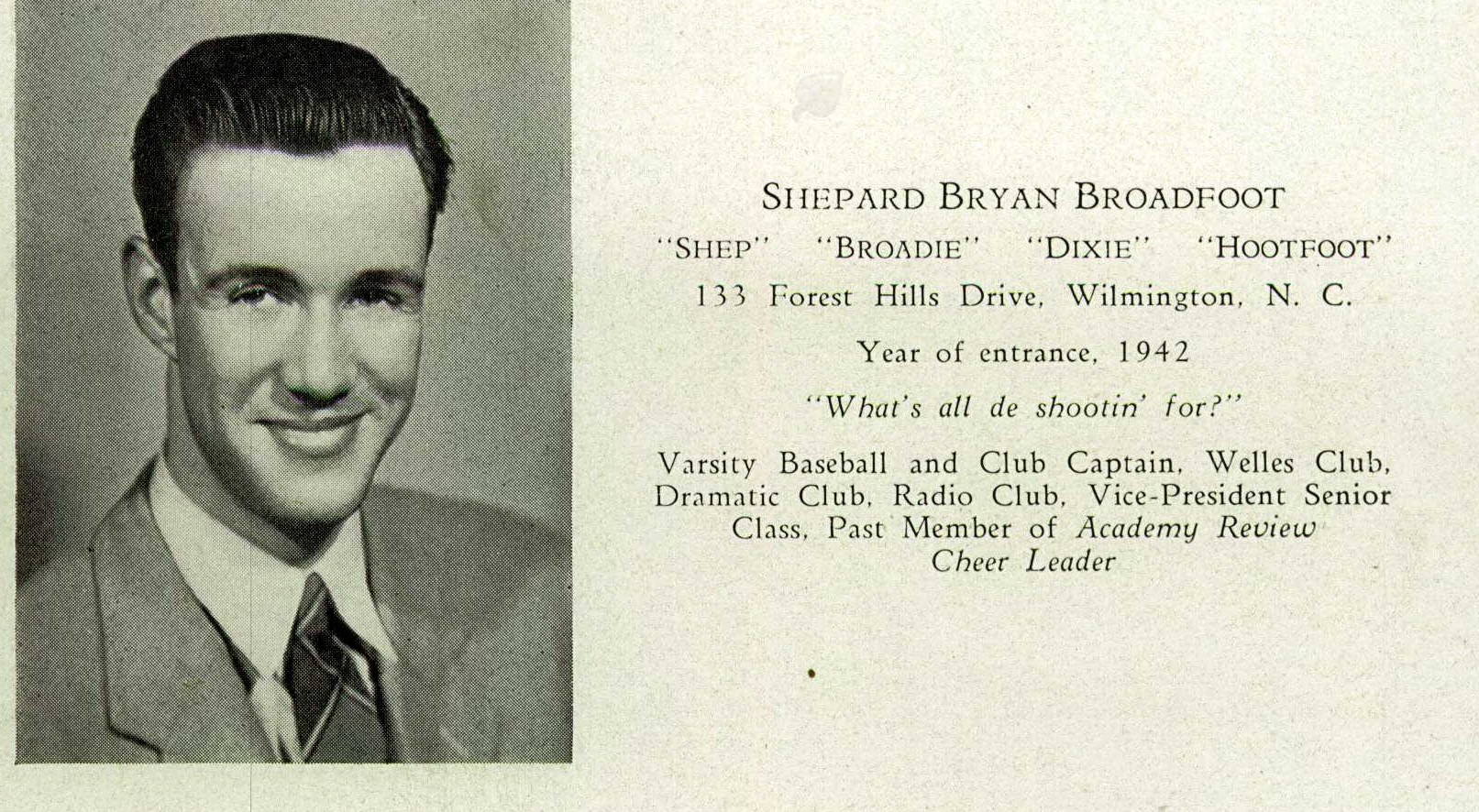
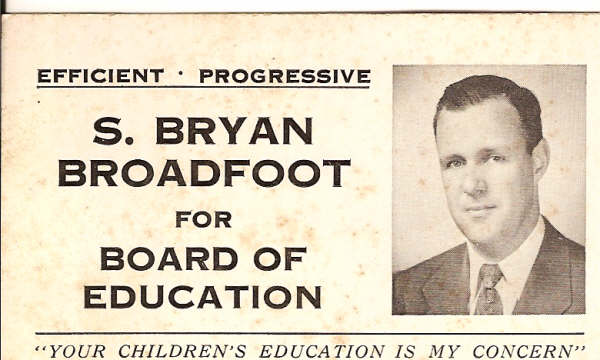
When Shepard Bryan Broadfoot was born on December 19, 1924, his father, William, was 36 and his mother, Elizabeth, was 29. In 2009, Bryan released his autobiography, My Life As I Rember It. Throughout this post, direct passages from his book are used as he tells his own story the best.
“I started my life, I’m guessing, in probably the spring of 1924 or thereabouts, for I was born December 19, 1924 in Atlanta, Georgia at 168 Praprado. That was the residence of my parents. The reason I was born at a residence was because it was about Christmas time and my mother insisted the Dr. S. T. Barnett deliver me at home rather than in a hospital so that my mother could be with her children at Christmas. He didn’t like that idea at all and said that it was impossible because he had never done that. So my mother said, “Therefore I will have to get another doctor”, and he said, “Well, I’ve never delivered a baby at home.” My mother replied, “Well, this will be your first and you can practice on me.” Therefore I was born in her bedroom at 9:33 PM December 19, 1924. I was named Shepard Bryan Broadfoot after my very fine great uncle, Judge Shepard Bryan, who was a big time judge in Atlanta, Georgia.“
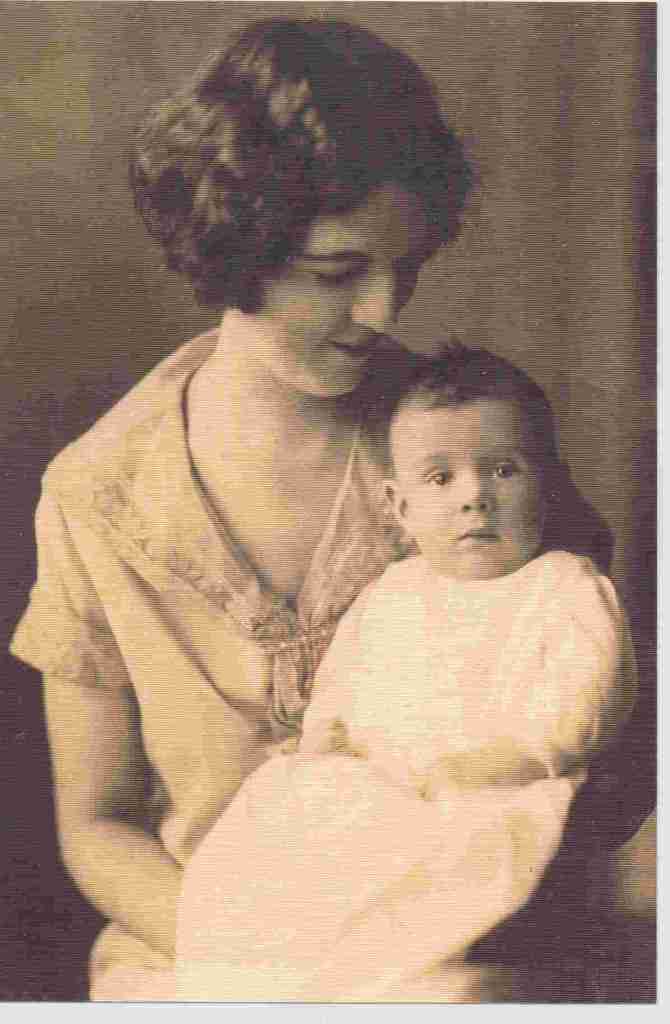
I lived in Atlanta for approximately one year and the family moved to Wilmington, North Carolina. My daddy was a cotton mill executive. (I call him daddy because I think “daddy” is somehow, to me, more reverent and special than “father”. Anyone can be a father, but it takes a very special person to be a daddy, and he was that special person.) My daddy moved us to Wilmington in 1925, or thereabouts, to open Broadfoot Iron Works, a very prosperous firm that was later to be a big part of World War II. I do recall when we moved to 133 Forest Hills Drive. Daddy built this house, designed it and everything. Many years later it was referred to jokingly as “The Broadfoot Hilton.” I remember being taken out as a little child seeing this house constructed. It was indeed a beauty, and being as Daddy actually designed it, being the engineer that he was, he designed it and took great pride in this house.”

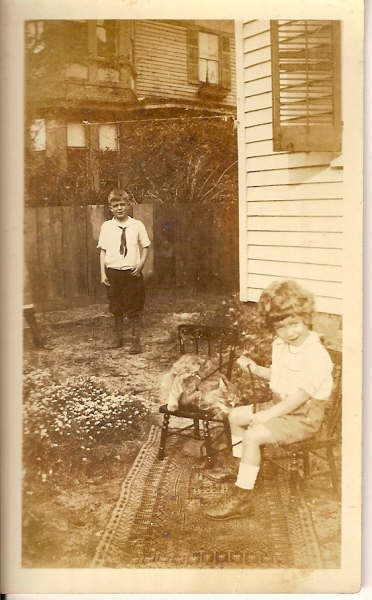
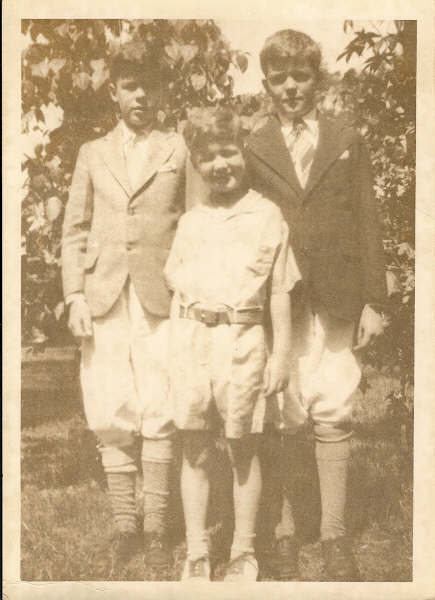
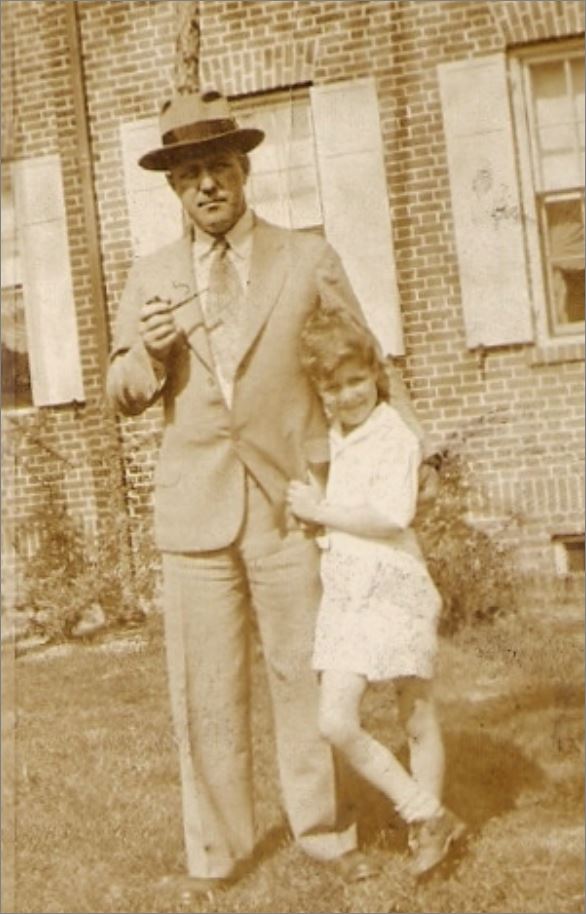
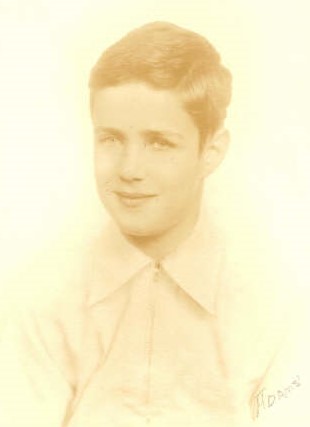
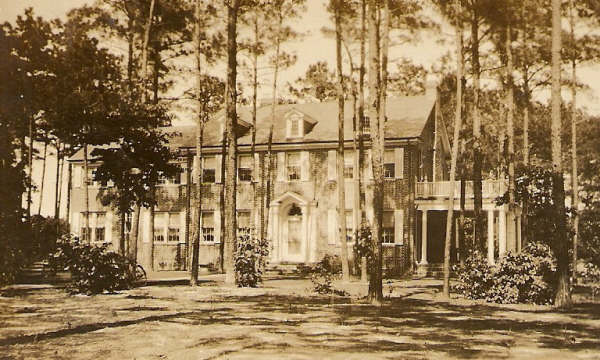
Bryan went to Forest Hills Elementary School and then on to Issac Bear for his middle school. 1n 1938-39, he went for a time to Exeter Prep School in New Hampshire and then New Hanover High School in Wilmington. At NHHS, Bryan was active in many sports as well as student council. He then went on to Virginia Episcopal in Lynchburg, VA and later at Fishburn Military School in Waynesboro, Virginia. Bryan graduated in 1943 from Cheshire Academy in Connecticut.
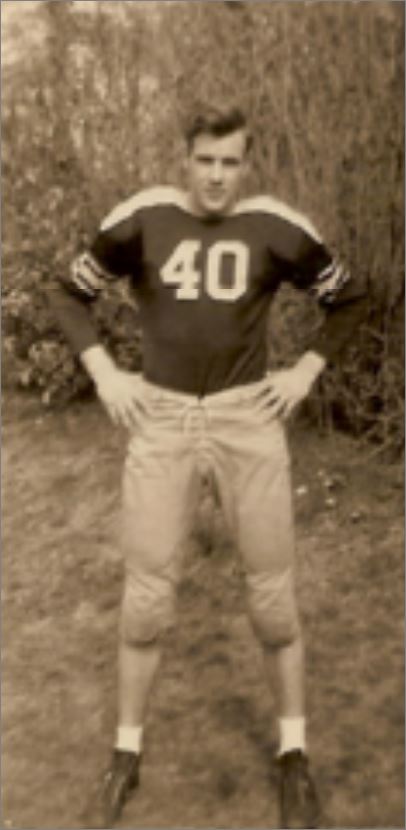
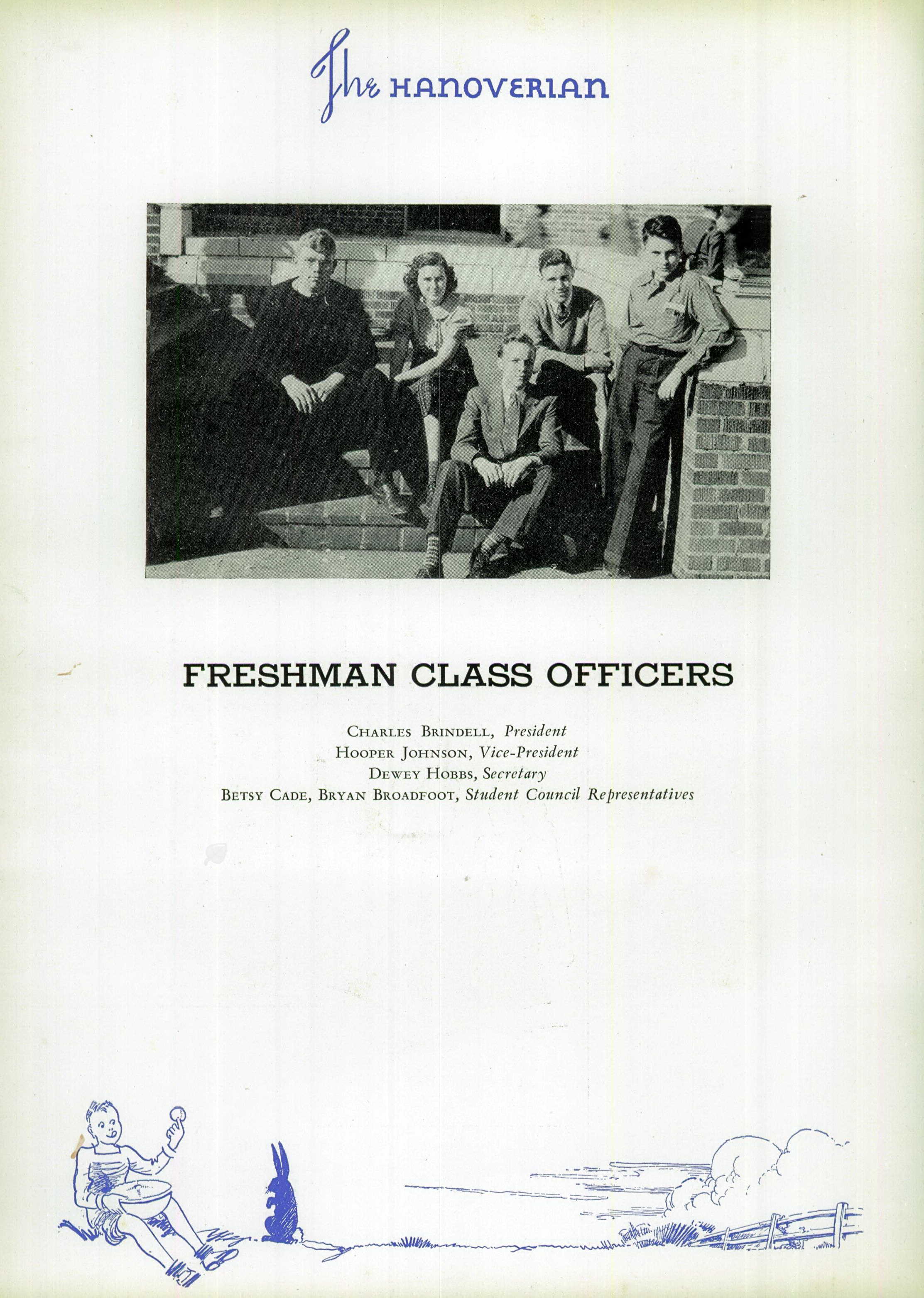
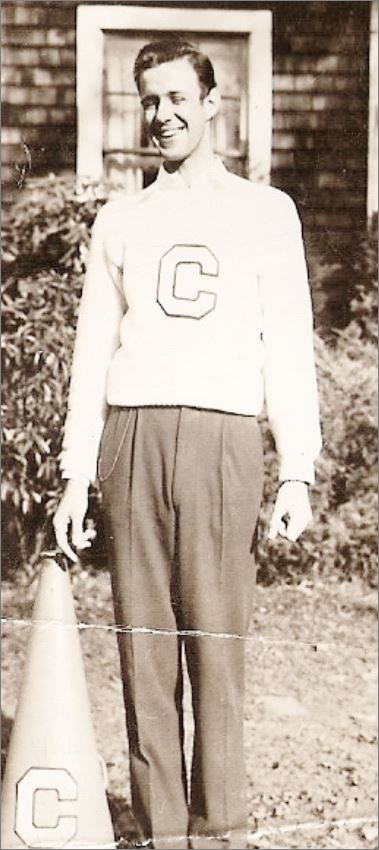
“The summer of my freshman year, a Mr. Galloway came to town representing Virginia Episcopal School in Lynchburg, Virginia. My parents decided that I wasn’t doing too well in high school, so they would enroll me at Virginia Episcopal and they accepted me. It was an absolutely beautiful school, an Episcopal school. The headmaster was a Dr. Randolph, who was also an Episcopal minister, who held services in the chapel. The school was very strict, and needless to say, I walked many a demerit, each demerit being one mile long around the track. I recall at Thanksgiving break, everyone was gone for Thanksgiving, but not Bryan—I was dumb and I had to walk some demerits before I could leave campus.“
“Looking back, I truly wish that I’d have been a better student at V.E.S. than what I was and would have paid more attention to things at hand. …V.E.S. was a wonderful school. It’s just a darn shame that I couldn’t appreciate it and put forth more than I did because I’m sure the school was not inexpensive and it was just my fault.” “Summer came on, it was 1940 and all hell had broken loose in Europe a year or so previous to that and now it was getting worse, and with the summer, I went to work with my Daddy at the Broadfoot Iron Works, and worked some, played some and had a very good summer. Daddy sat me down about the middle of the summer and said it seemed like a Christian school wasn’t the school for me but I would take more, hopefully, to a military school, whereby I was entered into Fishburn Military School in Waynesboro, Virginia.”
“That summer I went to work at Broadfoot Iron Works trying to learn to be a mechanic of some sort. I ended up learning to run a lathe. We were turning propeller shafts for the liberty ships out at the shipyard and also were making doors for the Sherman tanks. Daddy bid this job and how in the world he was smart enough to get it, I don’t know.” “I had a sailboat that summer. I’ve forgotten exactly what kind it was, I believe a Sunfish, I’m not real sure. Frances and I were out sailing and it came late afternoon and she said, “Bryan, I think you better get me on home now.” And I said, “Get you on home for what?” She said, “Well, I’ve got a date.” I said, “Well, you’ve got a date with me and I don’t see the rush to get you home.” She said, “I’m sorry I don’t have a date with you.” I believe she had a date with Clark Poisson, if any of y’all know him. And I said, “You got a date with who?” And with that I took my arm and swung her off the side of the boat, and there she was floundering in the water, hair soaking wet, raising her fist up. She said, “I’ll get you for this.” I laughed, I thought that was the funniest thing. She had over a mile to go to get to her house. I don’t know how I got out of that one. Seemed to me like she should have been mad at me forever, but that was funny and I bet you she thought it was funny too.” “
His recalls his first meeting with Frances went something like this, “Mother was going to have a birthday party for me, for I guess it was my 13th birthday, perhaps. She told me that she wanted me to bring a girl who’d just moved in across the street, and I said, “Not if it’s the girl I’m thinking of,” and said, “Well, they’re a fine family. Her daddy’s a president of a bank.” I use an expression of my daddy’s…Daddy would always, if he said no, he would say “Nothing stirring.” But that’s what I said about this girl. Her name was Frances Thornton. When she came to the party at my mother’s insistence, I said I must be stupid or blind, for I later married her at the age of 20. Mother did have a nice birthday party for me and I was enthralled, is a good word, I think, with Frances, and we started dating. I had many dates with her.”
“I recall one night sitting on the swing on her front porch on Oxford Street or Henderson Street at Wrightsville Beach. I was sitting on the front porch on the swing necking and it was right in front of her daddy’s bedroom window, but I figured he was a sound sleeper and obviously she did too, and all of a sudden, this voice says, “Tancy – he called her Tancy—he said, Tancy it’s time you come in now.” I said, “Oops!” I believe there were four steps off of that porch down to the ground and I didn’t hit a step, but as I was flying through the air to the ground, I hollered back, “Call you tomorrow Frances.””
“Quite a few big bands were playing at the Lumina Pavilion that summer. I remember distinctly Louis Armstrong, I remember Cab Calloway. Cab Calloway had so many people come to the dance, they must have turned 500-1000 away, and they got on the beach underneath the Pavilion, just so they could hear the music. They had some excellent bands. Artie Shaw played there, Woody Herman, I believe, Tommy Dorsey, Jimmy Dorsey.”
“I don’t know how in the name of heaven I picked it, but for my senior year in school (1943), I picked Cheshire Academy in Cheshire, Connecticut, which is fifteen miles north of New Haven. I caught a train from Wilmington and changed in New York, then caught a train to New Haven, Connecticut, and from there they had a local bus run like you would see—not too many stops. I got off in this little village of Cheshire, Connecticut, put my suitcases on the ground, and I heard a voice yell out, “Hello, you Rebel son of a bitch.” I thought to myself, “Who in the world knows that I’m from the South?” I turned around and looked and there was this fellow laughing like all get-out. His last name was Mahone. I don’t recall his first name, but dag-gone, he was from Virginia, and we were in school together at Virginia Episcopal School. From then on, I was known as Rebel, and his nickname was Dixie.” “I became head cheerleader at Cheshire and I was also bestowed quite an honor being elected vice president of my senior class.”
“Billy and Winston had now gone overseas and it was time for me to make a decision. I wanted to go into submarines but was turned down because of my height, so I sure couldn’t see living in a trench and carrying a 70-pound pack on my back and eating out of a can, so I was accepted at the US Merchant Marine Academy in Great Neck, Long Island.” “The Morse Code was very difficult for me, so I went from the deck department to engineering. I got along pretty well, but did not make it for my second year of school and ended up going to Seaman’s School at Sheepshead Bay, Brooklyn. I was to do some engineering study there and go to sea, which I ended up going to sea as a junior engineer. “”When I sailed on the James Jackson, it was the 24th of March 1944 and I told Frances I would be back in about three months. Well, little did I realize where I was going and how long I would be gone. We left Norfolk, Virginia and my being junior engineer, I had nice sleeping quarters all by myself, a state room with a upper and lower bunk bed all to myself. No sooner did we hit the Chesapeake Bay that ol’ Bryan got seasick. Well, prior to sailing, I had bought I don’t know how much, but a ton – a TON it seems like, of a seasick remedy called Mother Sill’s Seasick Medicine. I took the Mother Sill’s and little did it do. I can swear by all that’s holy, that it took fifteen days to go from Norfolk to the Rock of Gibraltar. Of course, once we got to sea, our orders were opened up and we knew where we were going. I was very ill until I got to the Mediterranean and what I survived on was Coca-Cola and chocolate bars.”
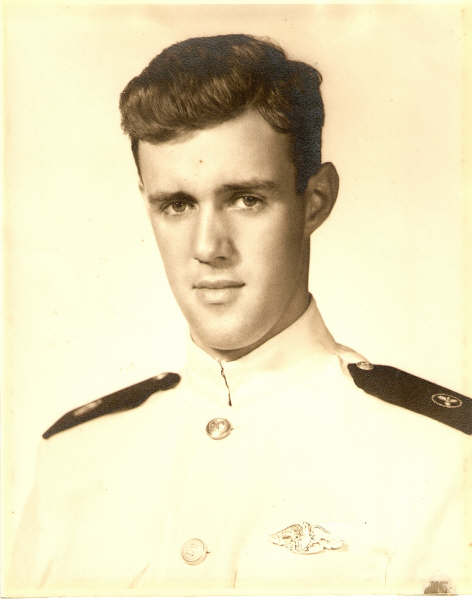
Bryan ended up in Oran, North Africa and then continued on to Naples, Italy and back and forth between the two for a bit. He then was off the coast of southern France during the D-Day invasion and for a bit afterwards. His time with the Merchant marines ended and Bryan headed back home to do, in his words, “some serious courting.”
And that serious courting involved Frances Thornton. Based on his autobiography, Bryan seemed quite close to all of Frances’ family.
“I would like to go back a bit to the time I was about fifteen or sixteen years old and courting Frances. We would go up to a place called Pop Gray, which was a soda shop at one end and a bingo parlor at the other. Across the street was Newell’s, at Station One, a place where they had sodas and ice cream, etc. Frances and I would go up and play bingo. Her grandmother, Fannie Holladay, was always up there playing bingo and she’d pay for a few of our cards once in a while. I just enjoyed seeing her with a great big straw hat or some sort of hat – it was a big hat. She would sit there with a smile on her face. She was an enormous lady, but she enjoyed her bingo.
Frances’ brother Jimmy was quite a character. He would go up to Pop Gray and drink beer with about five other fellas. There was a girl named Betty Cordon, and she would take off and go to the beach with the fella that was the drunkest. I guess she felt safe that way, and I don’t blame her for that. Ol’ Jimmy invariably won because he’d drink so much that he couldn’t drink any more. He’d go to the restroom, throw it up and come back and drink some more. He was a fine fella – was later killed in the Battle of the Bulge. He was a commander of a Sherman tank, and went in, heard the voice of someone in the infantry needing relief. They were trapped by the Germans and he recognized the voice. It was a classmate of his. The classmate later told the story, he had his leg blown off and was left in the ditch with a corpsman. They were told that, as the story goes, someone heard it and reported it and that they were going to come back and get them the next day. When they came back the next day, the corpsman was dead and Jimmy was gone. It was assumed he later died in the German hospital. He is now buried somewhere over there. I’ve forgotten exactly where, but it was a grief-stricken time when he lost his life.
Frances had another brother, William, and I’ll speak more of him later, but if there ever was a person that was a man of integrity in my book, it was William Thornton. She had a younger sister named Lucretia, very cute, very witty. Her mother was very witty. Frances’s daddy was president of Wilmington Savings and Trust.
Fannie Holladay lived on 7th Street – that’s that big fat grandmother that I was telling you about—a lovely lady. She had a great big Saint Bernard named Stump – stump like a tree. Anyway, Stump had a habit of walking down Princess Street, going to the WS&T bank, and as the door would open, Stump would slip through the door and no one paid any attention to him. One day Mr. Thornton had a very important client sitting at his desk and Stump had slipped into the bank and gone under Mr. Thornton’s desk and curled up to take a little nap. By and by this important customer was sitting there at the bank and this horrible odor came from underneath the desk, and with that Mr. Thornton said to the customer, “Excuse me”, and called up Fannie Holladay and said, ‘Miss Fannie, Stump’s here at the bank. Would you please send for him?’ She said “Oh, Darlin’ I’m so sorry.” And she would send a taxicab down to pick up Stump. She was such a character.

She double-parked at the post office one day and when she came out, the policeman was writing her a ticket. She said, “Young man, what do you think you’re doing?” He said, “I’m giving you a parking ticket. You double parked.” She said, “I don’t think you know who I am. My name is Fannie P. Holladay.” He said, “Lady, I could really care less what your name is; you double-parked.” She took the ticket in a huff and drove off in her usual pace of about 15 miles an hour – that’s about as fast as she went on the open highway, too, as I recall. She got home and felt so bad about being what she considered ugly to a policeman, she called the mayor. Meantime, having the policeman’s name, she asked what his address might be, that she wanted to send him a television set. The mayor was Dan Cameron and they sold TVs there at Cameron’s place at Third and Chestnut. He said, “Mrs. Holladay, you don’t have to do that.” She said, “Well, you do it anyway. Send him a television set and put it on my account.” Boy, that was Miss Fannie for you.”
Having thirty days off, there’s nothing to do, but the best thing to do was to get married. I talked to Frances about it and she says, “Why not?” We went down to Huggins Jewelry and looked at rings and that evening, I came back to talk to her daddy to get permission. Frances and Mamie, that’s her mother, were sitting in the living room. I went into the kitchen and Mr. Thornton was at the kitchen counter doing something and turned around at me and he says, “You want to talk to me? You come to see me, Bud?”, and I said, “Yes, Sir, I want…” and with that he went into the drawer and took out a large butcher knife and started sharpening it, and turned to me and said, “What did you want to see me about?”, and I said, “I forgot.” I went out into the living room and Frances and her mother said, “What did he say?” I said, “Well, I didn’t ask him. He was sharpening a great big knife and I got nervous.” Frances says, “I can’t believe you wouldn’t ask him.” She got up, went into the kitchen like a hero, and said, “Daddy, Bryan and I are going to get married, and hopefully, it will be with your permission.” Her daddy said, “Tancy, let me know when, and how much it’s gonna cost.” She told him we were gonna get married in about two weeks. That was news to me, and suited me fine. We got married and I remember my daddy was the best man. All my friends were in the service and gone.” Bryan and Frances were married on April 21, 1944.

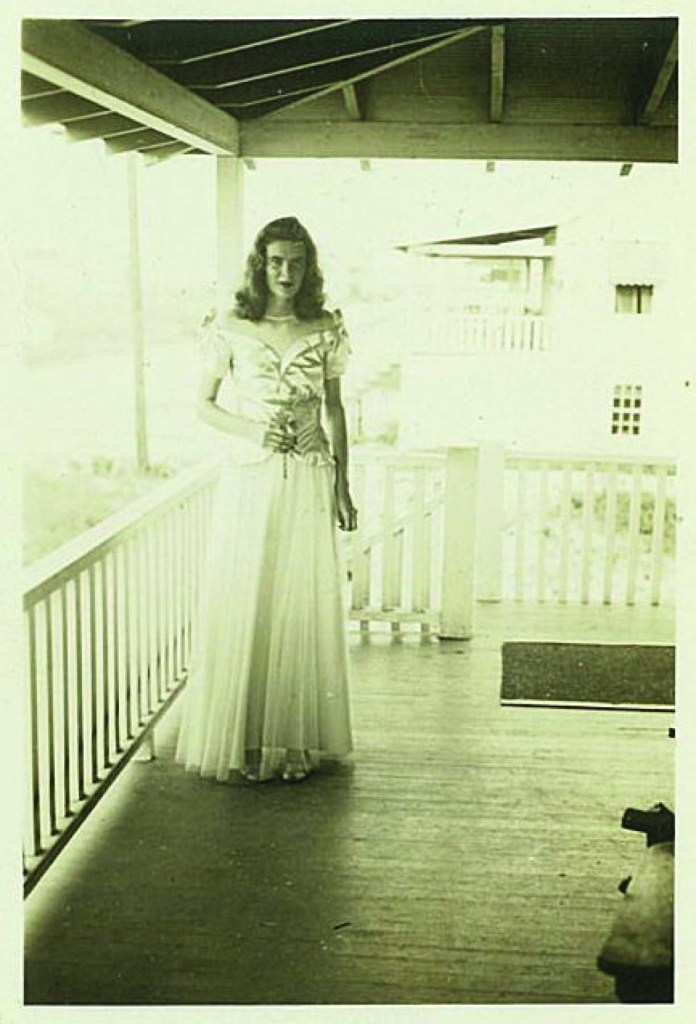
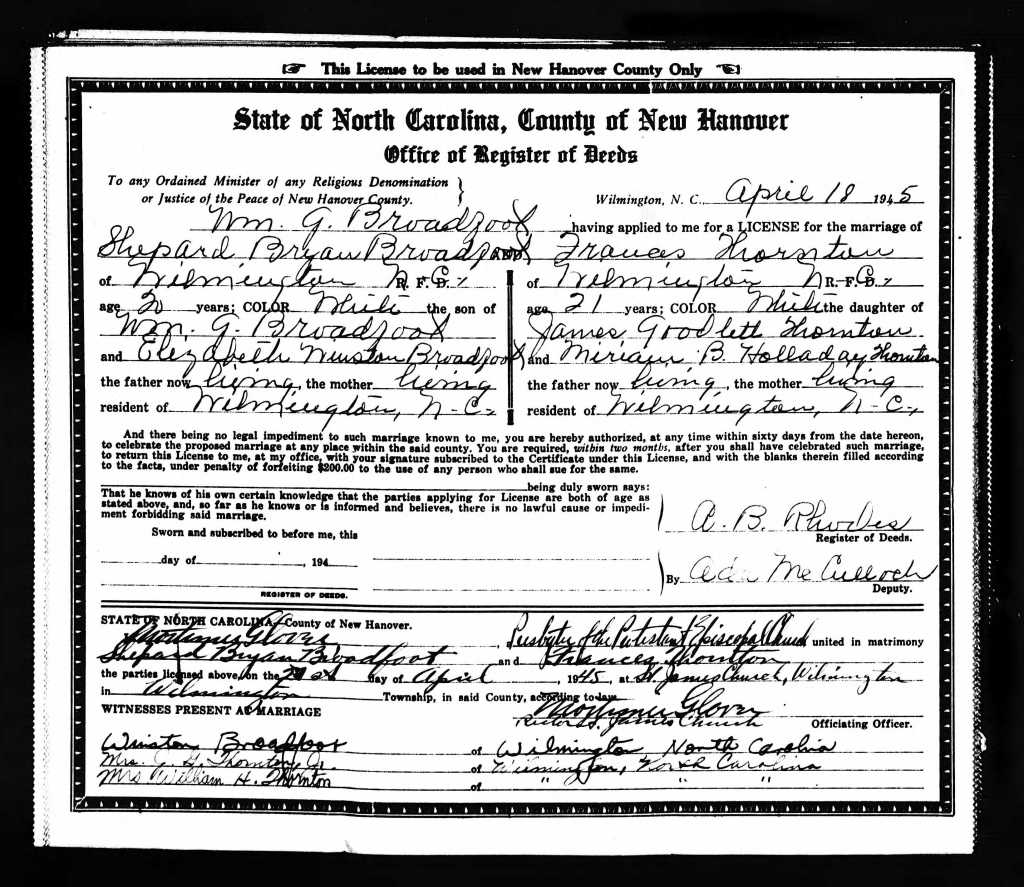
The Army called Bryan up and the young couple headed to Joplin, Missouri. Bryan was stationed to train at Camp Crowder, Neosho, MO and Frances found a cute one bedroom in Joplin. Later they moved to San Antonio, Texas where they got bitten by the Bridge bug and both continued to be avid players for decades. For several years, Bryan was the president of their Unit 118, American Contract Bridge League.
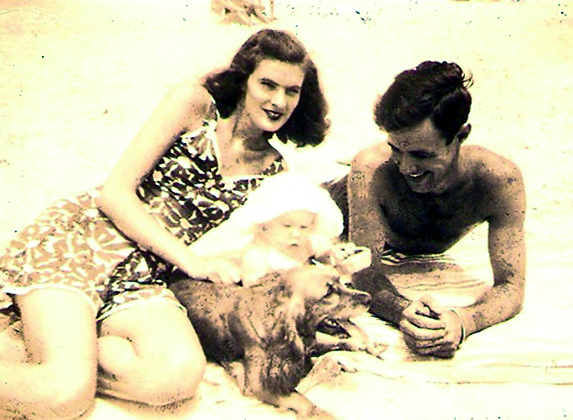
After serving in the army, Bryan (and Frances) moved back to Wilmington and started having babies. “Frances was pregnant by now and Dr. Bill Dosher was her OB, and the first child was a daughter. That was Betty. [Elizabeth (Betty) Winston was born on March 5, 1947.] She was a breach birth and when I found out I had a daughter, they came out and told me, “Mr. Broadfoot, you have a baby girl.” I said, “Is everything all right? Got ten toes and got ten fingers?” They said, “Yes, all were doing fine.” Well, I cried. Too many people take these births for granted. That child—the doctor bill was $100. Two years later, we had son Shepard [Shepard Bryan was born on August 21, 1949.] and that was $110, ‘cause he was a boy. And then we had the third child, and that was Miriam, [Miriam Holladay was born October 13, 1951.] and it was $200 and some and I complained. By then Dr. Sig Bear had come in to work with Dr. Dosher. I went and asked Dr. Dosher, how come that bill was so high. His office was right across the hall from my office, and he said, “To make you think about this bill before you have the next child.” I said, “Well, what it’s made me think about is, hopefully Frances will get another doctor, if she’s lucky enough to be pregnant again.” But prior to this third child being born, I woke up and sat straight up in the middle of the night about 1-something in the morning, and Frances said, “What’s the matter?” I said, “Good gracious, do you realize we’re about to have our third child?” She said, “Don’t worry about it” and turned over to go back to sleep. “Don’t give it another thought.” I must not have given it another thought because I had two more after that one. [Randall Thornton, October 19, 1954 and Beverly, March 8, 1956.]
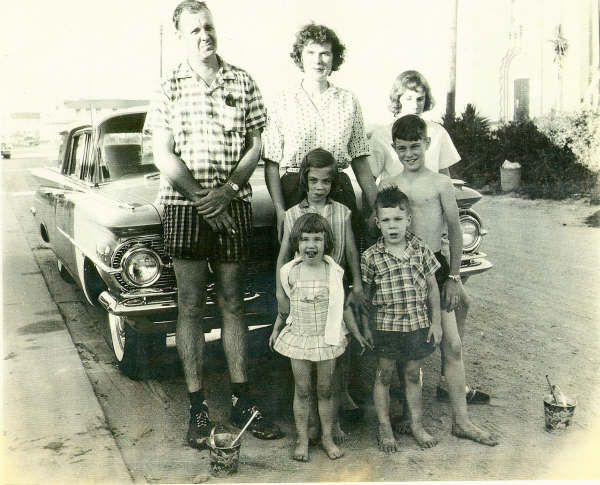

“I was also during this juncture in my life, made Norwegian Vice Consul for the state of North Carolina. Daddy had it before me, but retired and suggested that I become the Vice Consul. It was a great honor for me to serve and I enjoyed going on the Norwegian ships when they came into port. My duties were not strenuous by any matter of means. I signed seamen on and off the ship and also attended to those seamen left behind from injuries who would be in a hospital. It was amazing how, when I visited them in the hospital every day, they would not give their mail to anyone to post for them, but would wait for the Vice Consul, me being it, to take the mail and get it mailed. It so happened that the Norwegian Vice Consul at a port had almost the same power as the king. A Vice Consul had the power over the captain of a ship.”
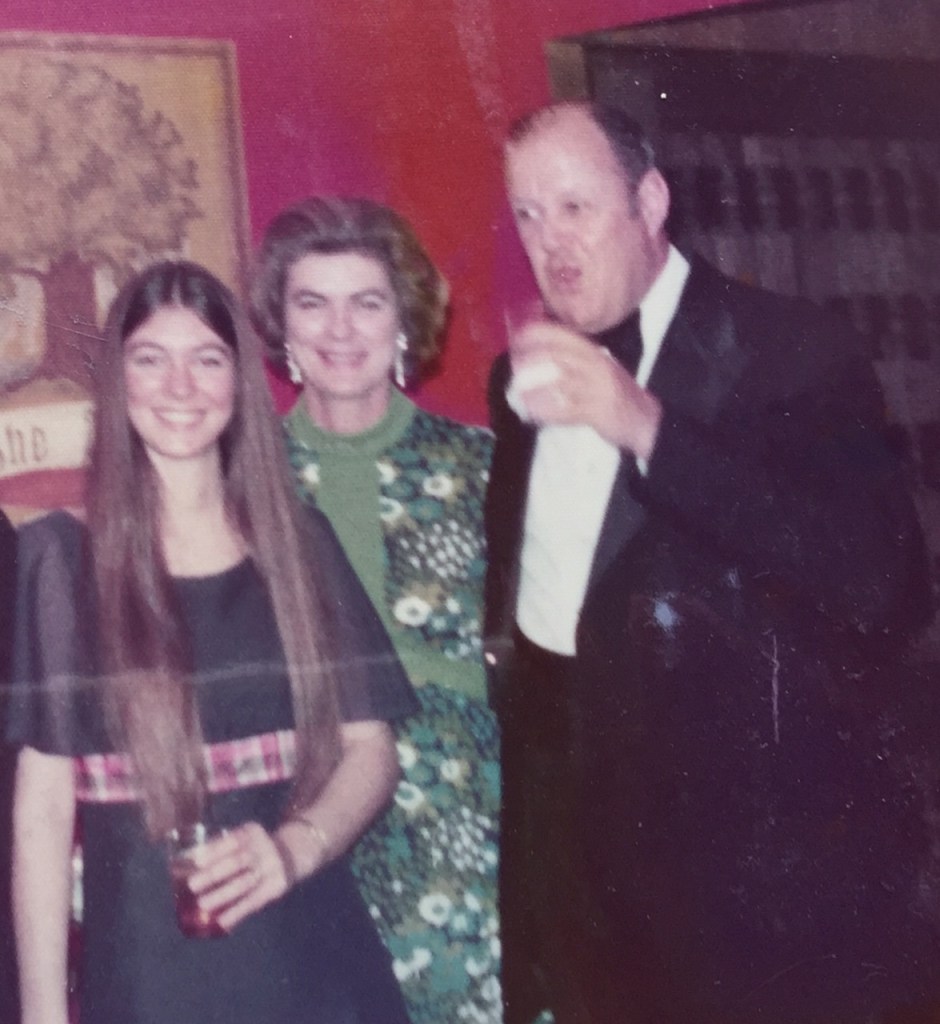
Miriam remembers, “I loved seeing Mama & Daddy when they were all dressed up for the L’Ariosa Ball. They were a handsome couple; Daddy looked very handsome in his tuxedo & Mama always wore stunning evening gowns & looked gorgeous! Not only were they a great looking couple, they were also great dancers, winning different dance contests throughout their marriage. Once when Daddy was a Norwegian Vice Consulate, they went on a Norwegian cruise with Mamie, my maternal grandmother. They won a Cha-Cha contest where they had to dance while holding a balloon between their foreheads. They really had a very fun-filled, busy social life, going out several times a week, but also had many cocktail parties, formal dinners or just casual gatherings with friends at our house. It was not unusual to see them written up in the “Society Section” of the newspaper in the late 50’s or early 60’s. They were really a beautiful couple!”
“She [Frances] became the first female Life Master in Wilmington, and I later became the second male Life Master. Bradford Reynolds was the first male and the second Life Master in Wilmington and I became the third Life Master.”
Bryan stayed socially active in Wilmington and served with several organizations. In 1960 he was voted the Kiwanis Club President for 2 years. In 1959, he was also voted onto the Board of Education where he was active in in getting new schools built and he was instrumental in ensuring all the jobs were given out to the best architect not the same old same old. He also took pride in the hiring of two superintendents. As a committee head, he worked with school athletics and became close with the coaches and athletes alike.
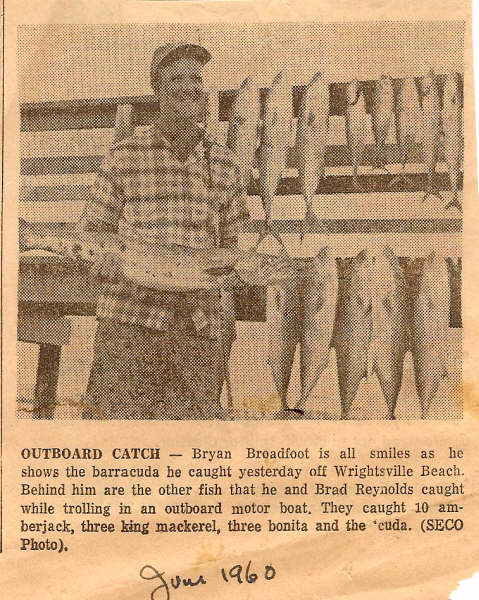
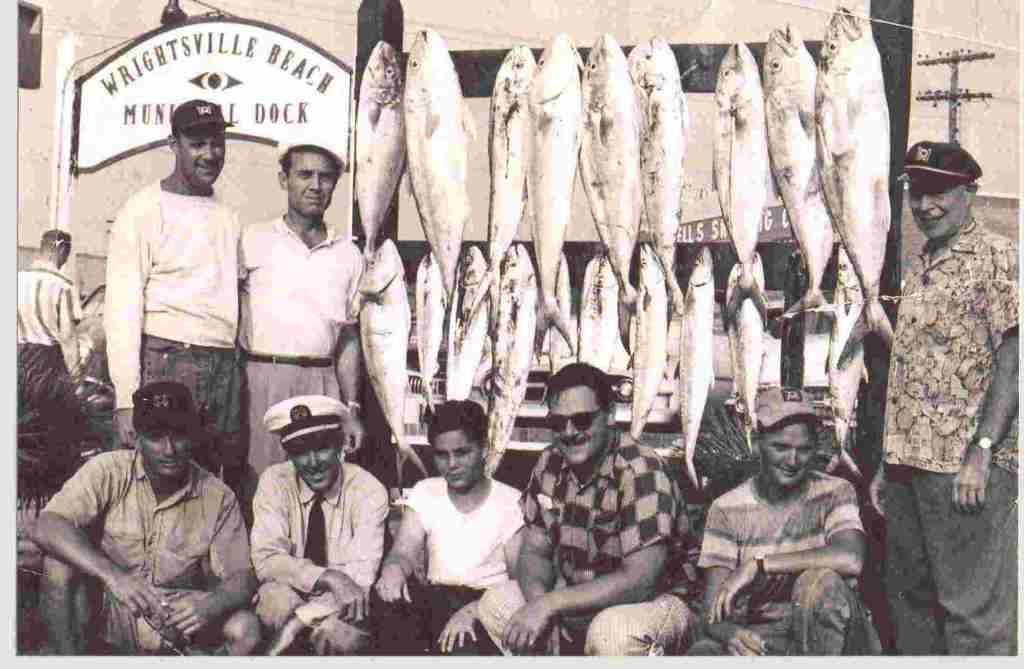
While both hunting and golf kept Bryan busy he loved fishing. “In the fall, I fished for spots and mullets and bluefish, particularly bluefish. I caught many a bluefish with cut bait. One of the best rigs you can use for bluefish and all kinds of fishing, is a 2 ½ ft. monofilament leader, a heavy duty one, with a 3-way swivel tied to the bottom. Your line ties to one of those swivels and on the other two you can put a bluefish hook. Then at the top of the leader, you put a double barrel swivel and above the double barrel swivel you had what we call a fish finder, which is a slide with a sinker on it that goes up and down. You fish with a two-ounce sinker, depending on the surf. When you cast, the bait just sorta swims along the bottom of the ocean, or in the ocean it swims along and when a fish comes up to get your bait, it doesn’t have the weight of the sinker to pull against. It’s pulling free and stretches out and when it doesn’t have any interference, it will normally get that bait in the mouth, and in the meantime you will feel it and jerk. Many, many a time, I’ve caught two fish at a time. Now if you are anchored on a falling tide in the inlet, that is wonderful fishing, and you fish with the same equipment using cut bait. I would sometimes put an onion sack filled with fish scraps out off the stern of the boat and that would attract the fish to the oil and blood coming out of that sack and you could really catch a lot of fish. I fished surf fishing with this type of tackle. I’d catch three fish to every fish that was caught on the beach, if they didn’t have my tackle. Johnson Harriss, I’ll have to give credit to introducing me to this tackle. I’ve caught as many as 50-100 fish anchored in the boat.” “One of my highlights of fishing in the Simmons was being anchored in the inlet with a few beers and Shepard fishing with me. I had a radio and we’d listen to Carolina football games and catch bluefish. It was quite a feat. When we would come in from fishing, I would ask Shepard to clean out the boat and there was never any problem with that. He, and sometimes Randall, would go down and clean up my boat. I guess that was good experience in one respect in that they later made it on charter boats, and cleaning up a boat was no new experience for them. I really enjoyed fishing with Shepard, and we fished many an hour and never said a word.”
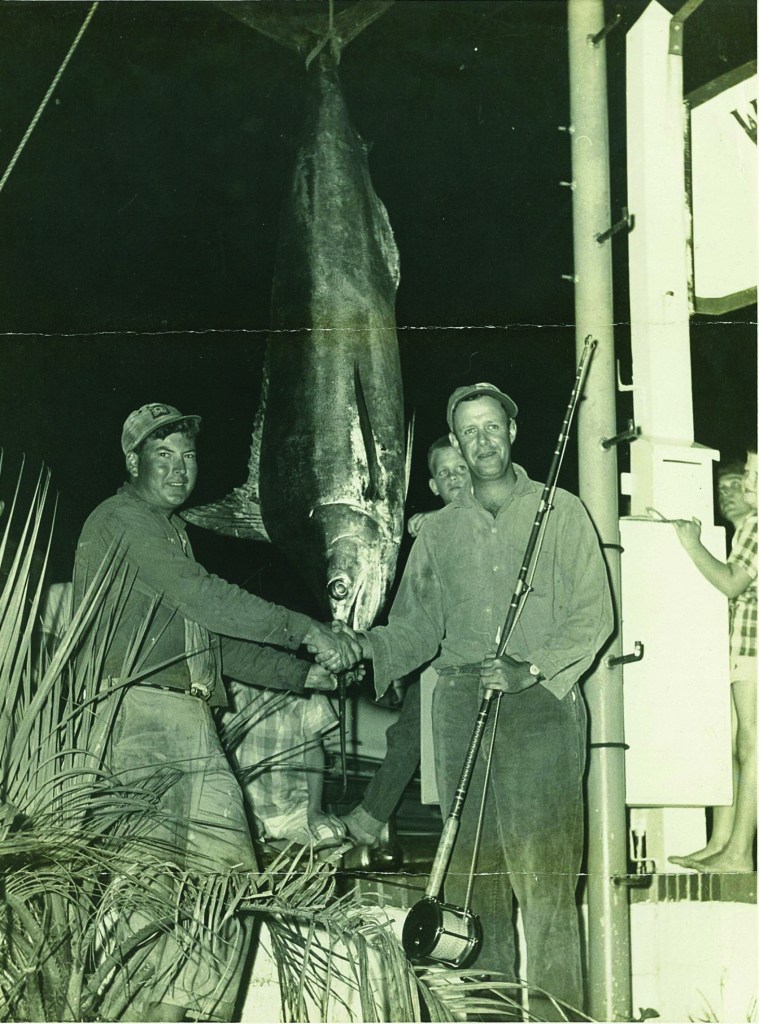
Shepard recalls “Daddy was very good friends with Captain Eddy, the most famous charter boat captain ever at Wrightsville. He and the other boat captains were awed by Daddy’s bravado and fishing skills. Inshore or offshore, Daddy was either trolling in the breakers or skipping baits 24 miles out around WR4, a favorite spot for commercial boats…he’d be right there with ’em in that 18 foot and later, the 20 foot wooden Simmons…one outboard, one compass, no radio, no fish finder, or electronics of any kind except portable, one way (meaning receiving but not broadcasting) so he could listen to the other boat captains fishing that day…and lots of gas. As i got older, 10 or 11, he started taking me with him.
At an earlier age, Mama would make sandwiches for Daddy and me to take with us cut bait fishing for blues in Riches or Mason’s inlets. We’d go on Saturdays, just the two of us. It was great fun listening to the Carolina football games on the little transistor sitting just inside the breakers with the gulls overhead and us fishin’…chum bag hanging off the stern and us cuttin’ bait and catchin’ dem blues…some of the best memories of my life growing up with Daddy…none of my friends had that with their fathers.”
“I’ve chartered with Cap’n Eddie, as I’ve said before, and on one such trip, it was an overnight trip. Louie Woodbury was the mate on board and I had a big fish on, and Cap’n Eddie thought it was a sail fish. The sail fish had gone down deep and he told Louie to get ready to bill him. Louie went back to the stern of the boat and was leaning over with the gaff ready to get the sail fish. Eddie said, “Louie, he’s getting ready to come up now. Get ready.” Well, that fish came up, and I’m gonna tell you what, Louie did a backward flip somersault into the cockpit of the boat. What it was, was a barracuda. It only weighed 42 ½ lbs. and that mouth was wide open, and I’m gonna tell you what; it was a sight to see! He told Cap’n Eddie, “Good Lord, Captain, it’s a barracuda! What do we do?” And Eddie said, “Bring him aboard.” Well, I’m glad they did because it was a showpiece, and if I’m not badly mistaken it still holds the record in weight off the coast. If it’s not, it’s certainly in the top three. My grandson, Spencer Broadfoot, was maybe 6 years old and had his picture taken with his head inside the barracuda’s mouth. That’s how cotton-picking large it was.”
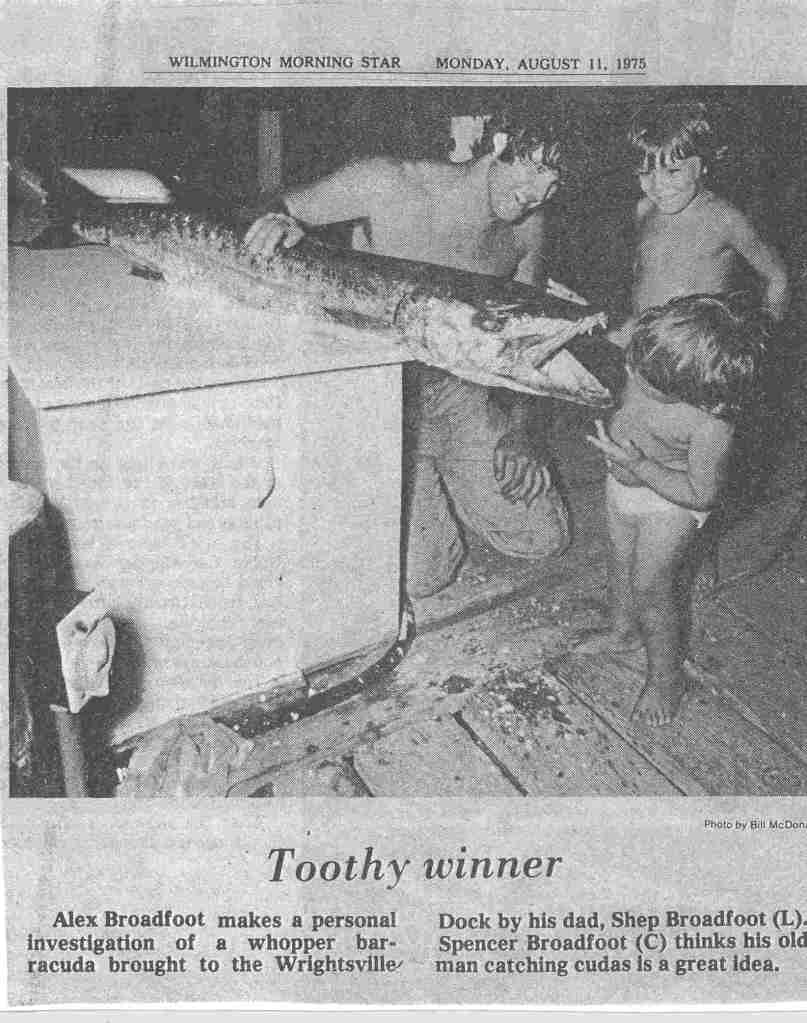
“So let me tell you about a little sailing I did at the Carolina Yacht Club. I had a Sunfish and one day in a race, it was sort of a spanking good breeze. I asked Beverly if she would like to go with me and be some ballast and she said she would. She was so young she really didn’t know any better, but I put a life preserver on her. I guess she was probably about 6 and the race didn’t even get started good and we turned over. Not only did we turn over then, but we turned over many more times, about 12 or more to be exact, and when we turned over, of course she would start floating away from me. I’d reach out and grab her by the life preserver and pull her back to the boat. We’d right the boat and continue a little bit more and turn over again. This is the way that race proceeded, but she never stopped laughing and I don’t know, maybe I turned that boat over deliberately just to see her laugh, but I don’t think I’d do anything like that. But it was a great time racing with her that day.“
“When it was decided that Frances and I were going to get a divorce, boy that was a stupid damn mistake on my part! Stupid, stupid! Anyway, at that time the one person I hated to tell was my mother. I would rather have taken 50 lashes, I do believe. I actually wish I had gotten the 50 lashes and no divorce. How-so-ever, I went in to see Mother at breakfast time like I normally did. I was sittin’ at her kitchen table and by and by she looked at me and she said, “Bryan, what do you have on your mind?” That was a smart mother and I told her about the forthcoming divorce and she looked at me just as calmly and said, “I guess I’m supposed to be surprised?” I said, “Well, yes, you certainly are!” She said, “Well, I’m certainly not! Now what can I do for you? Where you gonna live? You gonna need some money to put down for your utilities, etc., etc. You’re gonna need money to pay in advance for an apartment.” I ended up living at Cypress Grove Apartments. Well, anyway, she equipped me with pots and pans and money and the like, and that’s what Mother was like.“
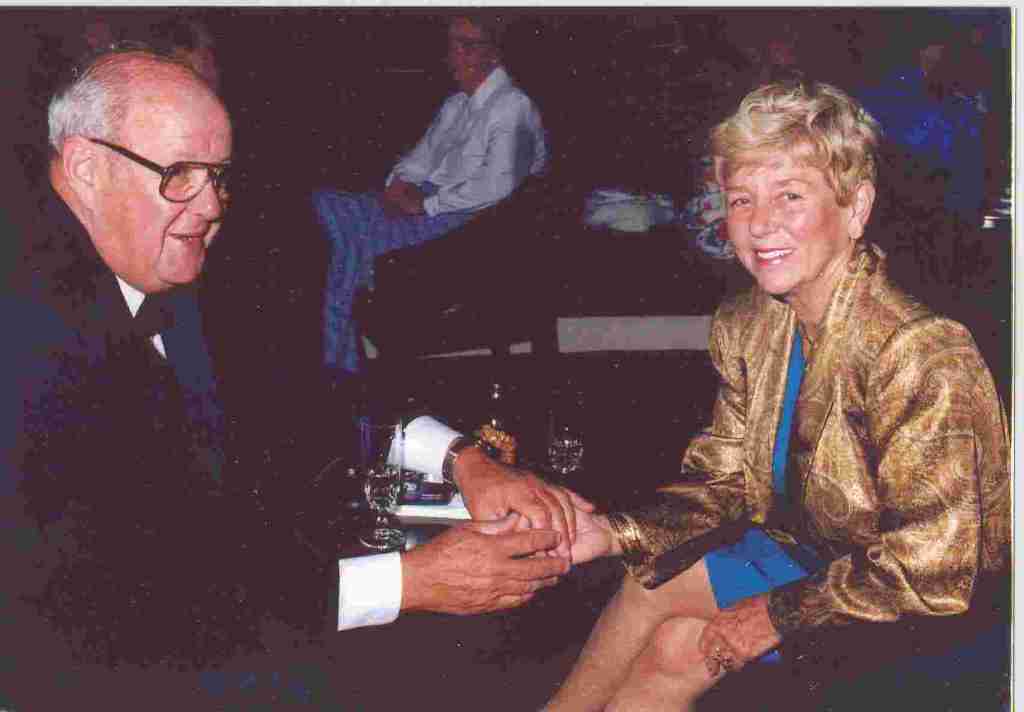
I was at a dance one night; the Glenn Miller Band was playing at the Wilmington Hilton and a casual acquaintance of mine spoke to me a week or so later saying he saw me at the dance dancing with my daughter. I said, “My daughter?” He said “Yes, your daughter’s blonde, isn’t she?” I said, “Wait till I tell this lady that you referred to her as my daughter.” Yes, she did look young and she was very beautiful. Her name of course was Evelyn and, oh, I enjoyed being with her so much. Her name was Evelyn Hale originally.” “She was very athletic on the tennis court and beautiful off the court. She was very good to this old plow boy. Finally I realized that she liked me. She was a gourmet cook and was very good and supportive of me.” “We were married by the Rev. Robert Cook at St. James Episcopal Church.”
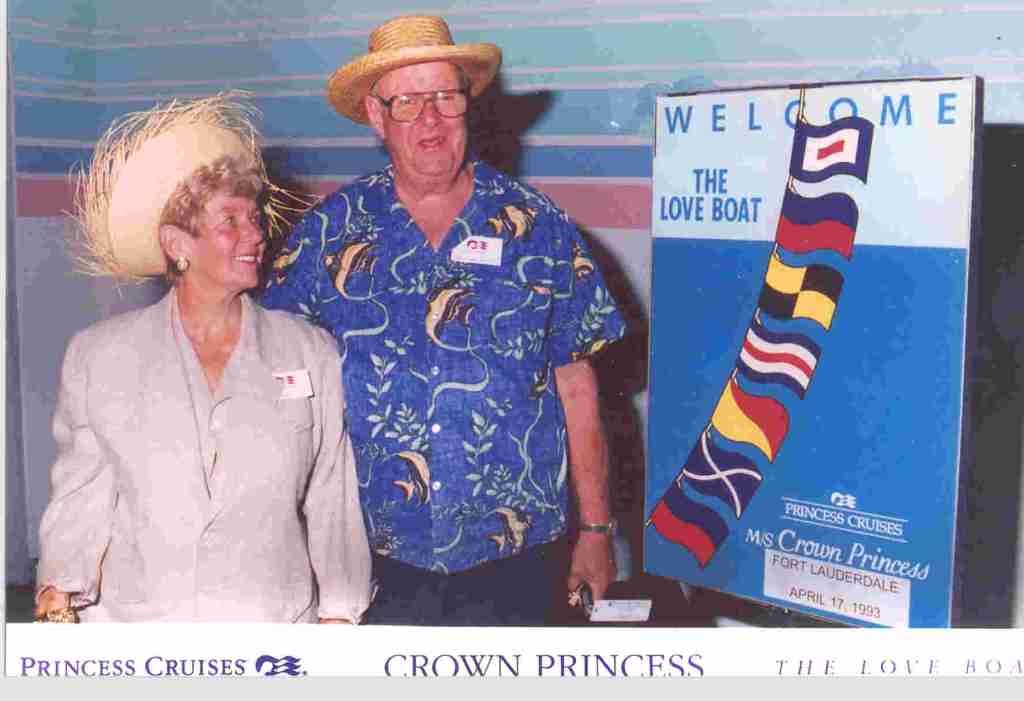
Evelyn and I took some wonderful cruises, maybe 30 some, each one different in their own way. We met some people on the cruises that we keep in contact with to this day.
One time we went to Europe and that was an excellent cruise. Most of the time we went to the southern Caribbean. On a one week cruise, when it was over, we walked across the walk and got on another ship and went on another week’s cruise in another direction. A very memorable cruise was a cruise to Alaska, where I was honored having been a past Norwegian Vice-Consul. We had dinner at the Captain’s table, a private party, and were invited up to the bridge to see the Calving Glacier. We were served bean soup up there. A special cruise was one she gave me for my 80th birthday. She was known for doing things like that.”
My happiest time in sports was my close association with Coach Frank McGuire and Dean Smith at UNC Chapel Hill.
Barbara Streisand’s “Memories” is my favorite song. Frank Sinatra is my favorite male vocalist.
The most frightening time – watching my family almost drown in front of my eyes from a stupid boating accident.
The saddest days of my life – when my brother Winston dropped dead, watching my parents and brother Billy die, the burial of my best friend Muck Dunn, my ex-wife Frances dying and the hurt for the kids, and losing my pets over the years.
The happiest times – making a family and watching them grow, being a daddy and loving my offspring. I live my life through my children, grandchildren and great grandchildren.
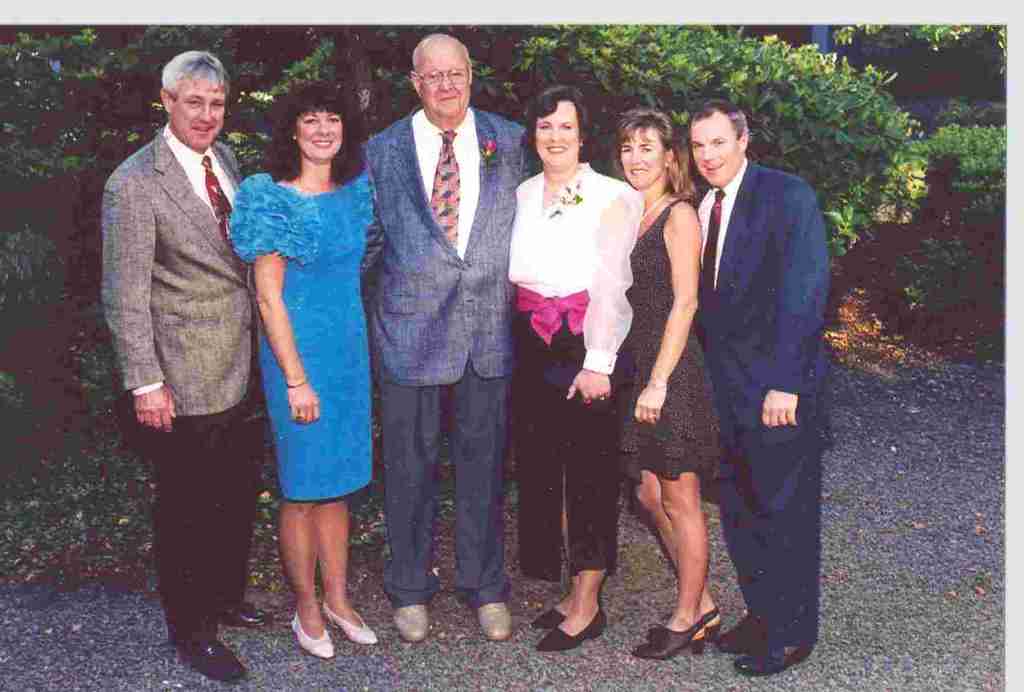
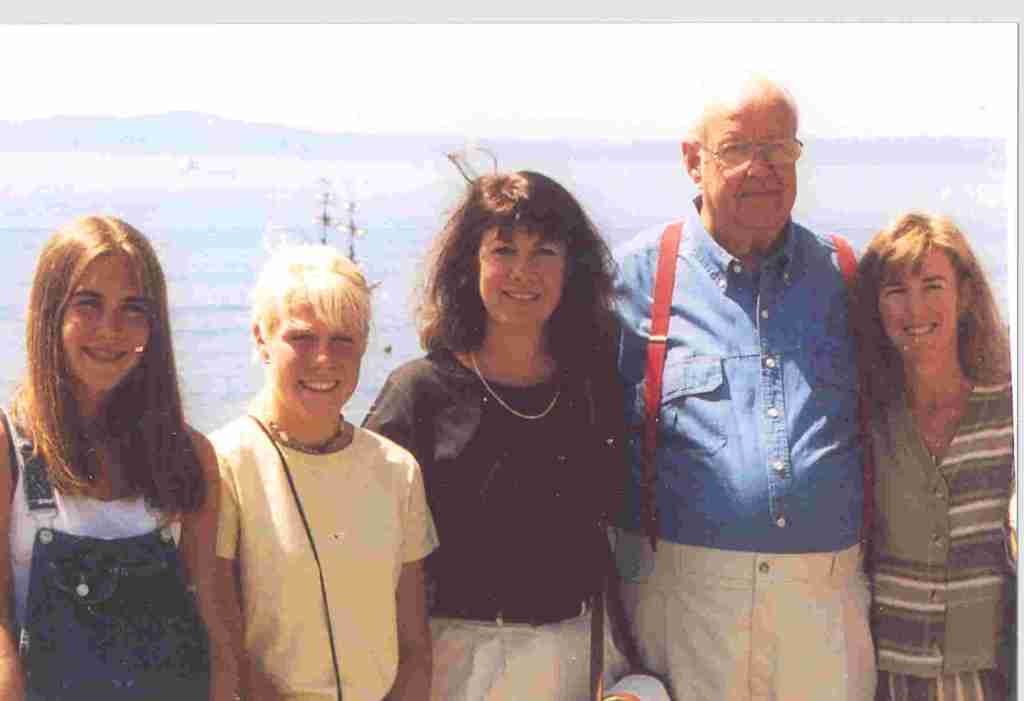
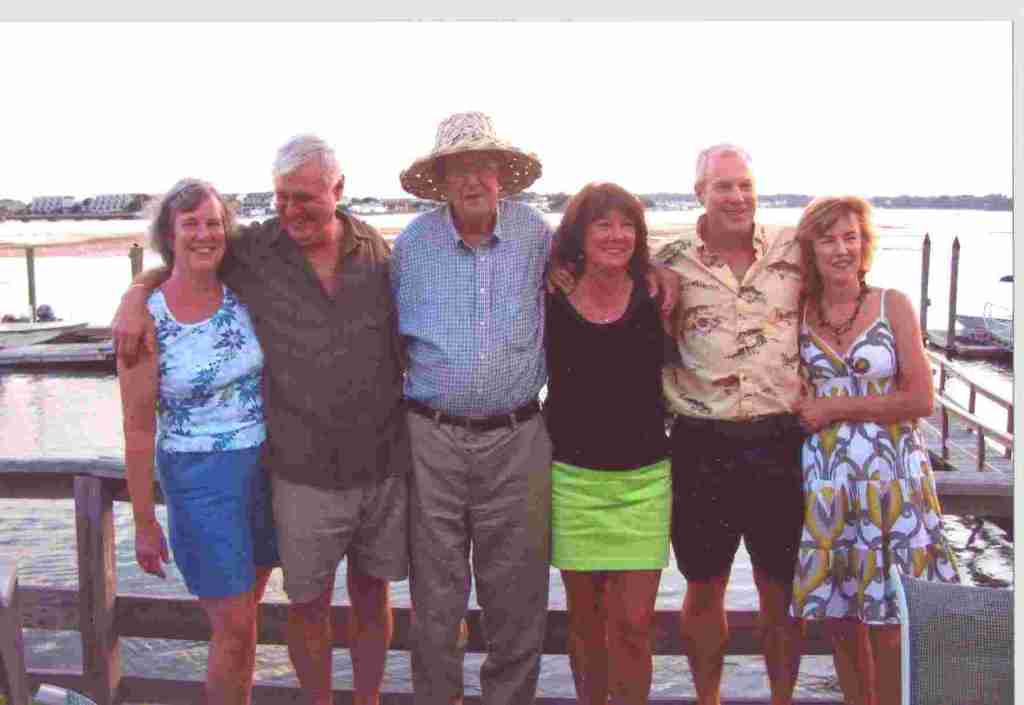
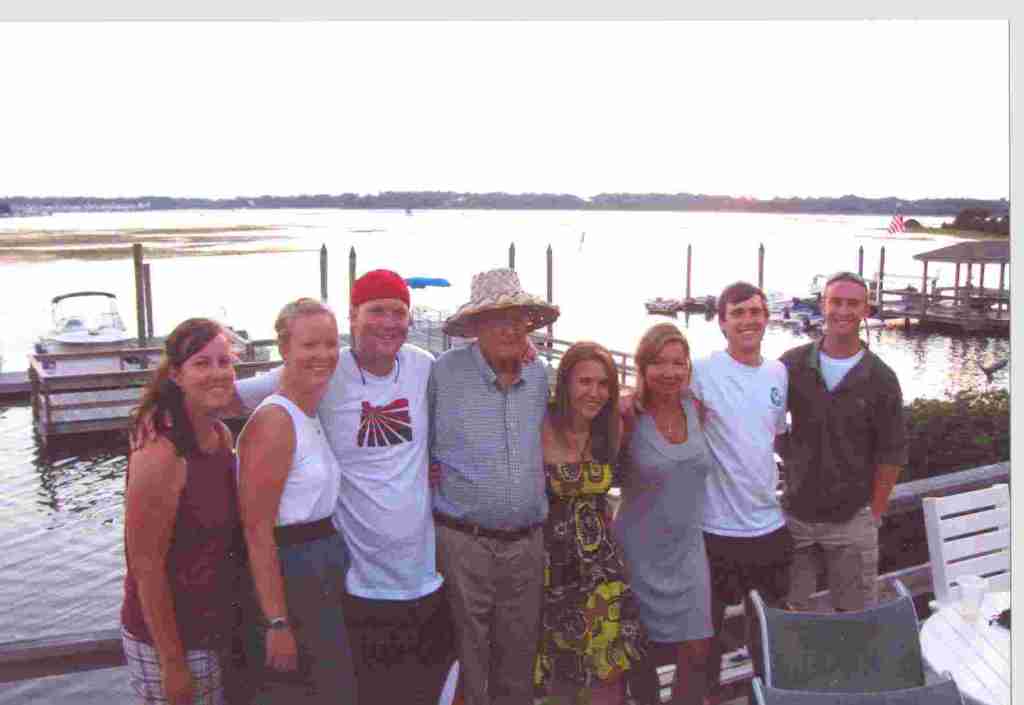
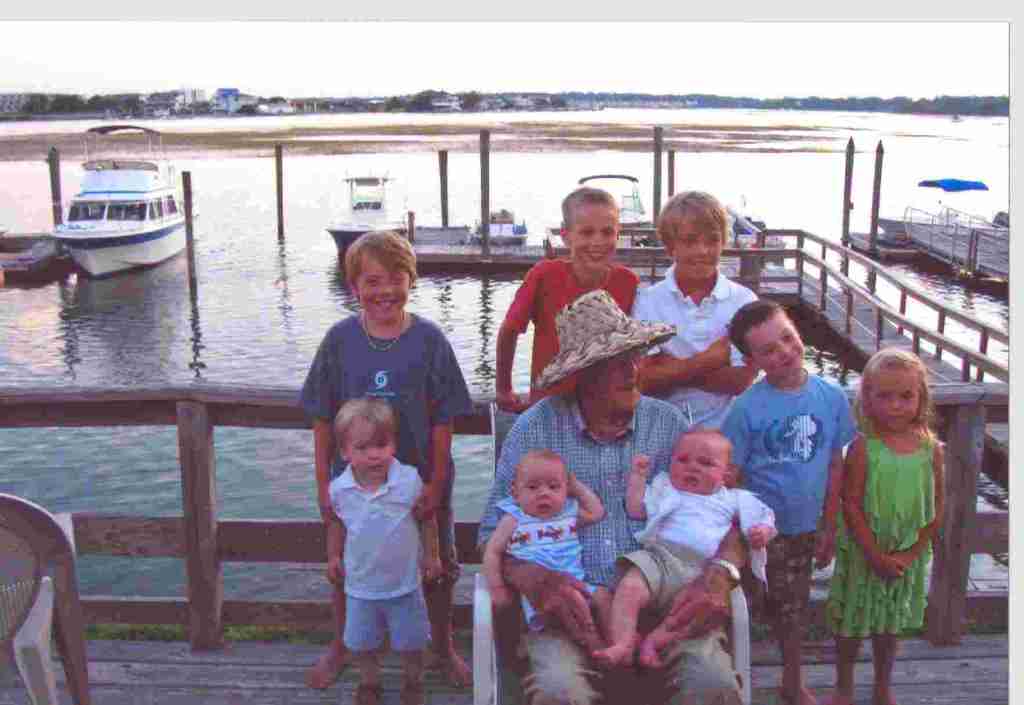
Shepard Bryan Broadfoot, 86, known as Daddy Rabbit and Uncle Bryan to many, died on February 3, 2011.
When Mary Burnham Bason was born on February 17, 1920, in Ithaca, New York, her father, George Francis Bason, was 32, and her mother, Mary Isabel Reuther, was 28. Over the next several years, Mary became a big sister to Johnsie (1921), Frances (1923) and George (1931). She married William Gillies Broadfoot on April 1, 1945, in Orange, North Carolina. They had four children during their marriage. She died on October 27, 2005, in Wilmington, North Carolina, at the age of 85, and was buried there.
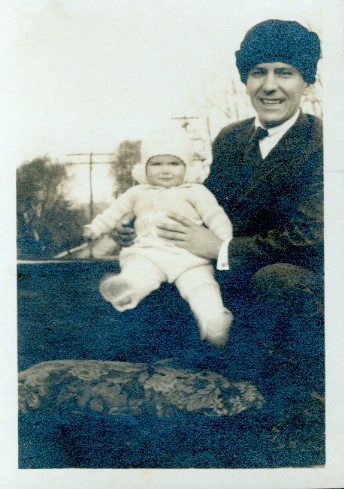
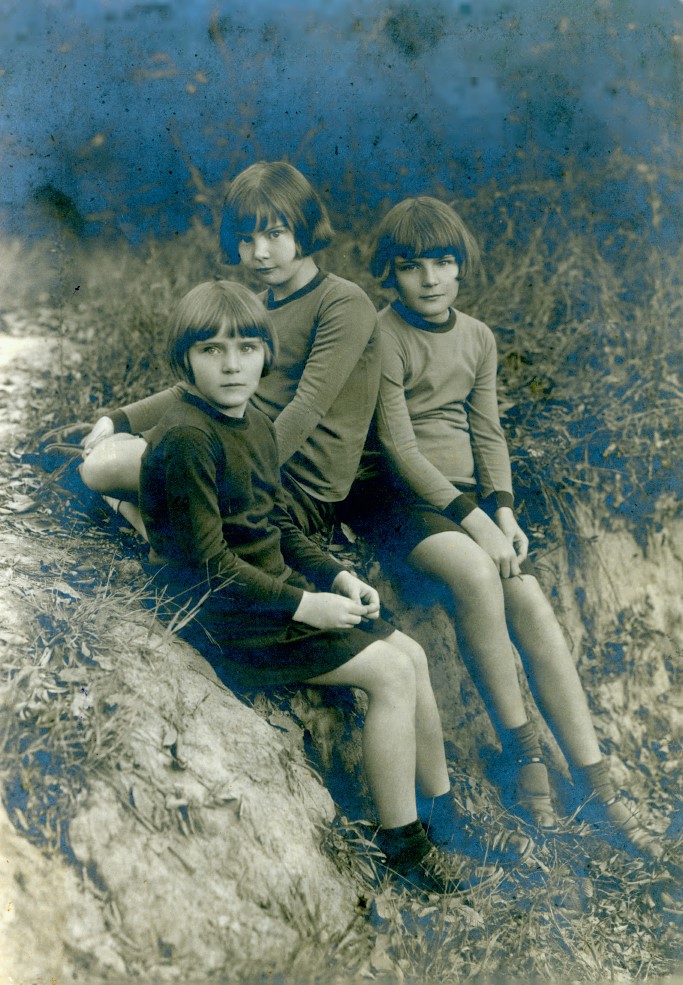


Mary compiled her mother’s life story and it shares so many insights into Mary’s own existence.
A BRIEF OUTLINE OF THE BACKGROUND AND LIFE OF
MARY ISABEL (MABEL) REUTHER BASON by Mary Bason Broadfoot
Although the life of my mother Mary Isabel (Mabel) Reuther Bason contained enough drama to be worthy of a best-selling biography or novel, I write this brief outline of her life and character primarily for the knowledge and benefit of my children and grandchildren. Friends called Mother “a lady of great courage.” She was indeed that.
Badham and Bason history and genealogy have been recorded by Henry Badham, Jr. of Birmingham, Alabama, and by the late William H. Bason, Daddy’s brother. No written record exists, to my knowledge, of Mother’s family, who emigrated from Germany in the middle and latter 1800’s. I will narrate information passed to me from Mother.
Born on the 10th of July 1891 in Newark, New Jersey, Mother was the daughter and first child of John and Maria (Mary) Ernst Reuther. The first John Reuther, my great-grandfather, was born in southern Germany, or perhaps northern Switzerland, to a family of means. Mother believed that her paternal ancestors were in the wool or textile business. According to Mother’s limited recollections, the first John Reuther had been “disowned” by his family when, having stopped off in England on his way to Australia in connection with his father’s wool business, he met and married an English girl. After his first wife died, John came to the United States and married Christina Vohl whom he met at the immigration center when he entered the United States. Christina, too, was a German immigrant and a young girl of 21 at the time she immigrated. (I am taking the spelling “Vohl” from Christina’s death certificate, but I wonder if the correct name is “Pfohl.” “Reuther” was misspelled on the certificate as “Ryder”).
Four or five sons and two daughters were born to Christina and John Reuther; the eldest named Frank and the youngest Fred. Paintings of the Reuther ancestors went to other members of the family. My grandfather, John Reuther, Jr. (Mother’s father) was born in New Jersey April 4, 1864 and died March 8, 1895, a month before his 31st birthday, when Mother was not yet four years old. John had worked in the family iron foundry and contracted a lung disease which brought on his early death. Since Christina Reuther, John’s Mother, had died in October 1890 and her husband in February 1891, Mother never knew her paternal grandparents, and had only a slight memory of her father. Mother’s early memories were that her Reuther uncles and aunts, probably involved with their own families, were somewhat unconcerned over the plight of the widowed Mary Ernst Reuther, left with two small children: my mother and her baby brother Bernard Oscar Reuther, who had entered the world on January 9, 1893. Aside from providing housing, for which she paid rent to the Reuther in-laws, Mary Reuther was left to her own resources. This lack of closeness to her father’s family accounts for Mother’s sketchy knowledge of the Reuthers. However, she remembered her father’s two sisters, Aunt Katie and Aunt Carrie, who married brothers by the name of Mannigan. Aunt Katie had six daughters. Aunt Carrie was “the wild one” and subject to family disapproval.
The Reuther home stood at 30 S. Fifth Street in Harrison, New Jersey, across the river from Newark. Great-grandfather Reuther had owned considerable property, including the land on which the schoolhouse was built. He provided a house for each of his children when they were grown. (It is not clear to me why Mary Ernst Reuther had to pay rent after her husband and his parents had died; but Mother’s memory was always very specific on this point. Could the “rent” have been a mortgage payment?) Although Mother’s knowledge of her father’s family was limited, she knew more of her mother’s family. Her mother, Mary Ernst Reuther, daughter of Bernhard Ernst and Julia Muller Ernst, was born September 28, 1866 in Stadelhofen, Baden, southern Germany (Bavaria). Her mother’s family, the Mullers, were Swiss, and Mother believed her great-grandmother, Frau Muller, began life in Switzerland as Fraulein Aigeltinger, the Swiss name “Aigeltinger” being a branch of the Ernst – Muller genealogy. The Muller family showed cultural and creative interests, Julia being a pianist and her brother Gustav playing the zither.
Bernhard and Julia Ernst had six children: Bernhard, Jr., Adolph, Sophia, Wendel, Maria and Joseph. Son Bernhard came to the United States to seek his fortune in 1872. He wrote his family asking that Maria be allowed to join him, assuring them that he would guarantee she was properly cared for; so, in 1878, at the age of 11, little Maria Ernst entered this country. She was unhappy and homesick, and treated as a servant by the family with whom she lived. She returned to Germany before her final trip to the United States to become a citizen. She married John Reuther, Jr. in 1889 or 1890.
After John Reuther’s death in 1895, the young widow used all her energy and ingenuity in caring for her two little children. She sought employment as a seamstress and as a companion for anelderly lady, “Grandma Houk.” Mother recalled the occasional luxury of being allowed to ride in Grandma Houk’s carriage. For such auspicious events she was admonished to “wear your shoes – or you can’t ride in Grandma Houk’s carriage.”
Enterprising spirit that she was, Mary Reuther somehow scraped together enough pennies to purchase a small store, with an apartment in the rear, in Kearny, New Jersey, where she opened a grocery store. Her mother, Julia Ernst, widowed in 1896, waspersuaded to come over from Stadelhofen to help care for the two children while her daughter worked. By this time all of the Ernst children had immigrated to the United States. Wendel had died in this country at the age of 21 of typhoid fever. Bernhard, Jr. and Adolph were in business in Philadelphia and Joseph was living near Newark, or possibly came over with his mother. Sophia had married CharlesKrahmer.
My great-grandmother Julia Ernst (Mother’s maternal grandmother), in addition to being musical, had been aschoolteacher in her native village, and was a person of culture and refinement. A tiny lady of strong but gentle character, she exercised tremendous influence on my mother’s early years. Mother loved to chuckle over her grandmother’s helping her with homework, and the occasional difficulties that would arise over differences in language. Julia Ernst died in 1915 at the age of 70 or 71.
My maternal grandmother was a part of our family when I was a child and I adored her. She had all the traits of character that spell success as a person. Generous, warm-hearted, with a lively sense of humor, she wasalso hard working and industrious. Mother used to tell of her rising before dawn to meet deliveries at her little store, and how tolerant she was if customers were slow to paytheir accounts, or if they could notpay at all. Her business prospered, and gradually she acquired some property and asmall estate of her own.
Devotion to her family was paramount. Her belovedsister, Sophia, deserted by her husband and left with three children to support (probably in the early 1900’s) was provided for by my grandmother. She purchased a store for Sophia and provided the capital for her to go into business. Examples of Mary Ernst Reuther’s kindnesses were legion among family and friends.
She was strong, energetic, and intelligent: caring for two children during their formative years, with no male help, is evidence of that. Originally living in Harrison on Reuther property, the move to nearby Kearny was principally due to the fact that the school system was better there than in Harrison; and, of course, she wanted the best for her children. The house and store were across from a large estate known as “Kearny Castle.” The family later moved to nearby Arlington, where my mother was graduated from Junior High School in February 1906.
In 1902 Mary Reuther married Edward Johnston, a widower and veteran who had courted her for some time. He was much older than she was, and when I knew my grandmother she had again become a widow, Edward Johnston having died about 1921.
Mother always regretted her limited amount of formal Education. She had the typical German yearning, respect and zest for education. But, recognizing her mother’s financial struggle, she was anxious to equip herself as quickly as possible to supplement the family income and to become self-supporting. She therefore entered Drake Business School in Newark in 1907, meanwhile taking courses in the evening at the local YWCA in philosophy, literature and cooking.
During the summer of 1909, Mother made her first trip to Germany, an 18th birthday gift from her grandmother. Accompanying her, no doubt as a chaperon, was Marie Seiler, her Uncle Barney’s (Uncle Bernhard’s) sister-in-law. She had a happy summer meeting German relatives, making new friends and acquiring a German beau.
Mother’s first job was with the General Electric Company in Harrison, beginning with the grand wages of $5.00 per week. After two weeks she was given a raise to $6.00. Mother walked to and from her home in Arlington to the job in Harrison. Hours were8 to 5, six days a week. It wasn’t long before she was put in charge of 10 girls in the secretarial pool.
Her next employment was with the Crocker-Wheeler Company in Ampere, New Jersey. Through her good friend Olga Moore, in 1913 she met George Francis Bason of Charlotte, North Carolina, a young electrical engineer also employed at Crocker-Wheeler. Olga had raved incessantly over George’s beautiful baritone voice.
During the depression of 1914, Mother had to leave her job at Crocker-Wheeler (it had originally been offered as a temporary job, but almost immediately became permanent, until the depression). She applied for work at the Underwood Typewriter Company, took a test, and secured an $18.00 a week job in a law firm. Seeking higher salary and greater opportunity, she found her next job in Brooklyn in a munitions plant. Although she liked the job, the journey to and from work consumed 1-1/4 hours each way. The Driver-Harris Company was her next place of employment, where she was secretary to the Vice-President, Mr. Bentzel, until her marriage to George Bason.
Mother and Daddy’s courtship was fraught with problems when his serious interest in Mother became known to his family. Although both of his parents had died by the time they met, Daddy was the beloved baby brother of Will Bason and Johnsie Bason Burnham, and, in addition to their adoring influence, was also watched over by two of his mother’s siblings: Uncle Vernon Badham (who had helped finance Daddy’s education at State College in Raleigh and graduate work at Cornell University), and Aunt Carol Badham Preyer. Daddy’s Bason and Badham family roots ran deep in southern colonial history. The Badhams were a prominent family in North Carolina from the time of their settling in Edenton in the early 18th century. The Basons were sturdy Flemish Huguenots, their arrival in this country also dating back to the early 1700’s. Imagine Daddy’s family’s consternation in learning that he was in love with a German first generation immigrant — a girl of limited education who worked for a living, and whose cultural background they questioned! And, to make matters as bad as possible, she was also a Roman Catholic!
Needless to say, these four relatives set themselves to doing everything they could to prevent such a marriage. Letters from Uncle Will Bason and Uncle Vernon Badham confirm Mother’s remembrance of this sad time. Although Mother’s employment during their several years of courtship was consistently close enough for her to walk or use public transportation from home to work, Daddy’s employment, after he left Crocker-Wheeler Company, took him to upstate New York and to Tennessee. There exists considerable correspondence during the periods of separation, especially from Daddy to Mother (Mother being the letter-saver!). Daddy’s happy, loving letters clearly portray a young man deeply in love. Nevertheless, when his serious plans with Mother continued to develop, Daddy, respecting the protests from his family, finally wrote Mother early in 1916 stating his family’s objections and saying that their relationship must terminate. An undated letter from my grandmother, in humble but eloquent English, responds to this letter, telling him of Mother’s loyalty and devotion to him, and advising him that we all worship the same God, regardless of the “Path” we choose; and suggesting he choose his own wife, since he, not his family, must be the one to live with her. Obviously still in love, Daddy then wrote his brother Will, extolling Mother’s virtues; and Uncle Will’s reply indicates a readiness to accept Daddy’s judgment in selecting a wife.
Mother and Daddy were married on September 18, 1916 in St. Cecilia’s (or St. Stephen’s?) Church in Kearny. An affectionate exchange of letters existsbetween Mother and Aunt Johnsie in the early months of the marriage, both young ladies evidently anxious to rise above a rift.
My parents lived in Ithaca, New York after their marriage, Daddy being an instructor of electrical engineering at Cornell University. A baby boy, Neal, named after Daddy’s sister Cornelia who had died when a young girl, was born on August 8. 1917. Neal was a happy, precocious baby and a source of great joy to his parents. In April 1919 Mother took Neal to visit his Aunt Johnsie in New York City and his grandmother in Arlington, New Jersey. Neal was just beginning to talk in sentences and was responsive to his adoring relatives. On May 8 he became ill; the doctor was called that night, and Daddy early the next day. Daddy arrived on May 9. just in time to see his little son die in convulsions. The death was a shattering blow to Mother and Daddy. Mother never ceased to talk of little Neal and pictures of him were always in her and Daddy’s bedroom. The cause of death was given as spinal meningitis.
Mother and Daddy lived in downtown Ithaca in an apartment, or house, on Tioga Street. Mother, in those early years of marriage, helped with her younger brother Ben’s education by providing him room and board while he attended Cornell. Ben paid a nominal amount for his accommodations, and Mother said the arrangement was helpful to both of them.
I was born on February 17, 1920 after Mother and Daddy had moved to a house on State Street. Soon thereafter we moved to a picturesque early Victorian house at 210 Mitchell Street, where sister Johnsie arrived November 7, 1921 and Frances on September 22, 1923. Mother said the architect of our Mitchell Street house also designed the Cornell University Bell Tower.
Living on an instructor’s salary with three small children in the early 1920’s meant a constant struggle to make ends meet. My grandmother agreed to join the family and to take care of us three girls while Mother supplemented the family income with a secretarial position at Cornell. My grandmother (whom I nicknamed “Dodo”) must have come in 1923 or early in 1924. 1 cannot remember a time in my early years when she was not a part of the family. Although the Mitchell Street house was not large, one or two upstairs rooms were always rented to a university student.
During the summer of 1929 Daddy was away working in New Jersey, as was customary during the summer months. He had by that time been promoted to a professorship, but the summer employment was still a financial necessity. Mother worked hard that summer renovating the house, enclosing the side porch and giving the house a general face lifting. Imagine her distress when Daddy telephoned her one day, his voice ringing with the exciting news that he had received an appointment as head of the Engineering Department at the University of North Carolina, and that we would move immediately to Chapel Hill, site of the University!
My precious grandmother had just purchased a home of her own on College Avenue, a few blocks away from 210 Mitchell Street. She had her friends in Ithaca and her heart was not in the move to a new part of the world at the age of 61. So she decided to remain in Ithaca.
We made the trip from Ithaca to Chapel Hill in August 1929 in about three days. I recall an amusing incident our second night en route to our destination. We were staying at a tourist home in Richmond, Virginia and Mother overheard people talking on the front porch, adjacent to the room in which we were staying. “Aren’t there ANY white people in the South?” Mother asked Daddy, more curious than apprehensive. Daddy laughed. “Those are white people you hear talking.” he said. This was Mother’s introduction to a barrage of Southern accents!
Our first home in Chapel Hill at 501 East Franklin Street bore the distinction of being one of the oldest houses in town. Mother tracked down the legend that it had once been the residence of a widow by the name of Puckett; so it became, while we lived there, “The Widow Puckett House – 1799.” It still stands on East Franklin Street, and became the residence of Chancellor Robert B. House until his death in the fall of 1987.
When we arrived there in 1929, the old house had sheltered a university professor and his wife and brood of six rambunctious children — and bore the scars of that lively household. Mother was appalled at the dirt and disrepair, and tearfully proclaimed she could not take her children in it in that condition, despite her fascination with its antiquity. At first viewing, all she could think of was the tidy, newly decorated house on Mitchell Street she had left behind in Ithaca.
We spent a month or so in a rooming house on the edge of Chapel Hill while Mother supervised repairs, painting, hauling off trash, fumigating and scrubbing The Widow Puckett House, and moved in when it was spotless.
No one realized it at the time, but that summer and fall of 1929 my father was in an extremely elated emotional state. When he became deeply depressed in the winter of 1931, we three girls — or at least I, the eldest — were aware that he had had a “nervous breakdown.” Some time later, after sessions with doctors and trips to hospitals, we learned the term “manic-depression”. Imagine the feelings of desperation! What was this illness?
For some years now manic-depression has been diagnosed as an illness caused by a chemical imbalance, and in many cases it can be controlled by medication. The cause of this chemical imbalance is still unknown. Is it, perhaps, caused or aggravated by some emotional strain; or is it a condition that develops strictly by chance, or due to a genetic problem? If aggravated by stress, could Daddy’s condition have been an accumulation of frustrations and emotional crises, a series of events beginning with his Mother’s early death? In the early nineteen hundreds devoted elder brother Will had written Daddy discouraging him from pursuing his desire for a career in music. Daddy had a spectacular operatic bass-baritone voice, and also played the viola and ‘cello. How he loved music! Uncle Will urged him to fulfill the vocation in engineering for which he had been educated using music as an avocation. Uncle Vernon, too, was strenuously opposed to a musical career. Next, the initial opposition to his marriage obviously caused Daddy great stress and inner turmoil. The sudden loss of a beloved baby son left terrible scars. Finally, we have recently learned that Daddy underwent considerable frustrations in his new job at the University, due to dissensions within the administration. Daddy’s friend and colleague, Ed Winkler, wrote Mother at some length in 1985 and 1986, reciting some of the difficulties and pressures under which Daddy worked when he first arrived at his new post. Ed Winkler felt that Daddy’s illness was brought on by these problems.
Might there have been an inherited tendency to this “chemical imbalance?” Daddy’s maternal grandfather, Henry Badham, was mentally ill the last ten years of his life.
Or was it — as Aunt Johnsie steadfastly believed through the years — due to an incompatible marriage partner: in other words, Mother’s fault?
I believe one of the reasons Daddy loved Mother so deeply — and he did love her, as his cards and correspondence throughout the marriage show — was that he recognized her strength, and he needed that strength. His beloved grandmother, who raised him from the age of 7 when his mother died, was a woman of tremendous strength., faith and courage. No doubt, consciously or unconsciously, he sought these same character traits in a wife. Daddy’s nature — again illustrated through correspondence from his uncle,brother and aunt, and to Mother — was that of a dreamer: a highly intelligent, sensitive nature, one that needed the guidance of a strong partner. The marriage was fraught with grief, frustrations, and periods of immense anger and rejection; but basically it was a marriage of enduring love and mutual respect and admiration. Mother cherished in later years especially a message from Daddy on their 25th anniversary, in 1941, stating that their love was stronger than ever.
Toreturn to the onset of Daddy’s illness, Mother, ever trying to ingratiate herself with Aunt Johnsie (at least in those years) had suggested that Aunt Johnsie bring her seriously ill husband to stay with us soon after we moved into the Widow Puckett House. Uncle Athel died in that house January 19, 1930. I don’t remember how long he was there; probably not more than a few months at most; but it was a strain on everyone, and meant giving up two badly needed bedrooms as well as preparing special foods. I remember Aunt Johnsie constantly scolding us girls for making so much noise while Uncle Athel was sick. He wasa dear, wonderful man, and I regret that my only recollection of him isof adying invalid. This wasjust prior to the time Daddy’s illness wasdiagnosed. The strain of a temperamental, distraught sister and a dying brother-in-law possibly aggravated Daddy’s own emotional state.
After Uncle Athel died,Aunt Johnsie decided to move to Chapel Hill and purchased a house on Tenney Circle. She moved there in 1931.
Daddy’s illness followed a pattern of several months of severe depression, usually during the winter months, during which time he scarcely spoke and had little energy. This period was sometimes followed by a short period of “normal” activity: responsiveness and ability to function without stress. Then came the manic stage: Daddy talked incessantly, was constantly on the go, full of creative ideas and plans — and always shopping. This is a typical manic-depressive cycle. Although the depressive stage was heartbreaking, both for him and for the family, the manic stage was even more difficult for Mother to handle for she labored under terrible financial pressures in those depression years. She would learn that Daddy had purchased certain expensive items and would have to go through the embarrassment of returning them or of insisting that Daddy return them. Such was the condition of my dear, good, gentle, brilliant father.
Of course his illness meant resigning from his teaching career; it meant sessions with psychiatrists and stays at hospitals in Connecticut, Richmond Virginia and Pinehurst, N. C. For extended periods during the 1930’s Daddy lived in the country at Hogan’s Farm, separated from his family, per the recommendation and advice of one of the doctors at Duke Hospital, where he also received psychiatric care. Thought to be a psychological ailment, manic-depressives also received shock treatments. Daddy had several of these treatments at Richmond and, I believe, at Duke.
So Mother had to shoulder alone the responsibility and care of three little girls, with another baby on the way, as well as suffering the devastating news of a sick husband — all during the early years of the Great Depression.
Baby brother George was born June 30, 1931, some months after Daddy’s illness had been diagnosed. We girls were sent to Penland for a couple of months that summer at the wise suggestion of a good friend, Josephine Sharkey. I have memories of having to eat beets for dinner every night (always my most hated vegetable!) and of being so miserable that I tried to run away one midnight. But there are a few warm memories, too: my first horseback ride, learning the art of pottery-making, ghost stories in the evenings after dinner, blackberry picking. It was a very inexpensive place — not a “camp” in the accepted sense of the word.
Daddy’s cousin, Bess Bason from Burlington, and Josephine Sharkey stood by for Georgie’s arrival on June 30. He was almost certainly an unplanned event -but great joy prevailed over having a baby brother, and a namesake for my father.
With Daddy’s resignation from the faculty came the news that we must look for another house, the Widow Puckett house being University -owned and for faculty personnel only. Mother had rented two rooms in the house to male students. Renting rooms in faculty homes was traditional both at Cornell and again at Chapel Hill.
“Mimmy” Graver, (Mrs. Louis Graves), wife of the editor of The Chapel Hill Weekly, was one of Mother’s first and staunchest friends — a true friend — in Chapel Hill. Mrs. A. A. Kluttz, a neighbor, was another; and Josephine Sharkey ranked high among the most helpful. One of these dear ladies told Mother that just one block closer to town, across from the Episcopal Chapel of the Cross, a large house was on the market, held by the bank for default on mortgage payments. Mother looked at the house; talked with the bank officers and assured them she knew she could “swing the payments” if given the chance. She would rent rooms to students or single faculty; she would open a boarding house: the large dining room would accommodate about 30 people for three meals a day. The boarders and roomers would pay for food and shelter for her family; then she would do catering for fraternity parties.
Mother hired a cook and two maids. Acquainting herself with the working habits of the help was a frustration. She was impatient when she would hear them gossiping and laughing when there was “work to be done.” Problems with help continued for many years. Not only did they “steal” time, but also food and possessions. “Mr. Henry,” the black cook, was an impeccable soul in most ways, his chief fault being a love of alcoholic beverages which caused unexpected absences from time to time.
Mother also established a little business of making and selling sugared black walnuts and party mints. We girls would assist sometimes in boxing the popular confections.
Mother continued to seek other sources of income. Through her friends, she learned of some of the native North Carolina crafts — Cole pottery, Jugtown Pottery, Penland Weavers and Potters, Churchill Weavers of Kentucky. For therapy, my creative Father learned the art of hammering pewter. He made beautiful plates and bowls, patiently hammering and shaping, in wooden molds, the round sheets of metal. Johnsie, Frances and I were assigned the job of polishing the lovely pewter pieces with very fine steel wool. Frances has reminded me that the first “shop”, containing these items, actually started at the Widow Puckett House, just prior to our having to move.
In the spacious house at 307 E. Franklin Street, these items became the nucleus of a gift shop, arranged in a parlor on the first floor. The income was small, but it helped. A customer one day asked Mother if the display cabinet holding some of the crafts was for sale. “ Why not?” though Mother. She had always been an antique buff. Some of my earliest memories in Ithaca include going to auctions in the Finger Lake region. So — if it’s antiques they want, Mother reasoned, antiques I can get. She began making trips to Ithaca to see her antique-ing buddies and to attend auctions. She made contacts with wholesale dealers in New York City; and gradually “Whitehall Antique and Gift Shop” was born. Within a few years the shop was moved into an old garage behind the house, after Mother had it enlarged and renovated to accommodate the shop.
The shop and roomers and boarders and catering were not all. Mother still had her secretarial skills, and in the early ’30’s Paul Green, the noted playwright who lived in Chapel Hill, employed her as a secretary. I believe she must have done much of this work at night — at least the typing part of it. How she ever coordinated her schedule around Paul Green’s is surely a miracle!
The friction between Mother and Aunt Johnsie never lessened. They were such totally different personalities, being alike only in that they were both strong characters. Each would grudgingly admit the other’s many attributes, but each would be forever irritated beyond civility by the other’s shortcomings and idiosyncrasies. It seemed that when one would make an overture of kindness and warmth, the other, perversely, would make the most exacerbating response!
Aunt Johnsie was, by her own admission, spoiled and a complete extrovert. She had a mischievous wit and a wealth of humorous stories which she told with unsurpassable flair. She loved “center stage” and always demanded it. Mother was apt to be shy and retiring in social situations; but she was ever ready to do battle if her ideas or standards were challenged. In that way she, too, was selfish and unyielding. Through the many years that she was chief breadwinner, mother, nurse, she became more domineering. The natural bent was there, and increased with the phenomenal demands made on her time, energy and emotions. She never meant to nag, and was always sorry to have lost her temper and made what may have been “unreasonable” demands; but the force of need to control, and to have her opinions accepted, usually surmounted the discipline of keeping silent, when silence would have been the wiser course.
Aunt Johnsie truly wanted to help in the desperate crises of those years and she did. She financed much of Daddy’s hospital care; she paid part of my tuition at Hannah More Academy for 1-1/2 years; she at one time lent money to Mother for the shop. Her kindnesses sometimes reverted to thoughtlessness. I remember an occasion when, after lending Mother money for the shop, her financial advisor wrote her that “family investments” were not wise. She called Mother at the shop one busy day, upon receipt of this advice, to give her the news that she would have to recall the loan. It had been a business deal, with interest included in the loan, and Mother was hurt and angry. Aunt Johnsie, with nothing to do except entertain herself and pamper her minor ailments, was never fully aware of the terrible pressures under which Mother struggled in those years. Leisurely people never do understand the hectic life of a very busy person. Aunt Johnsie might be annoyed if Mother did not call her regularly; but if Mother called during Aunt Johnsie’s nap-time – the time of day that a free minute might develop in Mother’s pre-dawn to post-midnight schedule — she would be furious at being disturbed during that time!
Aunt Johnsie was an accomplished and talented violinist. She had studied in Paris (where she met her husband) and later taught violin and piano in New York City. She had also taught at Flora McDonald School in Red Springs, North Carolina. Her all-absorbing love of music provided her with life-long friends in the music world, and she helped a number of struggling young vocal and instrumental musicians at the University after she moved to Chapel Hill. Her vibrant, fun-loving personality made her the center of attraction in musical circles. She was instrumental in the development of the North Carolina Symphony Orchestra.
Daddy suffered over the never-ending friction between Mother and Aunt Johnsie, for he truly loved both of these domineering women who loved him, and vied for primacy in his affections. For my own part, looking back, I can understand this all too well, for I, too, loved both my Mother and Aunt Johnsie devotedly, admired them both for their remarkable attributes, and grieved over their inability to love and unreservedly admire each other.
Mother and I were temperamentally alike — quick-tempered and strong-willed; hence we often clashed. That, plus the fact that I was an eager student and loved school, and the Chapel Hill school system was not the best, prompted Aunt Johnsie to help underwrite my attendance at Hannah More Academy in Reisterstown, Maryland. I entered in mid-year, January 1933and loved the school. Aunt Johnsie may have paid for my full year, fall 1933 through June 1934, or I may have received a scholarship. I believe it was the latter.
Since my grandmother and I were so devoted, and since she missed us after the move to Chapel Hill, and since I was still a “hot-head,” and since the Ithaca public schools were excellent. I lived with my grandmother in Ithaca during the school months from September 1934through June 1937, when I was graduated from Ithaca High School. One of my letters to Mother during the winter of 1936 illustrates my grandmother’s anguish over Mother’s life. I wrote Mother that “Whenever someone asks Dodo about you, she just cries.”
Baby brother contracted polio the summer of 1935. Days of anxiety and emotional turmoil, and weeks of special care for the sick little boy were added to Mother’s overflowing schedule. George was blessed in that his only permanent damage from the disease was a slightly shortened leg. George, a very bright, sensitive child, was adored by all of us during his babyhood, and the polio resulted in excessive attention. Too many women in his life, and a sick, unstable father accentuated his own emotionality. During his late teens, a tragic rift developed between him and Mother. George and Aunt Johnsie grew very close during his teen years. I feel that, consciously or unconsciously, Aunt Johnsie’s strong feelings that Mother was the cause of Daddy’s illness were conveyed to George. Mother’s inclinations toward dominance and over-protectiveness produced further friction between her and her only son. Mother suffered, of course, over George’s rejection, which gradually became more controlled as he matured.
In 1936, while I was in Ithaca, the physical problems my grandmother had endured silently for some months were diagnosed as cancer. She was in great pain much of the time during the winter of 1936-37, but was determined to live to see me graduate from high school. She was too ill to attend the ceremonies that June in 1937. After my graduation, Mother brought her down to Chapel Hill, where she died in September. Mother and I made the trip to Maplewood, New Jersey, staying with our Krahmer cousins there; and laying my beloved grandmother to rest in the Ernst plot in beautiful Fairmount Cemetery in Newark, New Jersey.
In the fall of 1939 Mother agreed to rent all the rooms in the house to the ADPi sorority, of which I was a member, and which was founding a chapter that year at UNC. I wastransferring to the University after two years at Randolph-Macon Woman’s College. I believe converting the house into a sorority, and in effect adding the duties of housemother to her many responsibilities, must surely have been a more difficult arrangement than having regular roomers and boarders, and 1 don’t know why Mother agreed to the change. She may have done it for my sake, because she loved me and was proud of me (I don’t know why!). At any rate, a sorority house it was for my final two years of college.
At that time Daddy was living in a little cottage behind the big house, built for him some time in the late 1930’s.
Johnsie attended Converse College in Spartanburg, South Carolina for one year, then transferred to Salem College in Winston-Salem for her last three college years. Frances’s four college years were at the Woman’s College in Greensboro (now UNC-G). George attended and wasgraduated from The Hill School in Pottstown, Pennsylvania in the early 1940’s.
The years from 1931, when Daddy became ill, until 1945 were undoubtedly the years of greatest struggle, tension, turmoil and responsibility for Mother. She was 40 years old the summer of 1931 — a time when many women begin to face trying physical changes. But with four children to care for and educate, a boarding and rooming house to run, a sick husband, then a sick and handicapped child, then a dying Mother to keep her emotionally upset, a new business to start and develop, catering, and a secretarial job for an important playwright, Mother found no time to cater to her own physical change of life. How she had the endurance to meet the demands on her can only be accounted for by her strong will and an innate energy inherited from her forebears. I remember once in a while she would stretch out on a sofa or chair, exhausted, and I would rub her forehead for a few minutes. Johnsie and Frances recall Mother having had an operation – they think a hysterectomy during those turbulent years. Mother’s antique-hunting trips began not long after the gift shop opened.
If Daddy were well enough, he might accompany her. Sometimes he would be hospitalized at a time when Mother would receive a call from a northern friend about an auction in New York or Pennsylvania, and she would make the long drive alone. Sometimes she would drive all night on the return trip, the car or later the station wagon, dangerously overloaded with purchases.
In the fall of 1941, having been graduated from UNC, I went to New York City to look for a job, and worked there until December 1943. Mother found time to write me frequently, as well as my sisters at Salem and the Woman’s College, and, I’m sure, George at Hill School. She was dubious about my living in New York City; she phoned and was distressed when I moved from the safe haven of Church-operated Huntington house into an apartment in June 1942. She wrote me letters of wisdom when Billy Broadfoot and I parted company in August 1942. She was gracious and kind to Curt Sigler on his visit to Chapel Hill with me in April 1943 just before his departure for overseas duty; and was always concerned and caring for his welfare, sending a package now and then, and insisting that I send him pictures of me for Christmas; and writing me letters of justified reproach if I mentioned a five-day lapse between Curt’s letters. (That occurred when he was hospitalized in September 1943 with a severe case of jaundice; after that, he was flying almost every- other day, on an average: 119 missions in 9 months before he was killed in action July 28, 1944.)
Mother was inclined to lecture ad nauseam if we did something foolish or wrong. She usually repented these protracted lectures, but never seemed able to curb the unproductive trait.
The antique business was a natural for Mother, and she loved it, especially the buying. She had an innate flair for recognizing fine things, and also for decorating. At the merest hint that someone would like her ideas on re-arranging a room, she was in her element, moving every piece of furniture, every objet d’art. A room always looked better after one of Mother’s furniture-moving sprees. She read avidly in every spare moment books and magazines on antique furniture, glass, jewelry, painting, china, bric-a-brac. She had loyal friends in the antique business throughout the Northeast, friendships formed in the early years of her business which endured through her, or their, lifetime: the Cirones in Ithaca, Roger Beckleys in Maryland, Ruth Page in Pennsylvania, the Cohens and Seidenbergs in New York City, among others.
I married Billy Broadfoot of Wilmington, N. C. on April 1, 1945. Billy was a Major in the U. S. Air Force at that time. Our wedding was on Easter Sunday afternoon in the Chapel of the Cross across the street from our home. Mother had a home reception for us after the ceremony. Johnsie married John K. Wilkins of Cape Charles, Virginia in February 1946, in New York City where she and Jack were working. Frances married Sam Boyd, Jr., of Morgantown, West Virginia (originally from Pittsburgh, Pa.), a professor at the University of West Virginia, also in February 1946 in Morgantown.
By 1950 “Whitehall” was an established and thriving business. Parking at 307 E. Franklin Street was posing a serious problem; and it was time to move the shop to a more accessible location. Mother found a sizeable piece of property, land and building, formerly a Chinese restaurant, at 1215 East Franklin Street, and Whitehall became a conspicuous landmark at that location. Its fine reputation had spread throughout North Carolina and beyond. Since we three girls were married and George had been graduated from Davidson and subsequently Harvard Law school on a scholarship, financial burdens were greatly lessened.
In 1952 Mother and Daddy purchased property in the country on Mann’s Chapel Road, off the Pittsboro Road, and spoke of retirement to an idyllic country life. Daddy loved the farm. A few sheep, chickens, and a vegetable garden added to their enjoyment of their new surrounding. However, there was no relinquishing Whitehall Shop, and the trips back and forth to the country home, much as they loved the place and the old house, which they had renovated, became too much of a strain. The final decision to move back to town may have been precipitated by a near-death emergency. A friend had told Mother how to distinguish edible mushrooms from their poisonous counterparts. She went mushroom picking one day, brought them home and prepared them for dinner. Only because Daddy had the good taste sense to eat just a bite or two did they survive. When Mother became ill soon after eating a generous portion, Daddy was able to call for emergency transportation (or did he him-self drive to the hospital?). Mother almost died that night in the hospital.
In the fall of 1955, Mother and Daddy purchased the MacNider property at 737 East Franklin Street, and soon thereafter sold the farm to Johnsie and Jack Wilkins, who had moved to Chapel Hill. Jack developed the property into a beautiful nine-hole golf course.
My beloved father’s leukemia was diagnosed in January 1957, and he died the following 22nd of May. Mother and all of us were devastated. Daddy had handled most of the bookkeeping for the shop, and that was a difficult loss, but it was the terrible void of his loving, gentle personality and intellect, which his illness never obliterated, that Mother and the four of us children felt keenly.
In October 1961, George married an attractive, brilliant English girl, Sheilah Weavis. The ceremony was held in a Chapel of Washington Cathedral with only our family attending and Sheilah’s best friend as maid-of -honor. From my observations through the years, George could not have found a more suitable mate.
Mother continued to have a roomer or two in the capacious MacNider house, more for accommodation (housing has always been at a premium in Chapel Hill) than for any financial need. At one time her good friend Edith Church arranged an apartment in half of the upstairs and lived there for about a year. Eventually, however — probably by the late 1960’s — Mother was happy to have the house to herself and no longer rented rooms.
Whitehall Shop was consistently fortunate with employees. In the early years when the shop was located in the rear of 307 E. Franklin Street, Jean Woods (Mrs. Arthur Woods) became the first regular employee. She was an attractive lady and an extremely able salesperson, in addition to being adept at “arranging”– always an important facet of shopkeeping to Mother. Unfortunately she had a sharp and acid tongue, and, when she disagreed with Mother about something, she could be spiteful and sarcastic. Eventually she had to go. During the war years Mother employed a lovely lady whose husband was on the Duke faculty: Ruth Wackerman (Mrs. Albert Wackerman). Sadie Mebane (Mrs. Cummins Mebane), an attractive and industrious friend, worked at the shop for a number of years, as did my sister-in-law, Cornelia Broadfoot, when she and Winston lived in Chapel Hill after the war. When the shop moved to 1215 E. Franklin Street, Betty Caldwell (Mrs. James Caldwell) was another genteel, lovely lady employee. Matilda George (Mrs. Robert George) of Durham was a wonderful, loyal, long-time employee. Emyl Jenkins (Mrs. Clauston Jenkins), now a national authority on antiques and author of books on the subject, worked at Whitehall for three years and is a devoted admirer of Mother’s. Emyl credits Mother with being the main inspiration for her career. Truly this is a sterling list!
Mother was also tremendously fortunate in having two loyal, capable and hard-working black people in her employ for the final 30-odd years of her life. George Atwater’s many handy-man talents included minor repairs to furniture, transporting furniture, wrapping packages for mailing and running errands at Whitehall, plus doing all the yard work at Mother’s home. Frances Farrington also divided her time and talents between Whitehall and Mother’s home: polishing, dusting, preparing lunch, and sometimes waiting on customers at the shop; and regular housework, including fixing Mother’s breakfast (later, after Mother retired, breakfast, lunch and supper) at home.
Through the years Mother always was “on call” to anyone who wanted to see the shop in the evenings after hours, or on Sundays. She was at the shop six days a week until it was sold in 1982. By that time she bad had several slight strokes, was extremely hard of hearing, and also had a heart condition. But she insisted on going to work. “It gives me an objective,” she commented wisely.
Jack Wilkins worked at the shop for a short time after he and Johnsie moved to Chapel Hill. Jack had considerable artistic and decorative talent. Johnsie then took over as a full time employee, after she and Jack had purchased the country property and Jack concentrated his efforts on developing the golf course. Johnsie became a partner with Mother in the business. The partnership had its benefits in that it assured an income for the Wilkinses, and Johnsie worked hard and responsibly. With her beauty and warm, gracious personality, she was a tremendous asset to the business. Unfortunately, she and Mother were so different in their approach to business (and Mother was never easy to work for) that friction and tension between them constantly increased. Between such problems and the recession of 1982, the sale of the shop was a wise move. Mother, to my surprise and relief, accepted the change gracefully. The new owners kindly asked Mother to visit the shop from time to time, and were delighted to have her approval and suggestions; and to have her visit with old customers.
Mother always claimed to enjoy traveling. I think she enjoyed it more for the shopping in intriguing foreign markets than for the traditional tourist sightseeing. She and Daddy made their first trip to England on the Queen Mary in 1954. Subsequently she took me with her on two trips to Portugal, Spain, Italy, Austria, Greece, France and England. Sister Frances also made a trip abroad with her. Mother thoroughly enjoyed a trip to Cali and Tulua, Colombia for our son Billy III’s marriage to Rocio Echeverri in December 1970.
Aside from the shop, Mother took an active interest in politics. She was inclined to vote for the man rather than the issues. We had a considerable “falling out” during the Kennedy-Nixon campaign of 1960. Mother was lured by Kennedy’s charisma aswell as his Roman Catholicism! (In the South, from the time we moved there in 1929, anti-Catholic sentiment has run strong. Mother, although never a Church-goer in the years after her marriage, never abandoned her attachment to her Church.) I established a “Democrats for Nixon-Lodge” headquarters in Wilmington and Mother and I were scarcely on speaking terms during that hectic campaign fall!
She was also an avid fan of football and basketball; the football fascination no doubt originating in the days Brother Ben played football at Cornell. She faithfully watched all the games (those that did not coincide with working hours) after the advent of television and rooted for Carolina.
Mother was devoted to her 11 grandchildren and great-grandchildren. When Billy’s and my first two children were small, we attended all football games that were played in Chapel Hill, which included half a dozen or more games each fall. Mother and Daddy always professed great delight in those visits with the grandchildren, whom we brought with us and deposited with their grandparents while we enjoyed the games. I’m sure we must have worn out our welcomes with these frequent visits, but it never showed.
Since Johnsie’s and Jack’s three children spent most of their early years in Chapel Hill, they were under greater scrutiny than Frances’, George’s and mine, who were there only for brief interludes. From the late 1950’s, with financial pressures eased and Mother’s living style still frugal, she was always generous in helping all of us — children and grandchildren. She helped each of us furnish our homes with beautiful antiques, either as gifts or at wholesale prices; invested in savings bonds for each of the grandchildren, and has helped each of us from time to time. After Billy III and Rocio were married and having a struggle during their first year,Rocio, pregnant with her first child,was working in a factory. When Mother learned how greatly she loathed the job; she sent monthly checks so that Rocio did not need to work. I believe she has most generously helped every single one of us as our needs arose. Only once did her help end in disaster. The spouse of one of the grandchildren approached Mother in strictest confidence, asking for her signature on a large bank loan, which Mother gave. As we all learned to deepest regret, the person was a psychopathic liar and scoundrel, who defaulted on the loan, and most of it was lost.
Mother developed a special friendship with a German couple, the Arnold Waechters. He had been a prisoner of war in a camp near Chapel Hill during the Second World War. Through her dear friend Billie Curtis at the University, Mother became acquainted with him, and sent packages to him in Germany after the war. According to Waechter, these gifts literally saved their lives. Every year thereafter he and his wife sent Mother letters and cards expressing their gratitude. She also helped several other German families with “care” packages in the post-war era.
Mother was ready to lend a sympathetic ear to troubled young people. I remember one of my beaux, David Early, turned to Mother for sympathy when I treated him cruelly. Martin Cauble, a roomer in later years, was devoted to Mother for her kindnesses to him, and considered her his “other Mother.” David Hardee was another appreciative recipient of her kindness. How many others there may have been I do not know.
Diomedes de Pereira, a Bolivian prominent in political affairs, ambassador to France, artist and writer, was the owner of the country property Mother and Daddy purchased in 1952. Mother bought some of his furnishings in addition to the property. They kept in touch, settling the legal affairs of the sale, after de Pereira returned to Bolivia. Some years after Daddy’s death, he wrote Mother asking her to marry him. I don’t know if Mother had any other serious offers of marriage; but she did have admirers.
Mother was blessed with truly devoted friends, as well as many, many admirers, male and females of all ages. Billie Curtis called Mother “the best friend I ever had.” Billie was almost a member of the family for over 40 years. Edith Church was another true and devoted friend, as was business associate Ruth Page. I have already mentioned dear friends of an earlier era: Mildred Graves, Josephine Sharkey, Mrs. Kluttz and other ladies who gave Mother encouragement during the difficult 1930’s. In friends she was rich indeed.
Sister Frances and husband Sam Boyd moved to Chapel Hill to retire in 1977. It was a crushing blow when Sam died suddenly of a heart attack on April 1, 1979. Frances, with her loving, happy, patient, uncritical nature, was the chief source of joy for Mother’s last years. She was with Mother at least once or twice a day, and helped with her financial affairs.
After her retirement in 1982, at the age of 91, Mother’s chief pleasures were visits with her children and grandchildren, and sharing with family and visitors her beautiful home, filled with the most choice treasures she had acquired through her business. She loved to show off these treasures to anyone who came to see her -alas, sometimes to the boredom of her daughters! — To the delight of her grandchildren and others. Mother never had any interest in fine clothes, jewelry (except antique), cars, or elaborate social events. Her abiding loves, throughout her life, were her family, devoted friends, her shop and her Church. Sister Theresa and Father Walsh at St. Thomas More Catholic Church in Chapel Hill visited and befriended her after her retirement. I think this late re-connection with her Church meant much to her.
Fascination with shopping never ceased. After she was homebound, no longer able to drive her car and in feeble health, she would pore for hours over the multitude of catalogs that arrived in the mail each day, selecting items for family gifts, items that often had to be returned because they were of disappointing quality. Patient sister Frances was usually in charge of the latter tiresome chore.
On Monday, August 3, 1987 sister Frances took Mother out to shop for some new dishcloths for the kitchen. Frances Farrington had begun her two-week vacation. After the shopping spree Frances kissed Mother goodnight and told her she would see her for lunch at noon the next day. Frances telephoned about 11 a.m. on August 4 to say she would be a few minutes late. When there was no answer she was not overly concerned, since Mother was too deaf to hear the phone if she was watching television or in the bathroom. When Frances arrived at the house at noon, she found Mother on the floor in her bedroom, near the kitchen door, unconscious. She was fully dressed, her bed had been made, breakfast dishes washed, shades up: in other words, she had accomplished her morning chores.
Frances called an ambulance and Mother was rushed to North Carolina Memorial Hospital, where she died at 10 a.m. August 5 never having regained consciousness. Johnsie and Frances were with her at the hospital the entire time.
Funeral services were held at 10:30 a.m. at St. Thomas More Catholic Church on Saturday, August 8. Mother’s seven grandsons and Jimmy Ivie, grandson-in-law, served as pallbearers. She was buried beside Daddy in the Chapel Hill Cemetery.
A FEW PERSONAL REFLECTIONS
My childhood years with Mother were often stormy, although “making up” with Mother after one of our battles — an act on which my dear Father always insisted– never failed to be loving and tender. Mother’s and my domineering natures and tendency to perversity were bound to clash. Even before I was married Mother and I had both matured enough to get along. I began to understand a little of the tremendous pressures on her, and the added strain my rebellious nature had put upon her. What a blessing for her (perhaps for both of us!) that 1 was away at school for 6-1/2 of my ‘teen years!
Mother took me on two trips abroad, in 1959 and 1961. On the first trip, we arrived in Lisbon, our initial destination, ahead of our luggage. Mother was distressed for a friend of mine whom Mother had never met had invited us to lunch in an elegant hotel. We had to wear our travel clothes, to Mother’s discomfiture. Later in the trip, in Paris when we had taken a city sightseeing tour, the bus drove off and left us at Notre Dame Cathedral. I suggested we take a taxi back to the hotel. Mother was indignant over missing the remainder of the tour. These were minor frustrations of otherwise very happy experiences. I thoroughly enjoyed watching Mother shop, and she enjoyed the various sightseeing tours in each city we visited.
Mother joined us in Colombia for Billy III’s wedding in December 1970 in Tulua, and festivities in Cali. Husband Billy loves to narrate her “shopping technique” with a street vendor in Cali; and tells how she “danced all night” at young Billy’s wedding reception.
Mother also visited me a few times at our mountain cottage near Brevard, and loved that idyllic spot. She paid for the paving of the upper section of the driveway, saving us from constant repairs on the steep incline.
We had a wonderful “nostalgia” trip in the late ’70’s to Newark, Kearny and Arlington, New Jersey. Mother was anxious to visit the scenes of her childhood. I had misgivings, fearful of seeing drastic changes, which can produce a sense of disappointment and loss. To my surprise, Mother found Kearny and Arlington very little changed, and many old landmarks still there. Newark had suffered from the terrible riots and destruction of the 1960’s; but fortunately little of sentimental value surrounded Newark. We were also happy to have visits with Adele Krahmer, widow of Mother’s cousin Charles Krahmer and a childhood friend, and Adele’s sister, Norma Wilhelm.
My visits to Mother in Chapel Hill for the last 8 years of her life were less frequent than I would have wished, although I tried to go to see her at least once a month. I always loved my visits with her. They brought me peace and comfort. I never talked with Mother of any marital or in-law problems, but it was comforting to be with her during “black” periods, assured of her deep love and concern for me. I never went to Chapel Hill to see Mother because it was my “duty,” but because I wanted to be with her. Almost always I was very tired on those visits. She would want to pull out her treasures and share with me her pleasure in their beauty. In the time since her death, while my sisters, brother and I have gone through herbeautiful things; I suffer the agony of wishing I could re-live some of those visits and be more responsive to Mother’s need for shared enjoyment of the treasured fruits of her long years of labor. We have “oohed” and “aahed” and gasped with admiration over her things. Could I not have done more of it with her?
*************************************************
Mother, with all of her strengths and autocratic nature, was very sentimental and emotional: easily moved to tears. She was not often able to respond in kind to cutting remarks (such as from Aunt Johnsie — or me), and when deeply hurt tears would flow copiously. She sometimes cried as easily over the remembrance of past hurts as immediate ones.
*******************
From my earliest memory, Mother was seldom a Church-goer. Daddy was soloist at the Presbyterian Church in Ithaca and I think Mother attended services there when he had a solo. I have a vague recollection of this. She may have attended the Roman Catholic Church in Ithaca, although we girls went to Sunday School at the Presbyterian Church. Of course she attended our weddings, and baptisms of her grandchildren and great-grandchildren. Nevertheless, her devotion to God and her spirituality ran deep, and is reflected in her defense of Roman Catholicism whenever a disparaging remark occurred re the Roman Catholic Church. Her home subtly demonstrated her loyalty to her Church: small statues and paintings of Madonna and child were a meaningful part of her personal rooms — bedroom, office and bathroom. Many clippings and framed sayings of famous people were on her wallsand among her memoirs: St. Francis’ Prayer, Serenity Prayer, Lincoln’s advice on the “work ethic,” bookmarks giving spiritual direction for the good life. Mother’s faith took the shape of everlasting generosity to her family and friends, and in caring for the underprivileged and unfortunate with gifts to every charity that sent an appeal.
Surely it was this spirituality that sustained her through a life of great struggle and sadness: The loss of a father as a small child, the need to begin working for a living when a very young girl instead of pursuing and completing her education as she longed to do, the bitter controversy that surrounded her courtship and marriage, the loss of a beloved 21-month-old baby, her husband’s disastrous illness, extending over a quarter century of their marriage, the monumental struggle to provide for her children during the dark depression years, friction with a sister-in-law, years of rejection by a beloved son of whom she was immensely proud, and in later years, due to the strains of business relationship spilling over into personal life, a less-than-close association with a beloved daughter.
What were the joys of this courageous life? Deep love for and pride in her children, a never-ending pursuit of learning, devoted and admiring friends who helped her over the roughest spots, an ardent love of beauty and beautiful things and, through hard work, the ability to acquire beautiful things: four good children, all dutiful if not always loving, 11 grandchildren who were devoted to her. Mother took modest pleasure in the widespread reputation of Whitehall. Whitehall Shop and Mrs. Bason were names familiar to antique dealers and antique buffs in far flung cities throughout the country and overseas.
Mother often said in the last years after her retirement: “I count my blessings — my four wonderful children. I may not be much good any more, but I’m not ready to go yet, as long as I have my children. I’m so happy to see you together, and loving each other.”
Oh yes! I have such regrets! That I did not see more of Mother, that I did not do more for her, that I was tired and unable to respond as fully as possible to her need to share the delights of her home and her treasures.
******************************************************************
A card from George, Mother’s Day, 1941, six weeks before his 10th birthday, was among Mother’s “most valuable” papers:
“To Dear Mother” Inside: in his writing: “To the sweetest Mother in the world from her loving son George. May 11, 1941”
HEALTH
Mother seemed to have unlimited energy and strength. Her diary records flu or “grippe” in the 1930’s; but she drove herself so hard and constantly that she was an easy mark for germs. She had a terrible bout with dental problems in the summer of 1935, the same time that George had polio; and she had occasional dental problems thereafter. I have mentioned the hysterectomy. I remember she had trouble with a broken wrist from a fall; I think in the 1950’s. I have described the frightening “mushroom” poisoning in 1953.
Mother had a minor stroke in the’70’s and an occasional “mini-stroke” after the most severe one. She had a heart problem in the late ’70’s; and became more and more hard of hearing from 1979. She would not consider moving from her home, or having around-the-clock help, despite these problems. Frances Farrington was at the house for four or five hours each weekday morning and that was all Mother wanted.
******************************************************************
Resources for a more complete and accurate knowledge of Mother’s life and character:
Correspondence withfamily; also a limited amount of correspondence from friends.
Mother’s diary, 1933 – 1935. Although incomplete this describesthe purchase and moveinto the McRae house (307 E. Franklin Street), 1934; George’s polio (July and August 1935); Mother’s serious dental operation (July and August 1935); and many other interesting observations that give fine insight into her character.
Newspaper articles – from 1948 to fall of 1988. The April 25, 1948 article in the Durham paper concludes: “Whitehall is now as much a part of Chapel Hill as the Old Well or the Bell lower and rightly so. It hasbecome an institution, ashowplace. Today it stands secure in its success. Buyers, dealers, tourists from all over the United States buy from Whitehall. It is common knowledge among antique dealers that Whitehall has one of the most complete and moderately priced inventories inthe field, notwithstanding the fact that it is unique among antique shops. It is a personality.”
We are lucky Mary wrote her own life story. Here is the story of a life well lived in her words.
From the desk of:
Mrs. W.G. Broadfoot, Jr.
Dearest Billy –
This is my jumbled “autobiography”—Please feel free to edit, correct, change and improve it! I’ve been intending to do that – and haven’t.
So glad you have an interest in preserving family history!
Much love,
Mother
CHANGES, ADDITIONS AND COMMENTS I HAVE ENTERED ARE IN [ …].
Billy, III (January, 2003)
MEMORIES, ETC.
“Beautiful Dreamer”. Stephen Foster’s well‑loved melody has just been played over WHQR. Although never “beautiful”, a dreamer I have always been. As a young child and teen‑ager, I had high goals and motivation. Writing was my greatest love, and the desire for a career as a novelist spurred my delight in making up stories to entertain my younger sisters when we were very young. As a teen‑ager, I wrote stories galore. Challenged one summer by a teacher to write 12 short stories, I did. In college I hoped a major in journalism would help provide the tools for that facet of the writing craft; while a minor in French and courses in Spanish and German would give me the linguistic beginnings for foreign correspondence and travel to faraway lands.
Unfulfilled dreams. What happened?
A year or so ago I completed a sketchy outline of my Mother’s life, a turbulent life full of heartbreak and hard work ‑‑ but a life well lived and with goals achieved. My daughter Frances asked me to write about my life. Since it spans most of the 20th century and can therefore give one small glimpse of one ordinary life during this century of violent change: wars, depressions, revolutions and evolutions ‑‑ perhaps I should record this life, too, for any descendants who might be interested.
I reflect in these waning months of the year 1990 on the appalling changes I have seen in morals and mores. What has brought about the tragic status of our young womanhood? Now there are NO morals, none. An animal craving for sex, drugs, pornography abounds. May I blame the feminists? Or the economy for forcing too many young mothers into the work force, depriving the young of home and family life? The pursuit of pleasure and material goods? The relaxation, or the abrogation, of authority by home, Church, educational institutions? The infiltration of eyes, ears and minds by the lowest, most degrading sights and sounds in music, art, literature, radio, television, newspapers? All are intermixed, I believe, and each influences the other.
***********************************************************
I was born on February 17, 1920, in Ithaca, New York at Ithaca Memorial Hospital, the second child of Mary Isabel (Mabel) Reuther and George Francis Bason. A baby brother had preceded me in birth and died 9 months before I was born. As a child, learning of this loss, I wondered if my parents were disappointed in a girl child instead of a boy to replace the adored baby son. I believe I once questioned this possibility and was told that they were more than glad to have a healthy little girl.
My earliest memories surround our Victorian house at 210 Mitchell Street, a corner lot with a large yard bordering the corner, the house area nestled close to an adjacent house. Mother said she and Daddy lived on State Street, not far from Mitchell, when I was born; but I have no memory of that house.
I was an active child. Never one to be fenced in, deep in the past I remember climbing out of my crib at naptime. Sibling rivalry first comes to mind in the recollection of my baby sister Frances, about 3½ years younger than I (so I must have been about 4), who was napping outdoors in her carriage one day. An alert elder caught me in the act of starting to push the carriage down our very steep driveway. I recall very clearly, as I contemplated the act, knowing it was wrong and dangerous. My younger sister Johnsie, 21 months my junior, and Frances formed an alliance against the transgressions of their big sister. They were fortunate in outstripping me in size when we were still primary school age, and that afforded them some protection and advantage.
I remember climbing the cherry tree in the corner of the yard facing Linden Avenue, eating cherries to the tummy ache stage. Love of travel began when I was five, and I would take off by myself, to explore downtown Ithaca, or to visit my Mother in her office on the Cornell campus. (Isn’t it amazing that only one of my four children inherited this tendency ‑‑ and he with the good excuse of hearing loss!) My Father administered the punishment for these solo exploits: a wooden spoon applied to my plump rear end.
My maternal grandmother lived with us in Ithaca by the time we moved to the Mitchell Street house, and she took charge of the home front while both of my parents were at their University jobs, Mother in a secretarial position in one of the administrative offices, and Daddy teaching in the Department of Engineering.
My grandmother taught me to knit, German‑style, when I was 7 or 8. I would sit by her old pedal sewing machine, watching her make patchwork quilts, helping to cut out and sew the pieces together. I loved my grandmother. Very young I learned that the German phrase “Sacht nichts, Mabel” was a reproach by my grandmother to Mother when she was scolding me for something. Dodo, as I called her, was my ally!
Other memories of Ithaca are of digging caves into the deep snow that covered the ground for long winter months. Daddy would shovel the walkway, and we children would tunnel into the shoveled sides. In the spring there were picnics on the shore of Cayuga Lake, or at Buttermilk Falls, or sometimes a longer trip to Taughannock Falls or another of the Finger Lake region’s parks and falls.
Mother was a passionate antique buff, and auctions catering to her passion proliferated in upstate New York. The whole family would load up and head for the auction site whenever there was news of a sale. Mother’s innate thrift and eye for good value not only helped with furnishing our home, but stood her in good stead in later years when she was the sole support of the family.
A plump red‑headed (orange red) girl lived across the street from us. She was about my age: Janet Johnson. Janet was heavily endowed with the freckles usually associated with light red hair. I thought she was ugly. When an older neighbor one day remarked on my “lovely red hair” I developed an immediate and intense hatred of the poor lady, who thought she had paid me a compliment. To this day I shudder to recall the fiendish, childish cruelties I inflicted on this innocent lady, the mother of a neighborhood friend.
Those early days in Ithaca bring mostly happy memories. There were plenty of playmates within the radius of a few blocks: Ellen Williams and Rosemary Sullivan on Linden Avenue, Jane Doby across the street, Lucy Ward and Pauline Simons two blocks away (the latter two with lovely curls of which I was passionately jealous), Peggy Birch who lived on a wonderful farm not far away.
I loved roller skating in the summer and sledding in the winter. I loved Belle Sherman School which I attended, just up the hill a few blocks, my first three years. I cannot remember the time when I could not read. Mother used to say, when I was naughty or rebellious, that her threat of “I’ll keep you home from school” was the most dire punishment she could inflict, and brought instant behavior improvement.
My Roman Catholic grandmother said that she had made sure all three of us girls were baptized in the Catholic Church within a few weeks ‑‑ or as soon as proper ‑‑ after we were born. Since Daddy’s family were Presbyterians (in Charlotte, N. C.) and Episcopalian (on his maternal side), there had been great consternation over his marriage to a Catholic girl. Mother therefore did not pursue the proper Catholic Church upbringing for us. Occasionally I would attend a Catholic service with my grandmother. Very young, we girls went to the downtown Presbyterian Church where Daddy, gifted with a magnificent baritone voice, was a soloist. Sometimes I joined a friend at a Lutheran or Congregational Church. My grandmother ‑‑ and no doubt my Mother ‑‑ endured the disapproval of Catholic friends over our itinerant religious upbringing; but Dodo (my grandmother) would say: “It doesn’t matter what Church you attend, but go to Church. We worship the same God in all Christian Churches.” She was a loving “common sense” Christian ‑‑ a Christ‑like Christian above all.
In the fall of 1929 we moved to Chapel Hill, North Carolina. North Carolina was my Father’s native state. He was a Southerner through and through: For 200 years both sides of his family tree bore names of early settlers of North Carolina and Virginia. Daddy was ecstatic over receiving an appointment as head of the Engineering Department at the University of North Carolina. He had spent the summer in New Jersey, as was his custom, supplementing his meager salary at Cornell with a summer job at a company in New Jersey. Mother had remodeled the little house on Mitchell Street and hated to leave it and her friends in Ithaca.
************************************************************
My grandson Jim Ivie has just entered summer school (1991) at Cornell. When his Mother Mary called to report Jim’s account of the trip to Ithaca and his first view of Cornell, he told her the student body was about 50% Oriental. The comment stirred memories of an Indian student, “Mr. Singh”, who visited once or twice at Mitchell Street; and a Syrian, Michel Malti, who rented a room at our Mitchell Street home for a year or so. Foreign students from the mid‑and far‑East were in evidence at Cornell even in the 1920’s.
***************************************************************
Chapel Hill, 1929. Looking back I realize that the change was far more profound in every way than I knew at the time. I remember being tremendously excited: North Carolina had such a euphemistic ring to my young ears; it was far, far away and thus provoked my sense of adventure and eagerness to explore new territory. It was also a prelude to my Father’s “nervous breakdown” and manic depression which was to turn our world upside down.
For three days our old car wound around narrow two‑lane roads; we spent the nights at tourist homes along the way, after Mother had checked the beds and accommodations; rest stops we managed as best we could; hiding behind a roadside tree. We picnicked with sandwiches in the car. No Interstate highways, no shaded rest areas, no motels, no fast‑food Hardees or McDonalds.
We were assigned a “university house” on Franklin Street in Chapel Hill, diagonally across from the President’s mansion. After Mother had had it scrubbed, painted, de‑ratted, de‑bugged and de‑garbaged, we found it quite habitable and Mother was proud of its antiquity: circa 1790’s.
At Belle Sherman School in Ithaca there had been two black children in the entire six primary grades. My first awareness of segregation occurred in Chapel Hill schools when we were viewing slides in class one day. One depicted two black children eating watermelon. I looked around to see if the black children were embarrassed ‑‑ and realized there were none in the classroom.
**************************************************************
I wonder why I am writing this. It seems to me, if it has any value to my children and grandchildren, I should place more emphasis on “the way things were” than on the way I was! I should note the era of the old ice‑box ‑‑ which lasted through most of the 1930’s ‑- with regular weekly or semi‑weekly visits from the ice man, who heaved a large block of ice into the top compartment of the wooden box; and the thick 2‑inch layer of cream on top of milk in the bottles delivered daily by the milkman; the thrill of the mysterious “talking box”, our introduction to radio; the victrola which demanded constant attention, turning the thick records every few minutes. Memories of Ithaca and 1930’s Chapel Hill! What a different world! And more from Ithaca: my Father starting the car (I have no idea what make it was) by cranking up something or other in front with a funny tool; my Father shoveling coal into the furnace in the basement at 210 Mitchell for all those long cold winter months.
Memories of Chapel Hill: Playing in the Forest Theatre, where we built “tents” of tree limbs; directing plays. (I had visions of being a great actress, and usually gave myself the lead in addition to directing.) In the 1930’s the Forest Theatre was no more than a sloping hill where the audience sat, surrounding a small dell which served as a stage.
Within two years after we moved to Chapel Hill my Father’s tragic illness clouded our lives. My brother was born soon after Daddy’s “nervous breakdown”. All this has been described in my brief sketch of Mother’s life. From the perspective of my old age (it is summer 1991; I am 71 ‑‑ surely “old”!) I am filled with shame over my egocentricity of those terrible years for Mother, struggling to support four young children during the Great Depression, and with so many personal sorrows and griefs in addition to Daddy’s incapacitation. Selfishly, I viewed my Father’s illness as an embarrassment to me, never realizing the stress and pressures Mother was under. Before she died four years ago, Mother would often remark on “how hard” we girls had to work polishing pewter, hand‑delivering payment of bills to save the two cents postage, various chores; and my scholarship to Randolph‑Macon which involved waiting on tables. I did not mind or feel “put‑upon” by these little responsibilities; on the other hand, I know it was good for us to have shared a tiny bit of the daily work routine. I do remember my embarrassment about my precious, wonderful, brilliant Father ‑‑ and my aversion to being poor!
Aunt Johnsie, Daddy’s sister, arranged to send me to Hannah More Academy, an Episcopal girls’ school in Reisterstown, Maryland in the middle of the 7th grade, when I was 13. I loved it! I loved French class (the only subject I remember taking!), I loved chapel services every evening, I loved the girls and the principal, Miss Laura Fowler ‑‑ even though my personal contact with her consisted of lectures over some of my misdemeanors: talking too much in classes, or slipping out of my room at night to visit on another hall. It was a wonderful little school. Twenty‑some years ago I wanted Frances to go there (the high school situation in Wilmington was very bad in the late ’60’s). Hannah More merged with St. Timothy’s about ten years ago. Reisterstown has been swallowed up by Baltimore, and is no longer the lovely country village of 1933.
My best friend at Hannah More, Ann Betticher, died the summer after I left (1934) ‑‑ my first brush with losing someone dear and close. I had often visited with Ann at her home in Baltimore. Her widowed Mother and maiden aunt survived her.
*******************************************************************
I am reading some of Agnes deMille’s autobiographical works, and marvel at her prodigious memory (given, maybe, a little poetic license?), her skill and humor in expressing herself and in her descriptive details. Again I wonder “Why am I doing this?”
After Hannah More, having completed the 8th grade there, I spent my high school years in Ithaca, living with my grandmother. North Carolina schools ran a total of 11 grades: 7 primary and 4 high school. Hannah More was based on a 12‑year curriculum, as were the New York schools. Therein lay a problem: My younger sister Johnsie was only one year behind me in school. She attended the Chapel Hill schools. If I were to enter Ithaca High as a Freshman, Johnsie and I would be in the same grade; and furthermore, I would be a frightfully ancient 18 years old by the time I graduated! That would never do on either count. Somehow I wangled myself into the Sophomore class at Ithaca High. It worked out all right. Quite consistently, by my Junior and Senior years I was among the top ten students academically. Why not? I loved school and even loved studying ‑‑ most of the time.
Ithaca High School had some of the most outstanding teachers of my school years. I still picture Miss Clara Apgar peering over her owlish spectacles with a steely glare if she detected a murmur or a wiggle in Latin class; Mrs. Isabelle Benjamin somehow made plane geometry interesting; Miss Conlon’s French accent must have approximated that of a native; Miss May Wager’s ancient history class whetted my already avid yearning to travel. She it was who introduced me to the Acropolis and Parthenon in Athens, and the glories of Ancient Rome.
By my Senior year I had my first real beau, somewhat to the consternation of my parents and grandmother. He played the French Horn in the orchestra; so of course I had to take up the violin. Aunt Johnsie had given me a “lesson” a few years previously in Chapel Hill. She was a concert performer and had taught violin in New York. The lesson consisted of standing for an hour with the violin tucked under my chin. This discouraged my pursuit of the instrument until I found it to be the best avenue to seeing more of the boy friend. His father was a clerk in a shoe store, which my parents did not feel was an adequate social or intellectual pursuit for a career. My only recollection of family snobbery! Anyway, we went to movies and dances together, and walked home up through the gorge that led to College Avenue, where my grandmother and I lived. Every date would end by his asking very properly: “May I kiss you good night?” and I would very primly, for months, say “No”. After many dates I finally gave up on his continual asking and said “Yes”. Not long after that was graduation, departure from Ithaca, sporadic and uninteresting correspondence with Johnny, and that ended that.
I had good friends at Ithaca High, was reasonably involved in High School club activities, and loved my three years there. When my two older children began attending New Hanover High School in Wilmington, N. C., and complained about having to walk to school, I used to regale them with stories of my walking up and down steep, icy hills in Ithaca, carrying ten books and a violin! The walking there really was often treacherous ‑‑ but after all, school, wonderful school, was the great reward. And often there were classmates to join the trudge down the hill.
How can I leave Ithaca without mentioning the trolley? When I could afford the nickel carfare, I could board it a few blocks up the street on College Avenue and wind around the hill to downtown. How I loved that trolley ride! I used to dream about it for years after we moved South.
My only regret of Ithaca High School years was my treatment of my precious grandmother. She was ill with female cancer during my last year, or perhaps earlier, and was in pain much of the time. My late hours with boy friend were a great worry to her. Further, I do not remember being of much help to her with housework. She rented several rooms upstairs, and she did all the cleaning. What a selfish, self‑centered teen‑ager I was! She was too ill to attend my graduation ceremony, held on the Cornell campus in June, 1937. Mother brought her down to Chapel Hill that summer and she died in September. I have come to realize more and more what a brave, generous, kind, good, wonderful Christian soul she was. She is buried in the Ernst family plot in Arlington Cemetery in Newark, New Jersey.
****************************************************************
The idea and prospects of college life were a great thrill, and I looked forward to going to Randolph‑Macon Woman’s College in Lynchburg, Virginia. Having been away from home for 4½ 3 years — 3 in Ithaca and 1½ at Hannah More ‑‑ homesickness was not likely to be a problem. However, college did present some unexpected social problems. My roommate, a big, fat, sophisticated girl from West Virginia, was in college only because her parents thought she should be. Academic life held no interest for her. I consider myself a truthful person, and recall with some horror the first totally black lie I ever remember telling. Her diary was on her desk, she was out, I opened and read her diary which recorded a less‑than‑flattering view of me, her roommate. When she returned, she asked if I had read her diary. I flatly denied having done so. We had an opportunity to change roommates after the first few weeks of school; I was approached by another girl who wanted to make a change; my roommate did not have a similar opportunity and said we could “get along” even though we were not congenial. Later she did change (against all rules), leaving me stranded until a nice Sophomore from Buffalo, N. Y. agreed to room with me.
Between roommate unpleasantness, sorority rush and hazing, faculty who for the most part did not inspire me, sometime during the fall of 1937 I made the only “homesick” telephone call of my life to Mother. Eventually things improved, I made friends, joined ADPi Sorority, joined the choral society and continued violin lessons. Sue Miller, a year ahead of me, became one of my closest friends, a friendship that continued for a few years until we met in Washington during the early 1940’s. I included a friend from Ithaca at the threesome supper. Sue obviously did not care for her, and I never saw or heard from Sue again. Strange and too bad, I think.
The only teachers I remember clearly at Randolph‑Macon were Miss Willie Weathers, my Latin teacher, who was so disagreeable I decided not to major in Latin; and Miss Gillie LaRue, math teacher, sprightly and fun – but obtuse.
Randolph‑Macon was not a complete fiasco; there were good times and bright spots; but those two years do not rank among the best in my life. My friends who attended four years, namely Barbara Beeland Rehder and Alice Applewhite von Oesen, who came to Wilmington about the same time I did having married Wilmingtonians, adored Randolph Macon. I have maintained very limited loyalty and drove through the campus once many years ago.
ADPi established a chapter at UNC the year I transferred: 1939. Margaret Henderson, a “sister” at Randolph‑Macon and a graduate student at UNC, was one of the official founders and, by reason of my transfer, I became a founder, too. My dear Mother agreed to convert our home into a sorority house. That year I at last became “normal” and concentrated more on dating and social life than on studying ‑ although I adored some of my professors and enjoyed pursuit of my major in French under Dr. Lee Wiley, Spanish literature and history under Loren McKinney, journalism under Skipper Coffin and Walter Spearman, archaeology under J. P. Harland.
I had met David Early, an aspiring tennis pro from Chicago’s North Shore, on a vacation visit home during my Sophomore year at Randolph‑Macon. David courted me quite seriously when I transferred to Chapel Hill, and into my working years in New York City. He was a nice boy, quite attractive, a good conversationalist if somewhat egocentric; and he had charming, kind parents whom I met on several occasions when they came to Chapel Hill. I treated Dave quite badly, which probably increased his ardor, poor boy. I also had a few dates with Richard Adler, a very interesting, intellectual Jewish boy who has become prominent in the New York City musical world. Someone told me if I dated Jewish boys no one else would date me! That ended that. There were others ‑‑ enough to keep college life fun ‑‑ but no one serious and, like all teen‑age girls, I longed for a True Love. In the fall of my Senior year I met Billy (then “Knobby”) Broadfoot at a football game in New York City. He loves to tell how he and friends were sitting next to me and a glamorous sorority sister in the stadium, and how I kept interfering with his attempts to flirt with my beautiful “sister”. Later I dated a fraternity brother of Billy’s, who happened to arrange for me a date with Billy one night. I found him much too “fresh” ‑‑ he tried to kiss me on that first date, and I a girl friend of one of his “brothers”! That finished Billy Broadfoot for me ‑‑ until I ran into him in New York City the following fall.
I was president of the sorority my senior year ‑‑ quite by chance. Another girl was first choice but declined the “honor”. As sorority president, I had the good fortune to attend a conference in Washington, which included a visit to the White House and a memorable meeting with Eleanor Roosevelt, who spoke briefly to the group.
Looking back, I’m amazed at how egocentric and insulated I was during those college years. Much as I loved to read, I don’t recall reading many newspapers (aside from the campus “Daily Tar Heel” and perhaps the Chapel Hill Weekly, if it contained any pertinent “social” news). All during the turbulent 1930’s I was almost oblivious to worldly events. I do recall in Ithaca, in the spring of ’36 or ’37, my grandmother, after a conversation with a visiting Jewish immigrant from Germany, wringing her hands, weeping and saying: “Oh what is happening in my poor country?” That I remember so clearly. And there were whispers of communists around Chapel Hill. I was intrigued with the inferences, but not enough to research the political philosophy and implications of Communism. Of suffering, tragic China and the Far East I knew nothing. In my own defense, I think this was generally true of most of my generation of college students. We danced on the edge of the precipice, never suspecting the horror that was to engulf our world only a few months away.
*************************************************************
For one who claims to have had writing ambitions, I am having a terrible struggle with this, and doing such a sloppy, haphazard job. In these late years I have become an undisciplined, disorganized de‑energized old lady. I say “have become” because I think I was once disciplined and organized ‑‑ certainly during the years of child rearing and a multitude of volunteer activities. Unfortunately I never was able to discipline myself to the extent of focussing on one particular goal. I was greedy and wanted to be involved in everything!
I had had vague ambitions of wanting to study law and become an attorney, perhaps leading to political involvement. I had no plans for marriage (in spite of yearning for a “soul mate”!). However, the desire to go out into the world and earn my own living over‑ruled the interest in further study for a career in law. With a determination to pursue a vocation in journalism (in which I had minored, with a major in French), I went to New York City in the fall of 1941. I had studied shorthand and typing during the summer to equip myself with the rudiments of rapid word transcription. My application for a job with TIME magazine was stored in their files; and through an employment agency I received a couple of temporary jobs doing clerical work. Aunt Johnsie had driven me to the big city, installing me at Huntington House, 94 Fourth Avenue, near Greenwich Village, an establishment for working girls sponsored by the Episcopal Church. Room and two meals a day (breakfast and dinner) were $15.00 per week. My temporary jobs at $18.00 per week covered the rent, .15 for lunches, .15 for cigarettes, and an occasional .05 bus or subway fare, my jobs being within walking distance, about 20 blocks. I usually tried to put away $1.00 a week in savings. By late November I interviewed for a secretarial‑proofreading job at Dell Publishing Company. My boss was West Peterson, a kind, easy‑going man of Swedish descent. He asked for my experience, to which I admitted having none, adding “How can I get experience if no one will hire me?” West Peterson edited Headline Detective and Front Page Detective magazines. He gave me my chance, was a concerned boss, getting me raises every six months; and eventually allowing me to re‑write and edit copy, as well as summarizing the articles and stories for rejection or acceptance for publication. My starting salary was $21.00 per week. Two years later, when I left Dell, I was receiving $35.00 per week. An offer from TIME came in some time in the fall of 1943 which I declined. (George Delacorte, founder and President of Dell Publishing, became quite a noted philanthropist. The company grew and prospered after World War II, expanding into paper back books and a variety of publications. He died about 1991.)
I was with a date in the German‑American Rathskeller the early evening of Sunday, December 7, 1941, when news crackled over the radio of the Japanese attack on Pearl Harbor. War for me being only something in the history books, I had no concept of how serious the news was. In spite of the tragic disasters that beset our national military for the next two years, I optimistically, naively felt that the war would soon be over.
Ironically, my 27 months in New York City, far from the cataclysm that raged through most of the world, was a happy, fun‑filled time. I enjoyed my job and my boss at Dell; through contacts at Huntington House I met many interesting people, was never at a loss for dates ‑- some attractive young men either in the service or in careers; some a waste of time; ‑‑ spent many an evening at New York nightclubs (I got my fill of nightclubs during that era!); attended an occasional concert, play and opera.
In the spring of 1942, three girls at Huntington House and Frances Dyckman, a UNC sorority sister who lived in Short Hills, N. J. and worked in New York City, teamed up with me to sublet an elegant apartment at 51 Fifth Avenue. When the lease was up at the end of summer we five rented an apartment on Sullivan Street in Greenwich Village, below Washington Square, where we lived a hilarious, fun‑filled “My Sister Eileen” existence for the next nine months. We had to break up for a brief period the next year. Franny and I rented a room in the East 30’s until the five of us could get together again in a walk‑up apartment on West 21st Street. My roommates were all popular and attractive.
I had run into Billy Broadfoot in the fall of ’41, soon after going to New York. He was working for Pan American Airways on Long Island. We dated until he left for service in the Air Corps the end of the year, having enlisted right after Peal Harbor. He was back on Long Island, stationed at Farmingdale, a year later. He and his squadron buddies dated my roommates and me, Billy usually dating Franny, Lou Rockafellow or Lynette Cooke, and I dated another member of the squadron whom I had met at a party given by Billy’s cousin, Martha Winston.
He was a fine young man from Kansas City, Mo. I had by that time become very fond of Billy, but our relationship was on an “old friend” basis. His fellow pilot loved me, and when the squadron left for overseas service in May, 1943, I promised to “wait for” him. We had dated almost daily for three months, and he accompanied me on a weekend trip home to Chapel Hill when he had leave just before departing from the States. My dating life subsided considerably after he left, although we girls still had many good times. We were not entirely oblivious to the war situation ‑‑ hardly, since New York was brimming with service personnel; and we tried to do our bit by rolling bandages for the Red Cross and donating blood. My blood donation project did not work out when I admitted, at the donation center, that I fainted at the sight of blood. “Where do you think you are?” queried the astonished nurse who was recording data on me. “I didn’t think I’d have to watch,” I responded meekly. So I was immediately dismissed from this would‑be act of patriotism.
By December 1943 my optimistic projection that the war would be over had dissipated into feelings that the war would NEVER be over, and that I must become seriously involved. Roommate Lou Rockafellow was from Colorado and proposed that we fight the war at the airbase, Peterson Field, or Second Air Force Headquarters at Colorado Springs. I resigned my job at Dell, spent Christmas of 1943 in Chapel Hill where Mother urged me to stay and help in the shop, since she was constantly short of staff at that time; but, being headstrong and self‑centered and adventurous, I pursued the Colorado Springs objective. Lou and I met there early in January ‘44, rented a large room at a lovely old Victorian house on Wood Avenue, took the necessary civil service exams for employment in government service, and were soon ‑- a month later ‑‑ at work, she at 2nd Air Force. and I the first civilian employee at Peterson Field.
************************************************************
Again I wonder why I am doing this, and why I find it so difficult. Many a distinguished writer has claimed “Writing is hard work” – and yet ‑‑ and yet — it is what I have always wanted to do. I wonder if it is -– again — lack of discipline; recognition that I possess only the smallest talent and therefore my efforts are not worthwhile? A problem of being totally honest? Fear of “exposing” myself? Of being awed by some of the great talented authors I’ve been reading this summer of ’91? Such conceit! This is no more than recollections of a simple life, probably never to be seen or read by a soul.
Back to Colorado Springs and an 8‑month period of becoming acquainted with that magnificent, booming part of the great West. Plenty of dates, and a slight crush on an attractive boy from Richmond ‑‑ despite my professed loyalty and regular, devoted correspondence with my fighter pilot in India‑Burma. Although war casualties were reaching a more personal level ‑‑ friends of friends killed or in captivity ‑‑ I was happy to be at least in some small measure involved in doing my part to “win the war.”
Lou and I picnicked with the Air Force, skied on Pike’s Peak, danced at the Broadmoor in Colorado Springs and the Brown Palace Hotel in Denver. Every day, returning from Peterson Field on the bus into Colorado Springs, I gloried at the sight of Pike’s Peak and the majestic Rockies rising behind the Antlers Hotel as we rode down Pike’s Peak Avenue. It has been my good fortune to make two return trips to that beautiful part of the world: once on a Jaycee National Convention with Billy in the 1950’s, and again on a family camping trip in the early ’60’s. [ As I remember this was in 1962, when I was sixteen.]
Lou and I were planning on a trip to Hawaii during the summer of ’44 when she stunned me with the news that “Howard Crow asked me to marry him and I said ‘Yes’.” The wedding was set for early August in Shreveport, Louisiana. I was to be maid‑of‑honor, Lou’s only attendant. And so we left beautiful, cool Colorado for the tropical heat of a southern summer, got Lou safely married; and I meandered back to Chapel Hill, via jammed railroads and with stops at New Orleans for me to explore the city (at least the renowned French Quarter) by myself and at Pensacola for a brief few‑hour visit with a young Navy lieutenant. Shortly after I returned to Chapel Hill blitzkrieg finally hit me in the form of a telegram saying my Kansas City fighter pilot had been killed in action in Burma. I was stunned and numb ‑‑ and guilt overwhelmed me. Had I not loved him enough? I visited his grief-stricken parents that September (he was an only son), but nothing seemed to bring me back to life. I went through the motions of helping Mother in the shop, meanwhile making plans to join either overseas Red Cross or OSS (Office of Strategic Services). Months dragged by as I dealt with official paperwork.
In early March, ‘45 I prepared to go to Atlanta for a Red Cross interview. Just before I left the telephone rang one evening. It was Billy Broadfoot, fresh back from India. He asked if I would stop by Wilmington “on my way back from Atlanta.” I did ‑‑ planning to stop only for an hour or so to talk about my lost love. I ended up staying two or three days and nights; then Billy drove me to Chapel Hill. I found I still loved him, in a quieter, more subdued way. He said he loved me, proposed; I accepted and we were married Sunday April 1, 1945 ‑‑ Easter Sunday! ‑‑ in the afternoon ‑‑ all of a week or 10 days to prepare for the wedding! Aunt Johnsie helped me find a dress in Durham: size 16 cut down to my size. Mother, bless her, arranged for a home reception. Guests had only to walk across the street from the Chapel of the Cross where we were married. The Broadfoots gave a rehearsal dinner that Saturday night at the Carolina Inn. Lou was my matron of honor (she stole the show: she was in the first stages of pregnancy and shaking like a leaf as she walked down the aisle!) and Johnsie and Frances were bridesmaids.

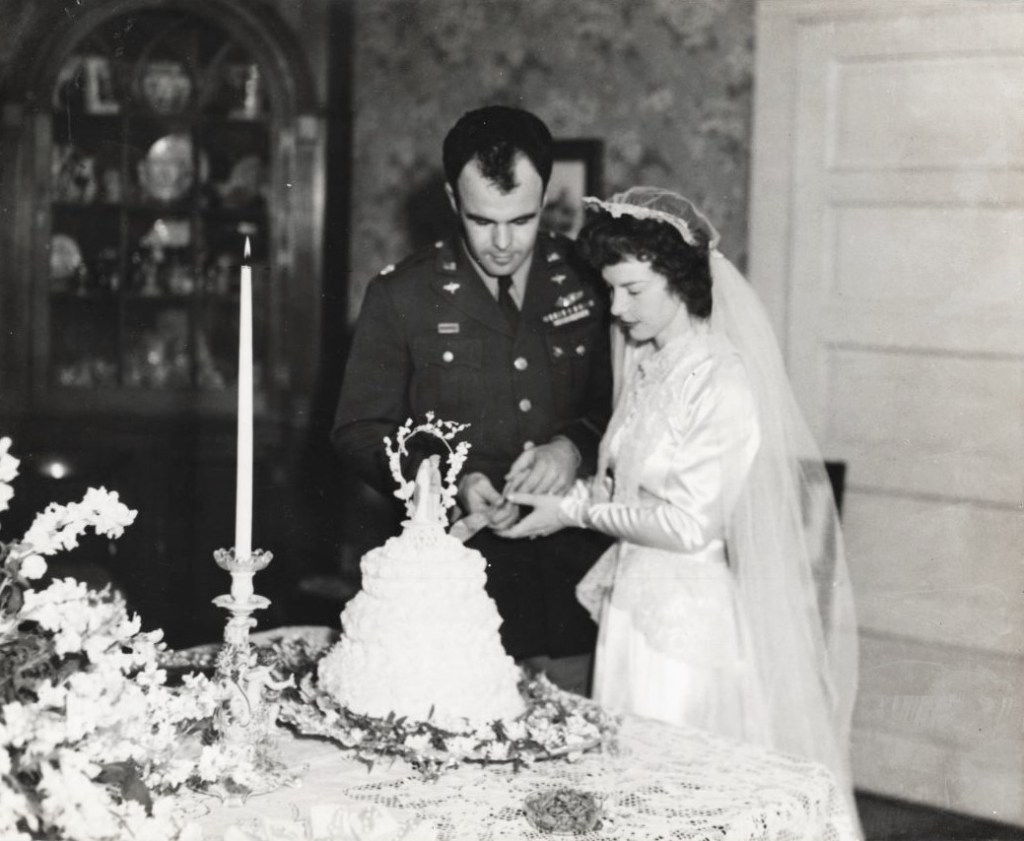
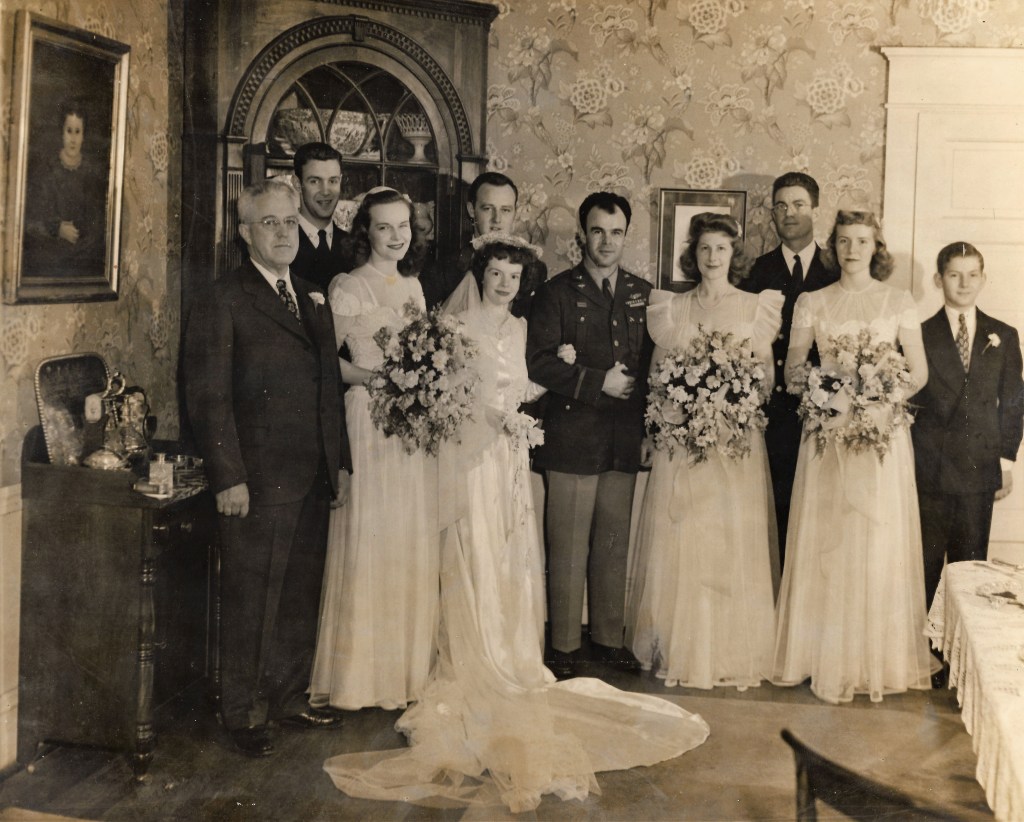
Billy and I left for Miami Beach, where he was assigned on Temporary Duty awaiting his next assignment. We spent our first night at the famed Carolina Inn in Pinehurst (it being early evening when we left Chapel Hill) and the next night at Sea Island, Georgia. We spent a week or 10 days in Miami Beach, luxuriating at a new hotel teeming with servicemen and wives, and then received Billy’s assignment to Orlando, Florida, where we stayed at the Jefferson Court Hotel. Six weeks later we were off to Victoria, Texas, not far from the Mexican border, site of Aloe Army Air Field. While in Orlando came news of President Roosevelt’s death on April 15.
Billy had planned to return to his squadron in CBI. We had no premonition that the war would soon be over. The officer personnel at Aloe were of dubious ability. Randy and Barbara Owen provided the only compatible companionship. We were housed briefly in a motel; then in a rather nice apartment. I betook myself to Red Cross offices to volunteer my services. In July we were sent to Hot Springs, Arkansas, Billy having had a cyst on his tongue diagnosed as being cancerous ‑‑ a false diagnosis, as it turned out. Back we went to Victoria, and when news of war’s end flashed over the world in August, Billy pulled strings to leave the Air Force rather than return to India. He had no interest in remaining in the service after the war.
We returned to Wilmington in November, 1945, staying with my in‑laws while Billy made plans to go to Chapel Hill for courses in Business Law for spring semester. After Christmas in Wilmington, we left for Chapel Hill and rented a little house on North Street where we lived from January to June, 1946.
Our son, Billy’s namesake, was born early in the morning of February 1, 1946 at Duke Hospital ‑‑ a month ahead of schedule, and a tiny 4 lbs. 10 oz. We were overjoyed and so proud and happy. Since we both felt we were “old” when we married (I 25, Billy 26) we had been eager to start a family at once. Yes, we were proud parents, but I have grieved through the years over having been a very poor mother to my first‑born. Due to his low birth weight, he remained in the incubator in the hospital for his first few weeks of life. Billy was very good about helping with midnight feedings when at last we brought him home. My parents were thrilled and excited over having their first grandchild so near at hand. He was a beautiful little fellow with a head full of curly blond hair and blue eyes. Those first months he had plenty of loving attention. It was later, when we moved to Wilmington in June, that my unsatisfactory mothering began ‑‑ this consisting largely of not wanting to spoil him, and often letting him “cry it out” instead of consoling or playing with him. Sometimes during that fall and winter of ’46 1 would put him in his playpen in the yard. He would soon become bored and begin a mournful little whine, poor baby. It was not until his sister Mary was born in November, ’47 that I felt he needed loving attention ‑‑ to prevent any sibling rivalry or jealousy.
While in Chapel Hill I had attended classes with Billy as an observer, taking notes on the business law lectures. Billy joked about having a personal secretary in class.
Wilmington, when it became my home in the summer of 1946, deserved its name of “The Sleeping City by the Sea.” Isolated by its location from any so‑called metropolitan area (if North Carolina could be said to have a “metropolitan area” in those days), its insularity gave it a provincial flavor. It had lost its 19th century supremacy as a port, although World War II had given it a considerable injection in shipbuilding; and nearby World War II Camp Davis had enlivened its 1941‑1945 activities. But by 1946 it had, for the most part, resumed its “Sleeping City” nomenclature. It did have much charm and character: most of its unique 19th century architecture remained in the downtown area. Cultural life was very limited, the Community Concert Association being the only source of classical music programs; nothing on radio; a struggling Thalian Association provided the sole outlet for community theatre. Social life among the “Old Wilmington” families absorbed their chief interests. Social bridge parties and cocktail parties kept the elite entertained and satisfied, with conversation almost universally limited to gossip ‑‑ very tedious and boring to an “outsider” such as I! I realized, after about a year in Wilmington, that I had never lived in an area where there was no university, and little access to cultural and intellectual stimulation. How thrilled I was when Wilmington College (now UNC‑W) became a reality within a few years!
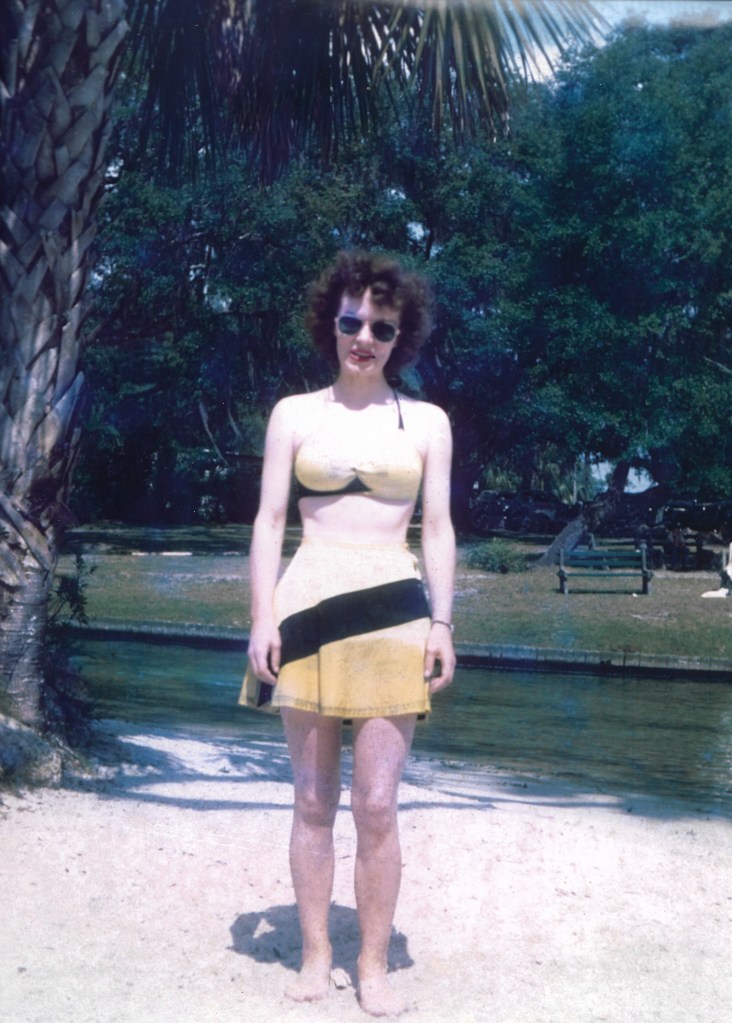
Married life had obliterated my personal career ambitions. Although not content to consider myself solely a homemaker, I had no plans for a paying job outside the home. Eager to be a partner in every respect, I wanted to be a helpmate in whatever career my husband pursued. It did not take me long to discover that Billy did not share this particular view of marriage; nor did his occupation in those first years permit any participation on my part. For these reasons I quickly and eagerly became involved in volunteer activities.
Mrs. Herbert Bluethenthal, a delightful, energetic, intelligent, civic‑minded lady, a friend of my mother‑in‑law’s, was introduced to me not long after I arrived in Wilmington as a new bride, and recruited me as a Board member for the Child Guidance Clinic, a new Social Service Agency she was organizing, pre‑cursor to the Family Service Society and Mental Health Association. I also became involved with the Girl Scout Council, then headquartered in Wilmington, and was active on that Board of Directors for several years. These groups led to my membership on the Community Council, an “umbrella” agency whose function it was to coordinate all social and community service organizations. I served as President for a year in the ’50’s.
Billy had given me a spinet piano for our first anniversary and I began taking piano lessons from William G. Robertson, organist and choir director at St. James Church. He was a dear man, a native of Scotland, but he did not take my potential as a concert pianist very seriously! The lessons were fun ‑‑ about 25 minutes of conversation and five minutes of piano playing! I stopped after about three years and three children. It was Mr. Robertson who recruited me for St. James choir, which I enjoyed for some 37 years ‑‑ through four directors, and being “promoted” from “youngest choir member” to “almost oldest”.
It was also about 1948 when I was invited to join the Social Service League, a group of young ladies who undertook various welfare projects and who were endeavoring to become the Junior League of Wilmington, which they achieved in the early 1950’s. I was very active in the League, serving as secretary, treasurer, news sheet chairman and president, along with participation in the numerous projects of the League. I particularly enjoyed the Childrens’ Theatre, directed by my beloved friend Billie McEachern, and at that time, during the 1950’s and early ’60’s, trouped to all primary schools in the county. I was in several of the plays.
Our son Billy and daughter Mary were five and three years old when Bobby was born on March 11, 1951. Meanwhile we had moved from the garage apartment behind the Broadfoot home on Forest Hills Drive into a home which had been designed by famed architect Douglas Ellington (a cousin of my mother‑in‑law’s) according to our specifications. I loved the house, located on Wayne Drive, just around the corner from Forest Hills Drive; and enjoyed it from the time we moved in in December, 1949 until we moved to Wrightsville Beach 37 years later. It was a joy to have Bobby and his family succeed us as residents.
During the year 1950 ‑ 1951, we had the good fortune of having with us a Displaced Persons couple, Vera and Aleksejs Pankratovs, whom we secured through Church World Service. Vera was a native of Latvia and Aleksejs of Russia. They had been through the horrors of World War II, and had been moved into a refugee camp after Stalin overran Latvia. They had watched helplessly as Russian troops marched off their teen‑age son at gunpoint. They never saw him again.
They were a dear couple. Vera was intelligent and so eager to please and to learn. They were ecstatic over the upstairs room and bath that became their living quarters, and so grateful for food and clothing and the very small monthly wages we paid them. Vera adored baby Mary and Alexey became son Billy’s buddy, teaching him Russian words and initiating him into the mysteries of electronics. Alexey struggled with English and never picked up more than a few words and phrases. Vera, on the other hand, learned quickly ‑‑ especially considering the fact that I was a very poor teacher!
Vera and Alexey were with us only for their one‑year contract commitment. They had friends in Milwaukee; and Alexey suffered in Wilmington’s summer heat, so we said a regretful good‑bye to them in April, 1951, a month after Bobby was born.
Back I was, now with three small children, a big house, volunteer commitments, facing another round of sorry household help. It was not until after Frances was born in November, 1952 that I was lucky enough to find Violet Cheek Humphrey, a tall, handsome black lady, devoutly religious and also a good cook. Violet was with me for about 8 years, by which time, with all four children school age, I could manage quite nicely with part‑time help.
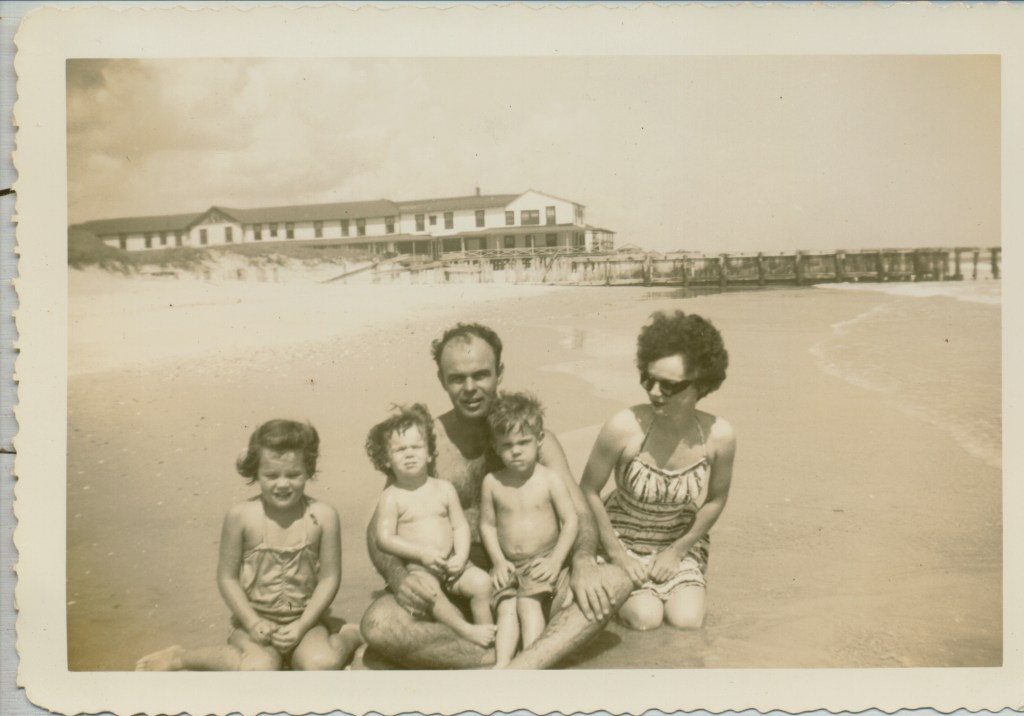
I have been blessed beyond words with my four wonderful children, but the young years were not easy! Little Billy and I had personality conflicts and, when he was two years old, developed eating problems. He also was not developing properly in growth pattern. Our beloved pediatrician, Dr. Buren Sidbury, said he “had to eat”. Those horrible “forced” feedings went on for a year. I would stuff food in his mouth and after the last bite he would throw up everything. No wonder he developed tantrums by the time he was 5. Behavior improved by the time he went to school; and it may be, too, that the attention from Alexey helped.
Mary was a good, placid baby. She was never a “cuddler” – even as a tiny baby. Being aware of possible sibling rivalry, I tried to pay more attention to Billy III after Mary’s arrival on November 30, 1947. However, as noted above, my attempts were too late. Meanwhile, at that time physical problems that had plagued me for several years (severe abdominal cramps, often incapacitating me) became increasingly acute. The doctor felt they might be psychosomatic, and recommended my going to a hospital in Philadelphia. Leaving my two little children under the supervision of my husband and in‑laws, I spent two months in Philadelphia in February and March, 1948 ‑‑ a most interesting experience both in patient contacts I made and a deeper understanding of how emotional problems can contribute to one’s physical ailments. Dr. Margaret DeRonde was my doctor, and she patiently prodded me to divulge my adolescent years. Mother and I had mended our personality conflicts by that time, and I was disturbed and somewhat resentful to have any of her deficiencies aired. I had at last become aware of Mother’s tremendous struggles during my teen‑age years. Actually, my psychosomatic illness, as it turned out, related to my guilt over my Kansas City pilot’s death, and marrying Billy within a year after that. A kind but domineering mother‑in‑law might also have been a contributing factor. Early on I had discovered that Lizzie did not always mean what she said ‑‑ although she probably thought she meant what she said ‑‑ at least at the moment she said it. Many instances of this occurred in the first years of my marriage, causing me considerable hurt, since I was often over‑sensitive, particularly since her criticisms were usually delivered as subtle jabs rather than a loving attempt to correct behavior or attitudes of which she did not approve.
These remarks about my Mother‑in‑law convey a wrong impression about our relationship. As we came to know one another, we had a wonderful, delightful, warm friendship up until the last 18 months of her life, when she, tragically, became bedridden and would have nothing to do with me. This was somewhat her attitude with almost all of her friends ‑‑ almost everyone except her two sons, Billy and Bryan. (Tragically, son Winston had predeceased her by several years).
Reverting to those busy, busy years when the children were young: Mary had urinary problems and we took her to Duke Hospital for a minor operation on the urethra when she was five. We became concerned about Bobby when his speech patterns were not developing properly. Actually, he was a “miracle baby”, for he did not breathe for almost two hours after he was born. He was almost four years old by the time we discovered, through a teacher, Peggy Moore, at St. James kindergarten, that he was severely hard‑of‑hearing ‑‑ NOT retarded, as we had feared. I sent for materials from the Tracey Clinic in California and began working on his speech, later taking him to a speech therapist for tutoring. He was an adorable, appealing, active little boy, but quite a handful! He loved to run away and “explore” ‑‑ rather typical of hard‑of‑hearing children, I learned. And certainly he got those runaway genes from his Mother! To this day we love to regale him with some of his childhood adventures ‑‑ amusing now but not at the time.
Frances was our “surprise” baby ‑‑ and a happy surprise indeed. We had thought our family was complete with our three very active boys and girl. Frances was a joy from the very beginning: the only baby I could cuddle. (Both boys, being underweight at birth, had to remain in the hospital for a few weeks after birth, and Mary was not a cuddler.) Frances’ physical problem occurred when she fell out of the car, aged 2½. We were fortunate: After a very trauma‑filled two-day stay in the hospital, it happened that the “only” injury was to one of her eyes, resulting in a “wandering eye” and many trips to McPherson’s Hospital in Durham.
I have not mentioned Billy’s work. He was employed for a year or two at Hyman Supply Company; then in 1947 began his own business, owning and managing commercial property in Wilmington, Raleigh and Charlotte: Building Management, Inc. This business afforded us a number of opportunities for trips around the U.S., on many of which I was privileged to be included: meetings in New Orleans, Savannah, Los Angeles, Seattle, Chicago, Minneapolis‑St. Paul, Houston, San Francisco.
Billy was also the entrepreneur who established the first bowling center in Wilmington in the 1950’s. He recruited friends Pete Fensel and Red Echols as business partners. In the late ’50’s he worked hard to bring to the area the second television station, WWAY. Through the years he was very active in the Jaycees, the Azalea Festival (he was “celebrity scout” for years and president for a year), the Chamber of Commerce, and the N.C. P.T.A.
In 1957 I was able to fulfill a long‑time yearning: my first trip abroad. With an inheritance of about $700 from my grandmother, and with my New York and Colorado friend Louise Rockafellow Crow in residence in Lisbon, with all four children in school and good household help, it was an opportune time. My father’s illness in January, 1957 was diagnosed as acute leukemia, and I would have cancelled my plans except for the urging of my family to proceed. They felt it would be worse for Daddy to know I gave up my “trip‑of‑a‑lifetime” and stay home, since I could be of no help to the family in Chapel Hill from the three‑hour distance from Wilmington. I had worked on plans for the trip for many months, which, of course, Daddy knew. Details of the journey are recorded in my daily log of the trip. My first stop was Lisbon, with Lou and husband Howard as gracious hosts in their home in Casoais; then Madrid, with Lou accompanying me there. I went on to Rome, Naples, Florence, Venice, Lucerne, Baden‑Baden, Heidelberg and Paris ‑‑ a fabulous five weeks from April to mid‑May.
I hurried to Chapel Hill upon my return to see Daddy, by that time at Duke Hospital. He died there just a few days later. I was profoundly grateful to have returned before his death, and grateful that sister Johnsie and her family were living in Chapel Hill at that time.
Mother took me on another trip to Europe in the fall of 1959: Lisbon again (Elizabeth Newkirk was living there; the Crows had left), Madrid, Rome, Vienna, Greece, Paris and London. This trip followed a busy year as President of the Junior League of Wilmington.
For two years in the early 1960’s I indulged myself by auditing courses at Wilmington College (UNC‑W) in Art History, Music History and Music Theory, and Philosophy. I was one of the founders of the Friends of Wilmington College and later President; also a founder of the College ‑ Community Orchestra (now the Wilmington Symphony Orchestra); and also served for a number of years on the Board of the Community Concert Association (now the Wilmington Concert Association).
In the 1960 presidential campaign I ran the headquarters for Democrats for Nixon‑Lodge, being a staunch Nixon supporter and fearful of Kennedy’s political leanings and charisma. Mother and I had battles over that campaign! She was as passionate a supporter of Kennedy as I was of Nixon.
Another fun “indulgence” in the early ’60’s included my tenure on the Board of the Thalian Association, Wilmington’s famed amateur theatre group. The Board consisted of a most interesting, attractive intelligent and creative group of people who could squabble over the most amazing bits of minutiae. Board membership led to my taking one of the leads in a play, “Strange Bedfellows”, a combined effort of the Thalian Association and Wilmington College, directed by the College’s talented Doug Swink. I received an award for “Best Supporting Actress” that year! What a surprise! One very minor “ambition” fulfilled. (I had, some years earlier, in addition to Junior League Childrens’ Theatre, participated in a PTA performance at Forest Hills School.) The Thalian Association ‑ Wilmington College experience also led to friendships with some of the young college students.
Later in the decade of the ’60’s I joined a small band of ladies who were organizing a local chapter of the League of Women Voters. It was a stimulating and diverse group: several attractive Jewish girls: Barbara Schwartz, Shirley Raphael, Emma Retchin, Janice Kingoff; Beebe Saffo, a girl of Greek descent who was the chief instigator; Bea Clemmons and a few others. The group disbanded after a few years and has been re‑activated. I was president for a year and helped write a booklet entitled “Know New Hanover County”, for use in the public schools.
In the late ’60’s I enrolled in a correspondence course with Famous Writers School in Connecticut. My only attempt at publication was a piece on Dr. Sidbury: “My Most Unforgettable Character”, which of course was rejected by Readers Digest. I also wrote a first chapter and outline of succeeding chapters for a book on Dr. Sidbury. This has just recently surfaced and seems to be much appreciated by his three children ‑‑ all good friends of mine. I loved doing the research on Dr. Sidbury, interviewing some of his long‑time nurses and asking questions of his children. He died in 1967, active to the last day of an enormously productive and successful life.
I wrote a few articles for the bulletin of the Lower Cape Fear Historical Society, of which I was an early member. Winston, Billy’s brother, was one of the founders.
Some time early in the 1960’s my dear friends Maxine and Ben Swalin, the latter conductor of the North Carolina Symphony, urged me to form a Wilmington Chapter of the Symphony. Dedicated and fine musicians but struggling administrators, they hoped to increase interest and support for the orchestra through a local group. I helped organize a local chapter and served as president for a year. Later I was on the State Board of the Symphony for about two years.
Ever yearning for travel and adventure, with Billy’s National Association of Building Owners and Managers scheduled for a convention in San Francisco the summer of 1962 (or ’63?), I began enthusiastically promoting a family camping trip for that summer. We talked and planned for a year, purchasing a tent‑camper that spring and practicing raising and folding the tent.
******************************************************************
Here it is, the fall of 1992 ‑‑ another year since I’ve scribbled on this narrative of personal reminiscences! Such a long life. I’ve outlived both of my grandmothers. Will I compete with my dear Mother and Aunt Johnsie for longevity? They both lived life to the hilt in their 70’s. I complain constantly these days about the need for so much sleep, and decreasing energy. Ugh!
******************************************************************
Back to the camping trip, 30 years ago. Planning paid off well. The children, involved in the excitement of the grand trip for months, were at the right ages: Billy 16, Mary 14, Bobby 11, Frances 9. We headed southwest for Atlanta, then to a campground near Memphis; next a forlorn camp in eastern Kansas; heavy rains in Texas (or Oklahoma?) necessitated a stay in a motel; we visited Santa Fe, N.M., Mesa Verde National Park in Colorado; the Grand Canyon; camped in a cold plateau near Gallup, New Mexico; finally reached Los Angeles and Disney Land; popped in unexpectedly on some of Billy’s Azalea Festival friends who lived in an elegant huge home in Bel Air. They insisted on our staying overnight, including night-clubbing and dinner. From Los Angeles we wound up picturesque coastal route U. S. 1 to San Francisco and convention headquarters at the swank Mark Hopkins Hotel. Billy loves to recount our being assigned to the finest suite in the hotel, despite his request for the least expensive accommodations. I still blush over recollections of the children dragging laundry bags across the spacious hotel lobby. Our time in San Francisco deserves at least a long short story in itself.
In Oregon, after convention, we stayed at Jesse L. Honeyman Park on the coast, probably the most civilized ‑‑ except for Grand Canyon ‑- of the campgrounds that summer of ’62 (’63?). Next a night at Crater Lake in a cabin almost buried beneath snow drifts ‑‑ in June!; and a visit with the Hoggards in Molalla, Oregon; then to Seattle and a stay at Olympia National Park; a ferry ride across to Victoria, B. C. ‑- a picturesque combination of Britain and American Indian lore; back through eastern Washington, across Idaho and a sliver of Montana to famed Yellowstone, where we had trouble finding a camping spot due to 4th of July crowds; on down through the Grand Tetons and the newly-opened campgrounds near Jasper, Wyoming; on to my beloved Colorado Springs; an overnight stop at Salt Lake City ‑‑ our most primitive “camp” being a spot beside a mountain stream; a stop at Dinosaur National Park ‑‑ again rather primitive camping; and finally a three‑day journey home. I think the children loved that six‑week trip as much as their hobo mother. Except for the two or three nights when foul weather sent us to motels, they enjoyed the freedom of the out‑of‑doors.
Another special pleasure in the 1960’s involved one of my favorite professors at UNC‑W, my music teacher Frank Honey. I began studying ‑- and I do mean studying, not “taking lessons” ‑‑ piano with him in 1965, a most rewarding association which continued for 8 years. Frank was an inspiring teacher and insisted on the discipline of regular, daily practice. He knew when to scold me, when to praise me, what my next level of musical endeavor should be. I had to give up lessons after 8 years when other pressures prevented necessary practice. Now I rarely touch the piano, but when I do some small residue of Frank’s good training remains.
Let’s hurry on with this ere another year goes by!
Some time in the late 60’s ‑ early ’70’s I served on the Thalian Hall Commission, originally a “seed” group organized to restore Wilmington’s landmark Thalian Hall. Although not one of the original members, I soon came on board as secretary‑treasurer, a job that went on for years, as the Commission struggled to gain recognition and raise money. The latter became a reality when Elizabeth and Tom Wright joined the Commission. (It takes money to raise money.) The grand re‑opening took place in 1976. The authentically renovated interior gave impetus to further expansion of this beautiful Hall. A new lobby and backstage extension became a reality in the late ‘80’s. Wilmington is blessed to have a vigorous and able administrator for the Hall, Tony Rivenbark; and through his energy, diplomacy and foresight Thalian Hall boasts a full‑time schedule. Quite a change from the 1940’s when I arrived in Wilmington and the Hall was in such a state of disrepair it was in danger of being torn down.
Also during this time, for several years, I served as Publicity Chairman for the UNC‑W ‑ Community Orchestra. It has been years since I’ve had contact with the local newspaper, and I look back nostalgically on those associations which I enjoyed through my publicity work with several organizations, going way back to the era when the Star‑News was in the Murchison Building (now First Union National Bank Bldg.) at Front and Chestnut Streets.
I also served as Treasurer for the National Society of The Colonial Dames of America in The State of North Carolina in the early ’70’s. Through my mother‑in‑law’s influence, I was accepted into the North Carolina Dames in 1967, served one year as Florence Kidder Scholarship Chairman, one year as Headquarters House Furnishings Chairman, and then Treasurer for five or six years.
By 1970 our “nest” was empty: Frances entered Peace College that fall, Bobby was at Appalachian State University, Mary was married in March of that year (home wedding reception: Billy worked in the yard for three months and Billy III was married on December 31st in Tuluá, Colombia.
Margaret Fonvielle, friend and neighbor, who, in the midst of a divorce had begun the practice of law, approached me about working “with” (not “for”, she said) her. I eagerly accepted. My hours were to be limited to morning, since Margaret was not able to pay for full time office help. However, within a short time I felt the need to expand to full time. Margaret would come in about noon, as I was preparing to leave, and say, sadly, “Oh, is it already time for you to go?” Soon I was working full time, still volunteering with the Thalian Hall Commission, Symphony publicity and Colonial Dames Treasurer. Nights and weekends quickly filled; housekeeping and husband‑keeping suffered.
My five years with Margaret were a stimulating glimpse into general law practice. Margaret’s practice concentrated principally on criminal law and family disputes, with an occasional property and title search case and a few wills, guardian ad litem and accident cases. I loved the learning process; but after four years I had reached a stalemate. Margaret was still not able to increase my salary to a full time wage which I needed by that time; and I felt stymied by my lack of status with no degrees either in law or as a legal secretary, despite the fact that I functioned as the latter. I resigned my job with Margaret the fall of 1975, after 5 years, following a rather miserable summer. Margaret was out of the office much of the time, in charge of re‑organizing the Timme‑Hilton (now the Wilmington Hilton) which was in Chapter 11 bankruptcy. The office air conditioning was in disrepair much of that summer. Billy III’s wife Rocío and our two little granddaughters were visiting us at the beach cottage for three months. Margaret and I were both under a strain, and it was time to part. It was also time to stay home and clean up! A colony of rats had taken up residence at 541 Wayne Drive. What a mess! I cleaned closets and attic, discarding a vast accumulation of broken and useless toys and tools; sorting out boxes of a lifetime of correspondence and throwing out all except family correspondence, sending most World War II correspondence to archives at East Carolina University, which was developing a collection.
One afternoon in 1978 Jean Graham, Rosalie Carr and Laird James paid me a visit, the object of which was to ask me to be president of the North Carolina Colonial Dames! I was thunderstruck. Lillian Boney had been a dedicated and wonderful president for five years and was eager to relinquish the responsibility. “Lillian is tired,” said Rosalie. When I questioned these friends regarding other members whom I considered better qualified for the office, they assured me none would accept. It seemed I was the last hope! Nevertheless I was flattered. After consulting Billy and my mother‑in‑law, and giving the matter real soul‑searching, I declined for the coming year, but agreed to be vice‑president and then run for president the following year. I had been off the Board of Managers since resigning as Treasurer and felt much too uninformed to step in as president that year.
My five years as President of the North Carolina Colonial Dames were undoubtedly the most rewarding of my volunteer undertakings. During those years I often recalled Jean Graham’s comment when she, Rosalie and Laird recruited me: “Colonial Dames are such lovely ladies.” Indeed they are. My contacts with members throughout the State bore out Jean’s observation. My life‑long feelings of inferiority and inadequacy were constantly submerged by the kindnesses, graciousness and ‑‑ yes ‑‑ praise of so many dear ladies throughout the State. This is not to say the job did not have the frustrations and disagreeable moments which are a part of any job, but overall it was a thoroughly happy, rewarding experience. Details are contained in my annual reports for those five years.
Apparently no cure exists for one who has an insatiable appetite for travel. Surely there has been no cure for mine. Could it be in the genes, and perhaps fuelled by my early childhood reading of Lucy Fitch Perkins’ Twin books, taking me in imagination to foreign lands and peoples? At any rate, I have always yearned to see the world, and have been fortunate enough to see some of it, from my first trip abroad in 1957 and a trip two years later with Mother in the fall of 1959, covering some of the same area. The latter journey provided special insights into the glories of shopping in Lisbon, Madrid, Florence, Venice, Vienna, Paris, Athens and London, for Mother, of course, with her keen eye for beauty and bargains, loved shopping as much as I loved traveling. We had a grand time.
Billy and I enjoyed a cruise to Bermuda in connection with one of his businesses some time during the ’50’s. Dear friend Atha Josey Jones helped subsidize me on a Caribbean cruise in the early ’70’s. I signed up with Atha and husband John for a Scandinavian trip in the late ’70’s. Johnsie joined me on a Randolph‑Macon Woman’s College Alpine tour (southern Germany, including Munich and Oberammergau, the year of the 250th celebration of the Passion Play, Salzburg, Austria, northern Italy and Switzerland) in 1979; I signed up for a North Carolina Museum of Art tour to the U. S. S. R. the winter of 1985, and another Museum tour to South America (Peru, Argentina, Brazil) in January 1989. During this time I had also planned a two‑week trip to England in September ’89. It did not sell to full capacity (30 people) to guarantee a free trip for both Billy and me, but we ended up with a small (15) congenial group and a free trip for one of us. Debby Williams and I had a delightful self‑planned and self‑guided tour of Quebec and the Gaspe Peninsula in September 1987. This past February ‑ March I made a fascinating 18‑day journey to the Holy Land and Egypt with Maxine Snell, my roommate on the South American trip. I kept journals on all these trips ‑‑ mostly for my own subsequent enjoyment and recollections. I was pleased when grandson William Bryan Ivie invited me to talk about Russia and England to his 6th grade class in Eden, N.C. two years ago. I did not do very well ‑ I tried to include too much in too brief a time.
Billy and I also had two wonderful trips to Colombia, the first in 1968 when Billy III was an exchange student at the University of Antioquia in Medellín; the second, with Mother in December 1970, when Billy III married Rocío Echeverri in Tulua. Both times we were fortunate enough to include some touring around that beautiful, lush country, with its towering, snow‑capped Andean peaks and its wide green valleys.
Throughout my 47 years of married life the Church ‑‑ or should I say GOD ‑‑ has played a significant role in my life. This statement sounds superficial in a way, and I would not have it so. Is it the Church that leads one to God, or is it the inspiration of dedicated Christians in the ministry or among the lay, or one’s personal peaks of joy and valleys of misery? Perhaps all of these; or one’s own seeking for the meaning of life’s eternal mysteries, and the certain knowledge that there exists some great power that in some way controls this poor little world, this world possessed of such bounty and beauty in nature, peopled with so many who seek to follow Christ’s loving, peace‑solving mandates, and with so many others who‑seek only selfaggrandizement through power and materialism.
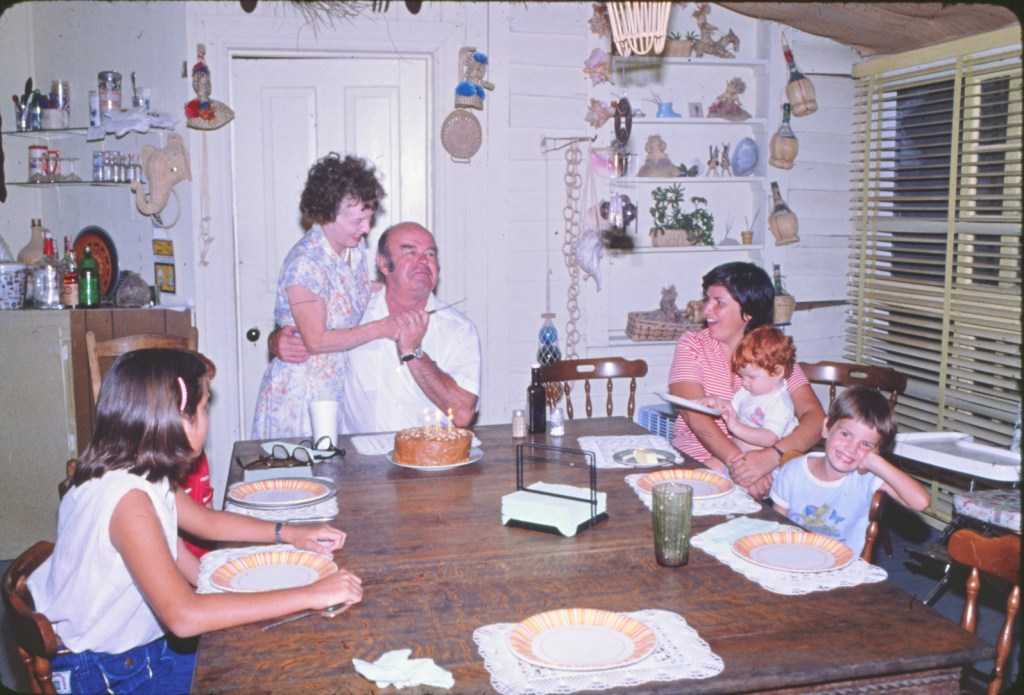
Whatever, however, my religious instruction, contacts and associations have been, I have often wondered, in the “dark valley” periods of my life, how anyone could survive without a devout belief in God, with Christ as our savior and model; and the Holy Spirit one sees in good people everywhere.
I would not, could not, dare not judge Church‑goers versus non‑ Church‑goers as to how they, as individuals, live good, caring lives of righteousness and good deeds. I see both within my own family ‑‑ and they are all good people; they call themselves Christians and, to the best of my knowledge, believe in and pray to God. I can judge only myself, and to that end my Church associations and Churchgoing have given me extra strength, a yearning love for brotherhood among all peoples, forgiveness for hurts from loved ones, acceptance of inevitabilities. I still struggle for acceptance of my own inadequacies and failures. I think it was Bill Dols, our rector at St. James in the 1960’s, who said to me at a private conference years ago: “You certainly are hard on yourself.” It seems I want to be Christ, to “play God”! Surely the latter is a terrible sin.
Regarding Church involvement, I give my mother‑in‑law credit for steering this Christmas‑and‑Easter Churchgoer into regular Church attendance very early in my marriage. She came over one day when Billy III was an infant and said: “You are a family now and I want you to go to Church. I will baby sit.” That did it. Billy and I became regulars. I served on the Board of the Churchwomen for several years in the ’50’s; taught Sunday School with Perida Roland for a couple of years, served on the Altar Guild for a year; as program chairman of the Churchwomen, and on the Christian Education Board while Bill Dols was rector. My happiest Church years were those when I sang in the choir. In the late ’70’s I worked with dear friend Billie McEachern on her “History of St. James.” She even gave me a credit line ‑‑ undeserved, because my work with her was spasmodic since at that time I was becoming heavily involved with the Colonial Dames.
In 1985 I committed to a four‑year Education for Ministry course, the first year under mentorship of choir director Charlsie Harris, the last three years under Church of the Servant rector Joseph Cooper. I loved the fellowship of this small group of bright, dedicated young people; the Bible study and the interrelated study of human problems in every day life, as reflected in personal narrations of the members.
While I do care deeply about people and their tragedies. I have difficulty with the more demonstrative aspects of religion, as exemplified in what is termed “the charismatic movement.” I hope and believe this is due to innate shyness; or perhaps, again, to my feelings of inadequacy.
When I was a young teenager at Hannah More Academy, I considered going into a convent! Yes, I really did. I’ve always had tremendous admiration for missionaries, and wished I had the ability and fortitude to be one. God knew what he was doing when He made such a wish impossible. My personality and physical make‑up would make inhabitants of darkest Africa or coldest Alaska unlikely converts by me. I lack wisdom and articulateness to deal with the underprivileged. All I seem able to do is to grieve for and pray for them.
****************************************************************
In the 1950’s we were fortunate to be ab1e to escape some of the humid, steaming heat of the coast by spending several weeks of the summer in Black Mountain. My mother‑in‑law had constructed, from two mountain cabins, a small bungalow on the Broadfoot property. When we no longer had use of the Black Mountain refuge, Billy suggested that I look for something at Brevard. Aunt Johnsie had built a little house on Brevard Music Center property in the early ’60’s. When I visited her for a weekend in the summer of ’66 and advised her of Billy’s suggestion, she called a real estate friend whose father had an 11‑acre piece of hillside land about 10 miles from Brevard. I felt we could not afford it, but Billy’s superior judgment prevailed ‑especially after he saw and walked over the property. It had all his prerequisites: a lovely view, a perfect building site, several springs and streams, and a fine stand of pines, dogwood, oak trees, maple trees and others. We bought it, hired a mountain carpenter to build our little house; and for 25 years it has been my dream house, my refuge, my “soul‑restorer.” Many friends have visited and shared it with me ‑‑ music lovers in the summer when we attend Brevard Music Center concerts for seven weeks; bridge and “leaf” friends in the fall; and an escape for Billy and me at odd times during the year. The children and their families, too, have used it for visits and vacations.
Finally, and most of all, my beloved children. How very, very fortunate I have been! Considering the fact that in many ways I was a poor Mother, especially to our first‑born, I feel blessed beyond measure to have four good, honorable, hard‑working children. When they were small I regarded it essential to do my volunteer work while they were in school, and to be at home when they were home. In that respect I was at least a responsible mother! When I gave up professional career plans for marriage, my children and husband have always come first; and it is my strong belief that women who choose to have a family must make such a commitment, whether they are in the paid work force or in volunteer work. I know this poses a terrible dilemma for young mothers who must help supplement family income, or who are single and must work to support a child or children. This is one of the greatest tragedies of our society today.
I am proud of my children and of their success as good citizens. The pain and grief I suffer for their problems surpasses any suffering for my own. The twelve wonderful grandchildren (three in each family)have given Billy and me unbounded joy, pleasure and pride ‑‑ and in some few instances considerable grief, as we see their parents confronted with the horrendous problems of teen‑age years.
***************************************************************
1992 ‑‑
A heavy, heavy blow struck us when Frances came to me in the spring of ’87 to announce that her 8‑year marriage to Whit Blanchard must come to an end. After the divorce became final, Frances married the Rev. Dr. Richard W. Warner, Jr. , rector of the Episcopal Church in Shallotte, in October, 1989.
*************************************************************
Now it is November, 1996 ‑‑ and time to wind down these scrambled memoirs.
I’m frustrated these recent years, since moving to Wrightsville Beach ten years ago, over not being more active in volunteer work. I moved my Church membership to Shallotte several years ago to support the new rector (our dear son‑in‑law) at St. James the Fisherman, but the hour’s drive to and from Shallotte keeps me from being active in Church affairs.
My passion for reading led me to volunteer in the literacy program for a couple of years. The young school children (high school age) I worked with were diverse and interesting ‑‑ but again, traveling from the beach to far‑flung schools, with occasional cancellations after driving there, made this effort somewhat frustrating. I had a wonderful time working with Lillian Boney two-three years ago, planning and preparing for the Colonial Dames Centennial (April 25-27, 1994) celebration. My present Colonial Dames job is Finance Chairman ‑- full of frustrations!
Billy and I made a fascinating journey to India last year (March ‑ April ’95) to celebrate our 50th anniversary. Our precious children had a SURPRISE 50th celebration party for us two days before we left. Billy III and his daughter Mary Elizabeth drove up from Miami. We were overwhelmed, to say the least. They had been planning for months.
Billy bought two new knees this past June 11. He has been a good patient. The past five months have been very full for his nurse, housekeeper, cook, laundress, bookkeeper, yardkeeper, etc. etc., what with many trips to hospital and rehabilitation center, with hold‑ups for road work and repairs all summer long. I did have one wonderful and saving weekend in the mountains with the Mastins in August. Georann did all the cooking ‑‑ and thanked me for allowing her to do it!! What a guest!
There is still so much I’d love to do. As my age group agrees: “Takes me twice as long to do half as much ‑‑!!” Amen, amen. To quote Mardeve Rorison, I wonder if I’ve done anything? Well, I’ve produced four wonderful children, who have given me nine wonderful grandchildren. Thanks be to God.
****************************************************************
October ‑‑ 2000
At the urging of our children, we bought a lot in a new development in Wilmington in October, 1998; supervised the construction and building of a small brick patio home, and moved April 1, 1999 ‑‑ quite a unique and unrecommended way to celebrate our 54th anniversary! The children wanted us removed from the immediacy of hurricanes (and we were happy not to be on the beach for Hurricane Floyd in 1999!) and closer to Billy’s doctors and therapists. Billy’s health was deteriorating slowly: his double knee surgery in June, 1996 did not accomplish the purpose of relieving his painful knees (which may have been due in part to the fact that he did not exercise enough); he had mini‑strokes in July and August, 1998 ‑‑ as we celebrated his 80th birthday; he broke his right arm in October, 1999.
As the new century began, he was having trouble, occasionally, with swallowing. His regular checkups with Dr. James Pence did not uncover any problems. He was losing weight ‑‑ because he was not eating enough.
We were both looking forward to attending grandson Whit,Jr.’s graduation from Avon Old Farms School in Connecticut the end of May. We spent a happy three days at HiC in mid‑May, right after a throat check‑up for Billy by Dr. Gene McMurray. When we returned from the mountains we filled an appointment Dr. McMurray had scheduled for Billy for a “cookie swallow” in the emergency area of the hospital. We were sent the next day for an endoscopy ‑ the day before we were to leave for Avon. Our world collapsed when the doctor told us Billy had terminal esophageal cancer, and his hemoglobin was so low that he had to be hospitalized immediately for blood transfusions.
My poor darling dearly‑beloved husband. He insisted that I go on to Avon ‑‑ which I did, with greatly mixed feelings ‑‑ great sorrow over leaving him in the hospital (fortunately Mary and Bobby were here) and the great joy of seeing young Whit and being with Frances and children.
Billy’s final three and a half weeks were indescribably tragic and heartbreaking ‑‑ devastating for all of us. Billy III drove up from Miami, bringing his daughter Patty with him; his other daughter, Mary Elizabeth, came from Atlanta; Mary was here for two whole weeks, Bobby and Frances were here.
Friends were so dear and kind. Hospice helped us the final few days. Radiation treatments, the first two weeks in June, were absolutely useless ‑‑ only adding to Billy’s misery by the trips to the clinic. A ghastly 3½ weeks. My darling died at 3:15 Wednesday, June 21. Mary, Frances and Bobby were with me, around their Daddy. Billy had just returned to Florida the day before, and returned for the graveside service at Oakdale at 3 p.m. on Saturday. The Rev. Ron Abrams, the new rector at St. James Church, was a wonderful help in Billy’s last days, and in arrangements for the service.
And now ‑‑ such a strange new life has begun for me. The past four months have been consumed with legal responsibilities of various kinds, and responses to the overwhelming kindnesses of many friends. Alas, I run out of energy quickly!
Billy and I had planned on a mid‑July visit to HiC with my sisters. He remarked, in his final weeks, that he had had an eerie feeling that our May trip was his last visit to HiC. And so it was. He loved the mountains as much as I.
Johnsie, Frances and I drove up for a short stay ‑‑ 1½ days at HiC ‑‑ and enjoyed a production of Brigadoon.
Mary, Frances and I drove the 850 mile trip to Ithaca the first weekend in August for my 63rd Ithaca High School reunion. What a treasure my girls are! It was a very special trip; too brief. They insisted on doing all the driving.
Now I am concluding preparations for a three‑week trip to China, for which I had signed up over a year ago. When I return I must take care of business: my new role as manager of “Mary B. Broadfoot Properties, LLC” ‑‑ to allocate a percentage of the beach property to the children; and organize my life to be useful. I pray constantly for my precious children and grandchildren, and ask God to make me grateful, useful and GOOD.
My precious children ‑‑ all under special stress: Billy coping with a tangle of legalese in finalizing a divorce from Rocío; Bobby coping with losing his two top coaches and training a new staff; Mary taking lengthy courses in library science, hoping to get out of the classroom and into a library; Frances busy with a new real estate firm, trying to send three children through college. Yes, they are ALWAYS in my prayers!
Just two months shy of their first wedding anniversary, William (30) and Lizzie (22) welcomed baby boy, William (Billy) Gillies Broadfoot, Jr. into the world on August 17, 1918 in Selma, North Carolina. By March of 1919, the family had moved to Wilmington and Broadfoot Iron Works was incorporated in March of 1919. Another son, Winston, was born on February 20, 1920. The family became socially active in the Wilmington area even hosting a fifth birthday party for Billy, which was reported by The Charlotte Observer on August 20, 1922.
William Broadfoot decided to try his luck in Atlanta, Georgia and moved the family down. On December 19, 1924 youngest son Shepard Bryan Broadfoot was born. By 1930, the family had moved back to Wilmington. 133 Forest Hills Drive became their home for the next many years. (Insert Pic of home)
Throughout childhood Billy attended Camp Carolina in Brevard, NC.
Billy attended New Hanover High School and Phillips Exeter Academy graduating in 1936. He then headed to The University of North Carolina at Chapel Hill for his college education. While at UNC-CH, Billy was on the wrestling team and lacrosse teams, he was the photography editor for The Yakety Yak, the school yearbook, and an active member of the fraternity Sigma Alpha Epsilon to name a few. He graduated from Carolina in 1941.
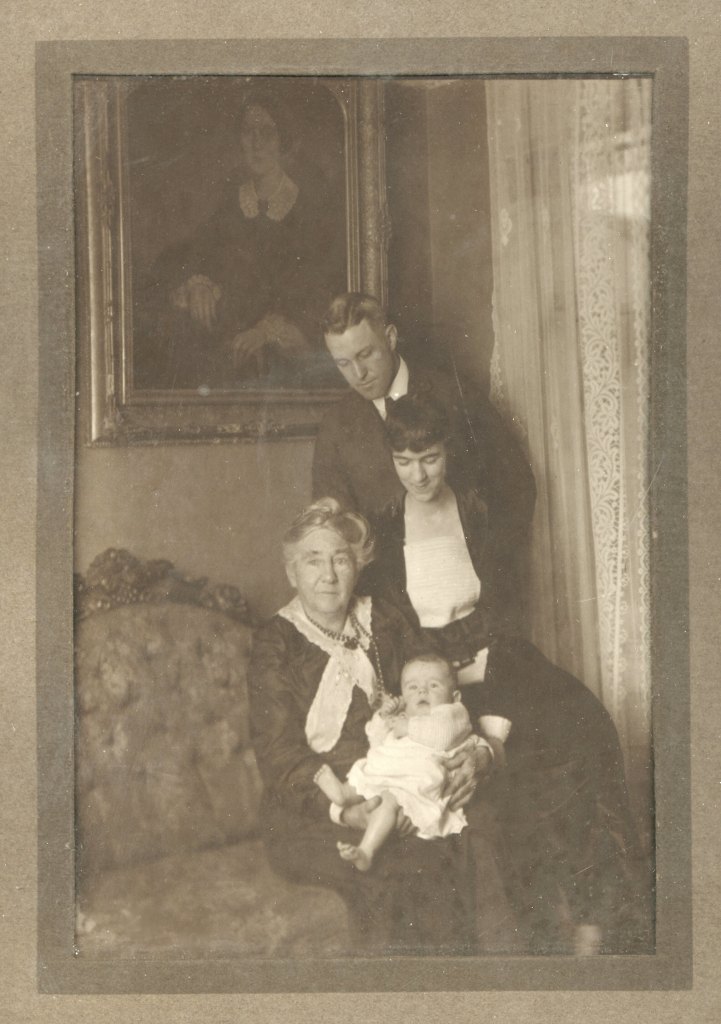
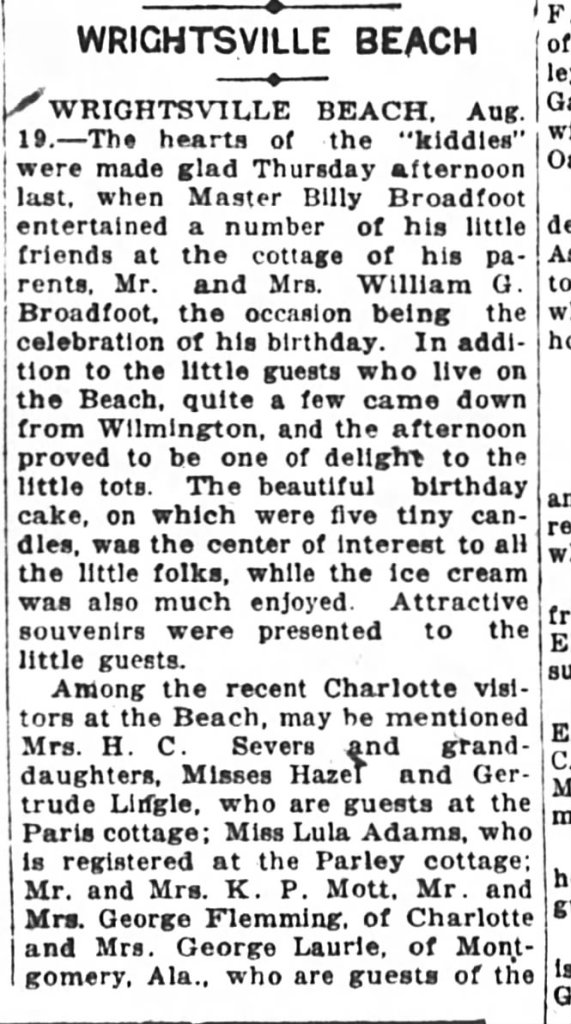
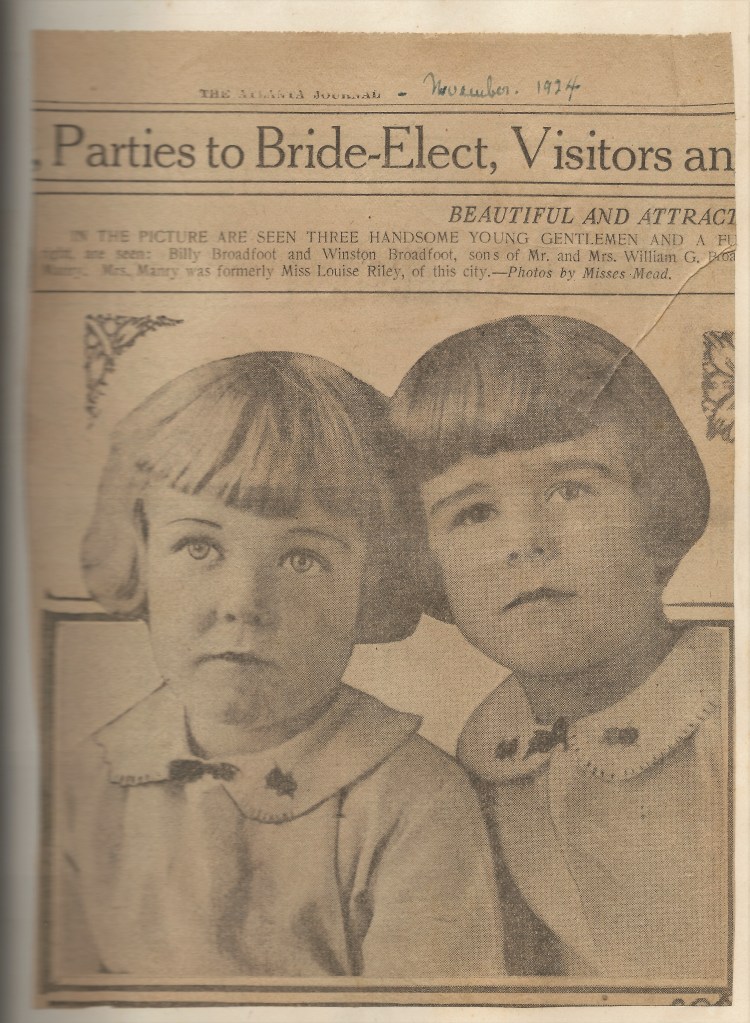
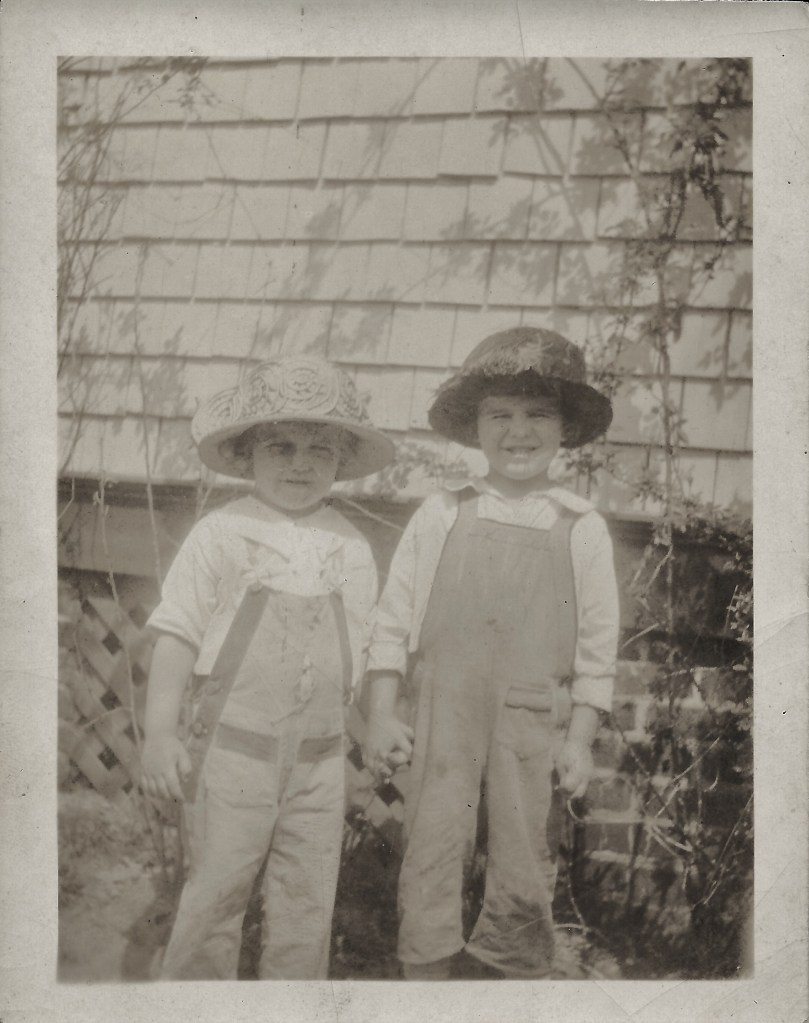
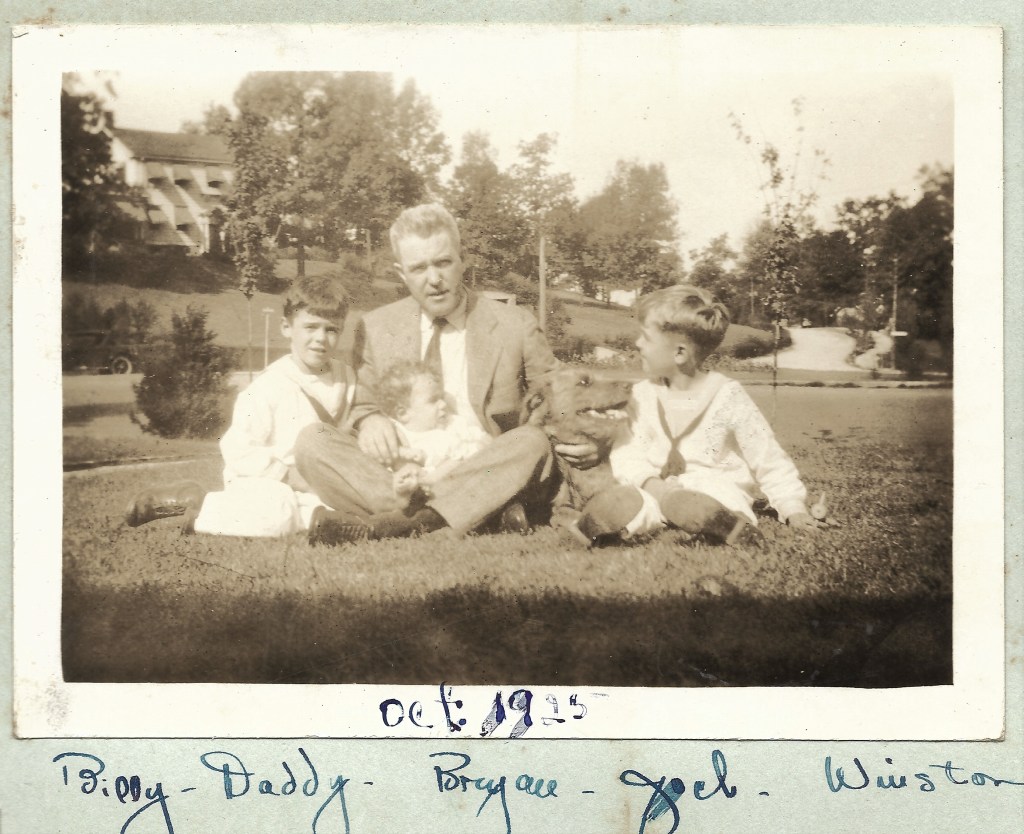
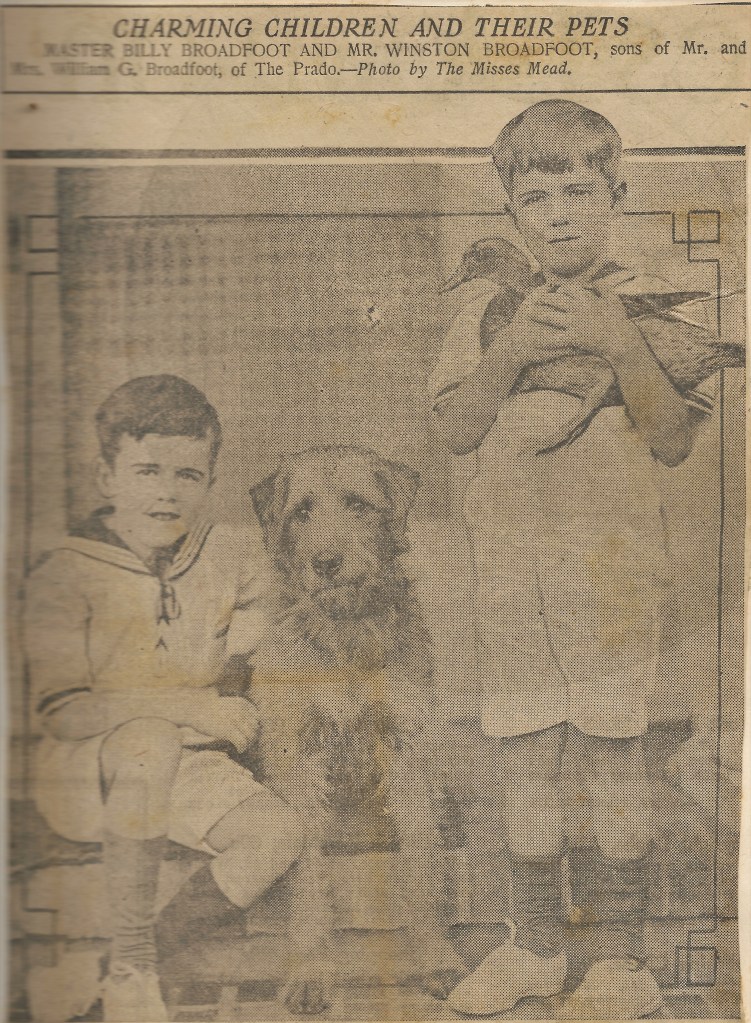
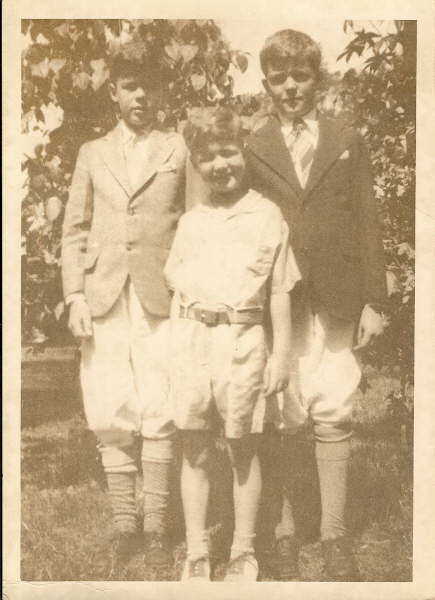
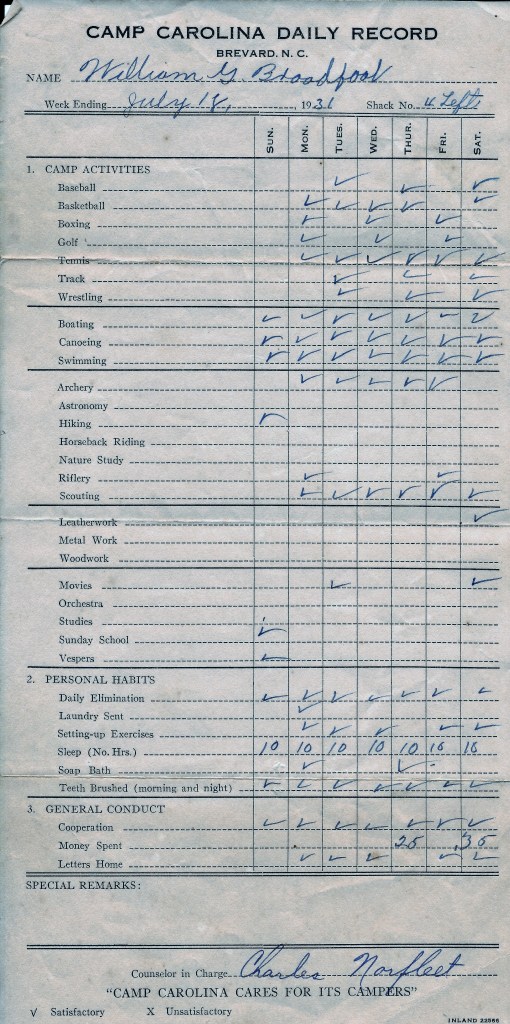
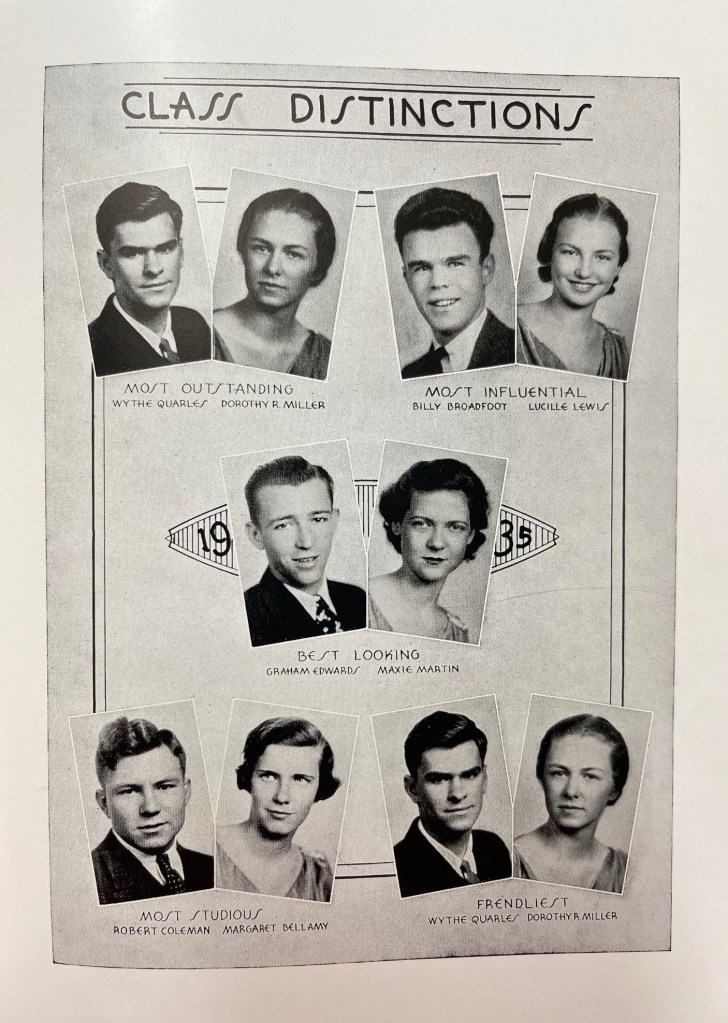
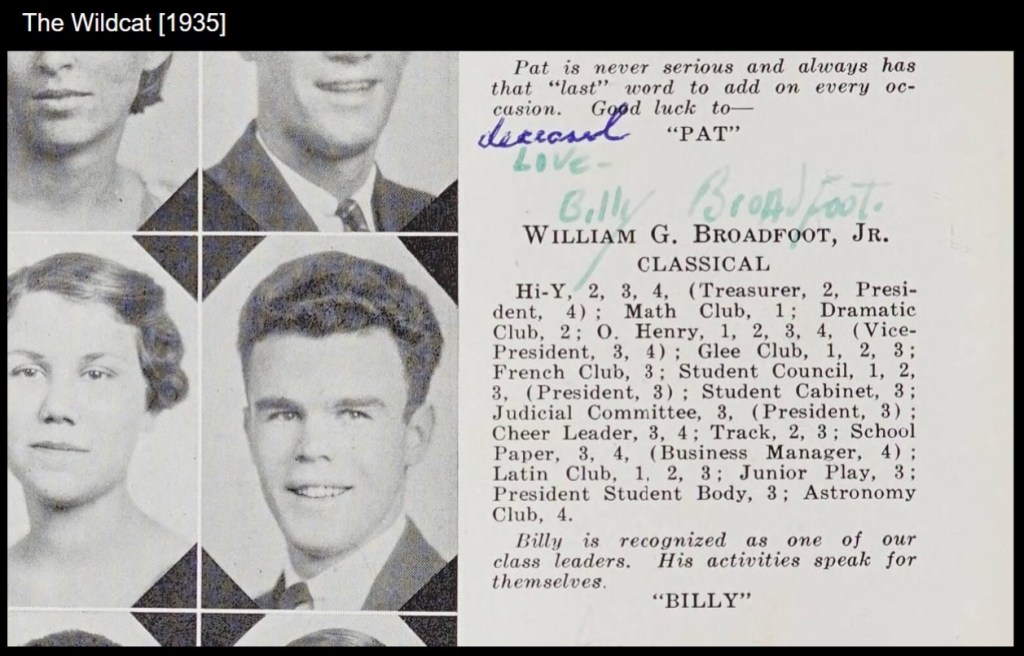


William Gillies Broadfoot enlisted in the Army on December 29, 1941, in New York City, New York, during World War II. He was 23 years old.

By January of 1942, Billy was already in formal U.S. Army Air Corps training in Dothan. Alabama. Luckily, some of his letters from this time were saved and transcribed.
Advanced Flying School
U. S. Army Air Corps
Dothan, Alabama
1/6/42
Dear Folks,
Squads right, squad left, column left, column right, to the rear march, the dress is to the right mister, one, two, three four. Attention, parade rest, ‑‑ man, you’ve never seen so much marching in all your life. And the exercises they throw at us are relics of the Spanish Inquisition. But when they get through, we’ll be in powerful fine condition.
Tomorrow night they are throwing a dance for us out here at the field. They are bringing in 200 gals from no telling where. All the boys are pretty tickled about the set‑up. I know now, Mother, how much the boys at Camp Davis must have appreciated the work you have done out there for their dances.
This getting up at 5:30 is getting pretty boring. Actually we have to get up a little before 5:30 and assemble outside at 5:30. It’s usually all I can do to stick my feet in shoes, slip on pants and shirt, stick in my shirt tail, pull on the mackinaw and get out. The last two mornings I haven’t had a button buttoned ‑‑ the mackinaw hides all that. Anyway, it’s pitch dark and they can’t see whether you have on a necktie or not.
Here the field is a lot closer to the barracks than at Maxwell and we can see the planes take off and land all day long. British boys are at the controls usually with an American flier leading the formation as instructor.
I’m having to send my camera home. The instruction book is with it so you‑all read up on it and take pictures if you want to.
Everyone’s in bed ‑‑ guess I’d better close.
Love,
Billy
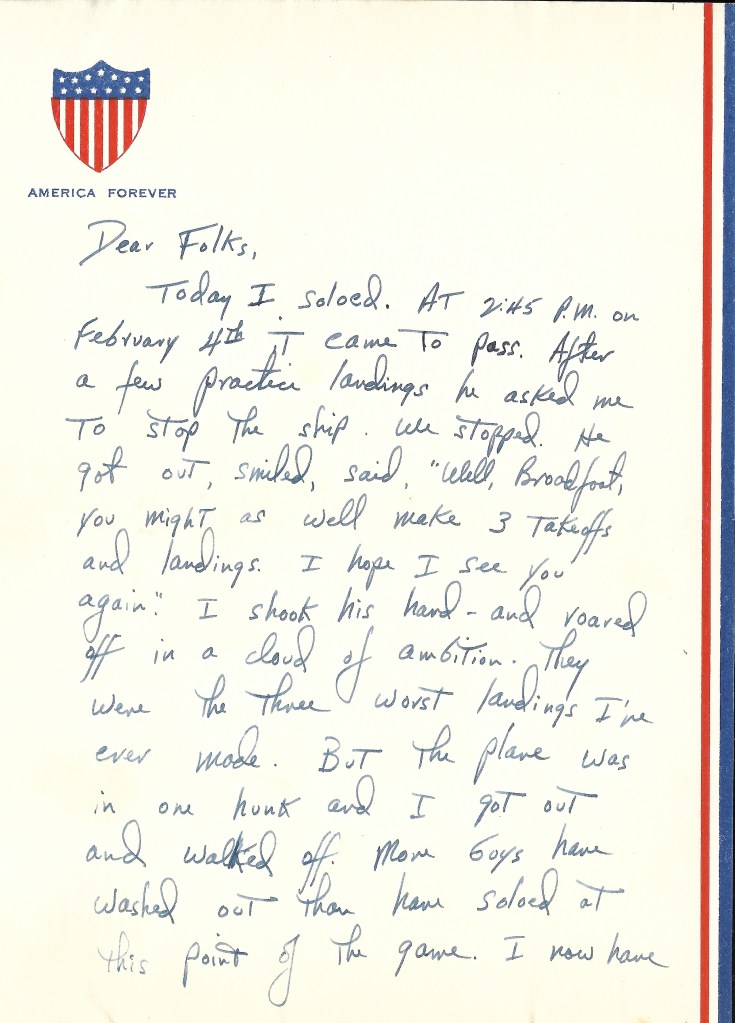
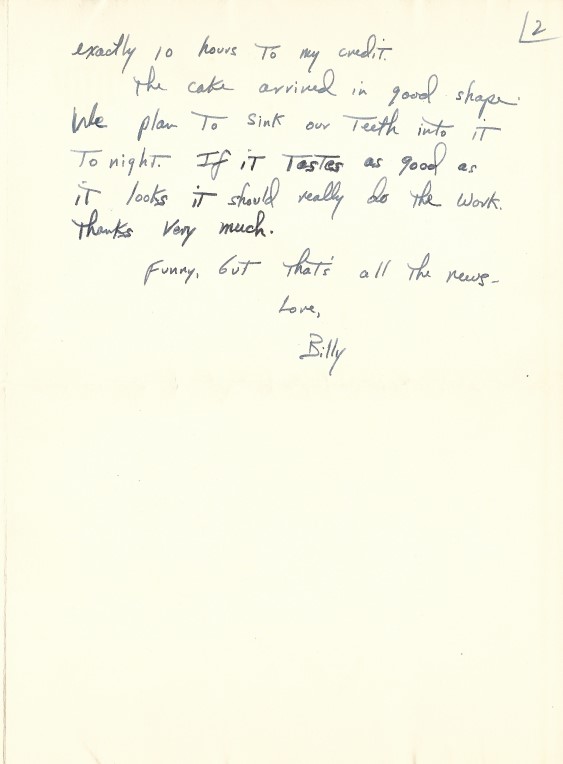
Postmarked Montgomery, Ala. May 13,1942
Basic Flying School (etc.)
Dear Folks,
First off, it looks as though it will be the middle of this coming week before we get off. However, I’ll let you all know as soon as I find out.
Had a rather exciting incident the other day. I was up with another cadet observing while he flew instruments under the hood. Soon something began to smell besides our flying. I told DuBois to come from under the hood. We started to let down; at about thesame time smoke began to come from behind the front instrument panel. I called in for them to clear the field for an emergency landing. By the time I had the thing on the ground, smoke was pouring out so’s you could hardly see the instruments. It turned out that the booster coil had burned out ‑- which was nothing. But it was fun.
Yesterday afternoon we flew down to Dothan on a cross country, ate dinner at the field, flew back that night. We landed at the municipal airport there. Got there o.k., but coming back was different. We flew the light line back. You are supposed to fly to the right of the light beacons. That’s o.k., but I flew so far to the right that I missed Montgomery, missed it completely. After I realized that I was off somewhere, I kept on flying. Knowing the lights would lead to a field somewhere. Finally a city came into view. I found the airport, started circling and letting down. I knew that I could call them on my Army frequency, but didn’t know their frequency to receive them on. I called in twice and asked them to cut on their runway lights. Nothing came on so I decided they didn’t have any. There were a row of little lights around the edge of the field ‑‑ that’s all. When I had gotten down to about 1000 ft. above sea level, a tree whipped past one wing, a little below it. It gave me the first good sweat I’d had in years. After that, I crossed my fingers, cut the gun, and headed into a field that didn’t look bigger the closer it got. I taxied over to the apron. A coupla fellows came running up, told me the place was Birmingham, that the field was 600 and some feet above sea level, had a hill on one side a coupla hundred feet high. They had called me on every frequency they could think of to tell me to stop parting the shrubbery on that hill. I got a coke, had the ship gassed, notified Gunter, another of our ships came in, together we left got safely back ‑‑ meek as mice at having flown past our own field. DuBois didn’t have that much luck. He also flew past and on into upper Alabama. Down to 15 gals. of gas, he found a lighted highway, buzzed it several times. Two alert officers cleared the road, stopped traffic; DuBois headed in to land on the highway. Now in one place three highway lights were out. Opposite them was a clump of trees close to the road. DuBois plowed through them, nosed on down across the highway and into a ditch. The plane ‑- gone. DuBois ‑‑ just a little scratched. Ho hum.
Last weekend I met several attractive young couples, went to the country club for a dance. It was an enjoyable time.
Love and good night,
Billy
P. S. Send Erdene a present for me please. Phil McDuffie is getting
married to a Virginia girl. I’d like to send them something. I’ll
send you the card.
Postmarked Dothan, Ala. June 5, 1942
Air Corps Advanced Flying School
Napier Field
Dothan, Alabama
Dear Folks,
Good ole Dothan. The field and grounds have been improved since last January ‑ but the weather continues as ever. It has rained off and on day and night ever since we arrived ‑ with flights sandwiched in between the squalls. The more we see of the AT‑6, the more we like it. So far we are still just flying around, and shooting landings to accustom ourselves to the ship, and the cockpit procedures. Our ground school work so far has been limited to going down to the flight line in mechanics coveralls and learning something about the inside workings of the ship. The idea is not working out so well; most of us just disappear around the nearest plane and snooze in the sun for the two hours.
Last Saturday, on open post, 6 of us drove into Dothan together, had a steak apiece, took in the movie. We had to be back here at 12:00 P.M. Sunday 5 of us drove down to Panama City and spent the day on the Gulf. Haunted by the cadets’ eternal problem of packing a week’s fun into one day, we damn near drowned each other splashing and ducking and carrying on. What with all this, plus bowling and shooting the rifles, we were a pretty pooped lot coming back. Two other cars full of our cadets had gone down. We all met there; everyone had such a fine time that we plan to go back this weekend ‑on Saturday ‑ and stay over until late Sunday.
Mary Bason’s address is Apt. 10‑C, 51 5th Ave., New York City.
There are five girls there together ‑ Mary, Frannie Dyckman, Lyn Somebody, and 2 others. To quote from Mary’s last letter, “The last vestige of a man is disappearing into the Army.” Tell George by all means to look them up. They are very informal and would be delighted to have him come around. It won’t be a proposition of his having to spend a pot full of money on them because they just don’t care for that. By all means insist that he get in touch with them. Mary is as attractive a little whipper‑snapper as you will ever find; Frannie is equally as attractive, if more reserved.
So Bryan is trying to prove he is worth something. It is an interesting experiment, but I doubt if he lasts long in any worthwhile capacity. He will have a hard time coming up to the standards of his brothers.
There’s not much news.
Love,
Billy
Postmarked Bridgeport, Conn. Aug. 29, 1942
Magazine photos of P‑47 and write‑up enclosed
Dear Folks,
A lot has been happening since last I sat down to drop a line.
But first: the cards arrived from Tiffany’s and are really quite a swanky addition. Thank you very much. And the book also arrived though I haven’t had time to read it yet. Coronet has carried a few quotes from it however, and they were ridiculous. The proofs have not yet arrived.
We finally hit a streak of not‑so‑smoggy weather at Windsor Locks and finished up our time there. When we returned to Bridgeport we found that all of the squadrons had been shaken up. Several of us are now in the 88th Fighter Squadron and will go to Farmingdale, L.I. around the first of September. None of us remained with the 61st. I hate not being one of the first to fight the P‑47 ‑ but now I’ll have time to learn more about tactical work. The 88th will not go over any time soon. I’ll send you the new address as soon as I get it.
Out of our group of 10 that came up from Napier ‑ 4 have crashed the 47 ‑ none injured seriously. I don’t get it ‑ but I ain’t talking.
I was able to spend a coupla days in New York earlier this week. Went out and spent one afternoon with Martha and Bill. Betsy was there at the time. She has plenty of sense, could be attractive, but needs a firm hand ‑ definitely. I went into the 42nd St. offices of PAA and was surprised at the number of the “old gang” who were still there. Also went around to Apt. 10‑C, 51 5th Ave. to see Mary Bason and the rest of that crew. One of them is more attractive than I would care to admit in spite of her being from New Joisey. She cooked me a steak the other night ‑‑ must have been an experiment. Anyway, you could tell it was steak. If you can send the ham this week, send it to Apt. 10‑C, 51 5th Ave., N. Y.C. Better not put anybody’s name on the outside, huh?
Do you know that I am yet to send out any wash? Nope, not since Napier Field. I’ve plenty of everything but socks ‑ have had to buy them. We haven’t been anywhere long enough to send out soiled clothes and know we’d get them back.
Pop, is the car being changed to my name? I got an A ration book the other day. That’s not too much gas, is it? I may have to get a B in Farmingdale. It hasn’t been bad, though; I haven’t used up a tank of gas since arriving. It’s really handy, though, since we’re about 7 miles from downtown Bridgeport and the Railroad Station, and there’s practically no other way to get in.
I’m buying a war bond a month and sending them home for safekeeping. May have a few additional expenses by the time they mature. Better deposit my rent checks in the bank. No, I’m not considering getting hitched.
Love,
Billy
Postmarked Charleston, S. C. May 4, 1943
Dear Folks,
This is to let you know, principally, of a change in address. Yes, Junior’s moving again. After a month of making money faster than we could spend it, the “advance party” is leaving tomorrow on the noon plane for LaGuardia. It has been a good stay in spite of not being able to get home more often. We are going to Kilmer, at New Brunswick N.J. Until we have been “processed” we will be held incommunicado. This may last for 36 hours, or 5 days. There is no telling now just how long that confinement will last. While there, our address will be:
Lt. . . . . . . . Jr. ‑ 0‑790857
88th Fighter Sq.
APO #3969
c/o Postmaster
N.Y., N.Y.
I don’t know now whether this APO will hold after we sail or not. The .45 revolvers should be sent there.
Tonight we are throwing an old‑time mint julep party in the dining room of the Carolina Inn. The officers from this office will be there with their wives or anything else that they can find. There will be 17 of us in all – with Lemons in charge of the mixings.
Will try and call you tonight. This is mainly to record the new address ‑ and say hello by ink and paper.
By the way, the little man from Fayetteville that knew pop (and is now in the next office) is named Morrow and is missing his right thumb.
Love,
Billy
Billy ended up in India and frequently wrote home about his experiences.
Postmarked U.S.Army Postal Service, Oct. 8, 1943
Letter dated Oct. 7th
Somewhere in India
Dear Folks,
First off the bat, don’t forget the change in APO. The new number is 629. Everything addressed to 3769 will continue to arrive ‑ but 629 will facilitate delivery.
I don’t see Rabbit any more. A few of us are staying in a former tea planters cottage ‑ right in the middle of a large tea plantation. We have two bearers working for us (in addition to sweepers, cooks, etc.) that are real cards. The boys have been attempting to teach them a little earthy English, but they have trouble with certain letters. One of them, Etwa,, has learned the first few lines to “Give me one dozen roses” and will sing upon request ‑ grinning from ear to ear. Mogaung, the other, is not quite so talented. I have discarded my canvas cot for a native bed, made by weaving cane on an oblong frame. Two quilts take the place of a mattress. I took over a former pantry, with huge window, for my room, have painted the shelves with a dark stain, red trimmings, a white bed table with red trimmings. I have a white Indian rug with colored flowers coming with the rest of my junk. Our living room is upstairs and is rapidly whipping into shape. No. 1 article here is the victrola ‑ a hand wind Victor that cost us $100.00 ‑ to give you an idea of prices on imported stuff. The records from you all haven’t started to arrive yet.
Our dining room is a screened porch downstairs. The food. Ah, the food! This will be bad for civilian morale, I know. We all chip in quite a bit to supplement our rations; the cook is excellent; this is the result: Breakfast is usually small, since we eat it at 4:00 A.M. about 1/2 the time, and consists of fruit juice, coffee, and either omelet, or eggs, or hot cakes, with bacon. Luncheon is better ‑ meat, with no less than 5 vegetables, panie, or chow‑panie, or nimbo‑panie (water or tea or lemonade), chow‑chow, bread and jam, and dessert. Dinner, at dark, is the real dilly. It is the only meal we all have together. First, we have a soup course, then a fish course ‑ with chips, then meat ‑ usually roast duck (or an equivalent dish) with fried onions, 6‑8 vegetables, drinks, dessert. No matter what the dessert is – pie, fruit, cake ‑ the cook always serves the same sauce ‑ a yellowish egg‑vanilla affair ‑ that is amazingly cosmopolitan and really goes with all those desserts. And, of course, there are tea and cake in the afternoon, hot chocolate in the morning. You must write Winston for me (2 of my letters evidently failed to reach him) and ask him why in the devil he joined the navy. The heat is pretty terrific here at times, also, and until the monsoon is over everything will be nice and mossy, (matches so damp that they won’t strike), and the mosquitoes so thick and persistent they make Buena Vista a paradise ‑ but, I’m definitely not losing weight and have had only one fever ‑ fairly high ‑ which I shook before the doc could even identify it.
Right now I’m listening to Grieg’s Concerto in A Minor. We “inherited” the 3 records of it from a previous group. It is a fair recording of an excellent piece. If you haven’t it, by all means get yourself a set.
I have received the box with Hershey bar, rabbits foot (which is now in my watch pocket), tooth brushes, and the roll of film. I promptly went out and celebrated by taking a picture of the cottage. As soon as we can find a place to do the developing, I have a new set of about 18 pictures to send to you.
Yesterday I drove a truck through the mud and goo to the Red Cross to pick up a ping pong table for the enlisted men’s basha. They have 12 “girls” working this area ‑ mostly British. We gave one of them a ride back to their cottage, had tea, invited them over to meet the boys last night. You would have gotten a big kick out of our entertainment. You see, we have no ice fit for human consumption ‑ in fact, we have no ice at all. We have been drinking our beer warm (it’s really pretty good that way). But last night I had no beer, only a jug of native gin. There was a white label on the thing that said “Gin”. The bottler made no other claims. The drink itself was the best to be had locally. Pour gin into the cup, add water. It’s not cold, but it’ll do. The gin I think I told you about. Emrick and I bought a case of it en route, had 8 bottles swiped en route. That’s one bootlegging expedition that will never pay dividends.
The Reader’s Digest you sent arrived ‑ and was completely read in one day of waiting. Those New Yorkers are also the real McCoy. That mag really has something. Should have caught up on my bridge work today, but missed out.
Rabbit has the Culbertson book but should send it over by one of the next planes.
Mother, I think that you are amazing. You are literally doing a helluva lot more than I towards cleaning up this mess ‑ no fooling. That day room sounds really hot. Those guys will probably never realize how lucky that they are. But I do.
Love to you all
Billy
October 29, 1943
India
“Dear Mother and Daddy,
“ Lou wrote and asked me a question which, at first, seemed rather odd and amusing; but, on second thought, was a natural one. Since you have undoubtedly wondered the same thing, I should probably answer your unasked question: ‘What does it feel like the first time up for the real McKoy?: So far, in a way, I have neither lost my shirt tail nor hung antlers over the hearth; but, I haven’t been picking my teeth either, so‑‑‑. The whole. thing is rather disappointing. It’s sorta like just before going out to wrestle, or play lacrosse, except less so. Actually I feel kindred to the dime store clerk popping gum and asking: “Issat all?” Of course there are certain aspects of the situation that I can’t exactly lose sight of, but they seem to make no difference-‑too far in the background to detract from the picture. Now I’ll probably go out and get my B.V.D.’s shot off. Actually, the best part, by far, of the whole show is the gorgeous country. You’ve never seen such country in all your life. Great massive green peaks impudently thrusting their snow‑spilt summits at the heavens‑‑‑then, abruptly, a serene little valley quietly holding her own in the midst of this masculine brawn. Flying high above all, we see a very fine crooked brown line, meandering laboriously, evidencing man’s own insignificant effort to thrust into the might of God.
Outside of the cottage, just across the road (and a very bumpy road, indeed) the natives are pruning the tea bushes. The bushes are planted slap‑dab, one against the other, so that one moves with difficulty between them. The workers are both men and women, but do not mix. That is, they do not mix during working hours. However., at the edge of the fields is ample evidence that bridge and the movies are yet to take over India’s night life. The women bring their youngest kids with them to the fields. Those too young to walk are transported in a very unique fashion. The ones not yet weaned are slung around front, in a halter, where they lap up the sunshine and a little readily available nourishment as they jog along. I imagine this practice ceases with the first tooth, if not sooner. The Kiddo is then shifted to the rumble seat. Here, he, she or it, rides pick‑a‑back. A halter about 6 ft. long is passed around the Kiddo’s back and under the bottom (quite bare), making a sort of seat. This halter is then brought over the shoulders, crossed between them and tied down at her sides. However, when working time comes, if the mother has more than one Kiddo, the younger is strapped to the back of the elder. It’s funny because sometimes the Kiddos are enough of one size to make it rather difficult to decide whom to strap on whom. This morning I took several snap shots of the whole process.
“The trouble now is that we cannot find anywhere to get our films developed and printed.
“The nights continue cool, the days very warm ‑‑‑and when you receive this Cornelia should be a mother or nearly ‘bout. Give her my love, best wishes, and tell her to start spanking ‘em young.”
Love,
Billy

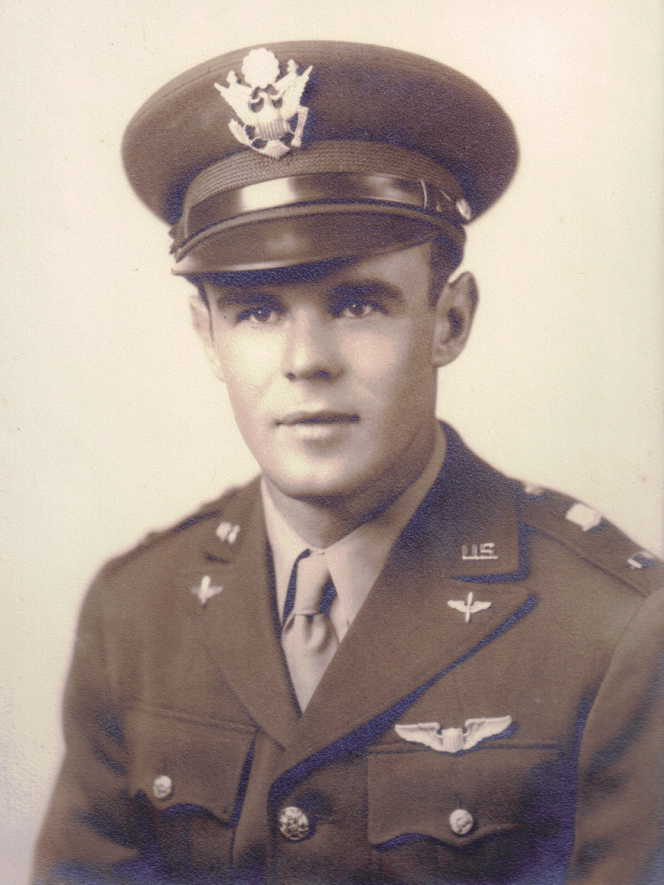
Local Wilmington writer and World War II expert, Wilbur Jones wrote a synopsis of Billy’s time in Burma/India.
“Capt. William G. “Billy” Broadfoot, Jr., USAAF
P-38 and P-40 pilot
459th Fighter Squadron, Burma/India, late 1943 to February 1945.
Broadfoot flew the twin-engine fighter out of Chittagong and Rumkhapalong, India, from late 1943 to February 1945. The 459th, mostly under British command, maintained 20 pilots, but lost 30 in combat. Most of his 125 combat missions were over Burma. His four P-38 machines each bore the nickname “Hell’s Belles.” “I had gotten good at what I was doing,” he said. “I knew where all the ack-ack nests were. I didn’t want to go back to the states.” This determination was emphatic in a May 1944 letter to his parents about requesting to remain. “First, I know that I shouldn’t be going home. I haven’t even hit my stride….Second, you don’t jump off a sure-fire winner in the middle of the race. This is the hottest squadron in combat….Each time you come back you havemore reason to go back again, usually a grudge against some guy that came too close.”
The “Twin Dragon” squadron’s history book recorded a number of Boradfoot-led missions, including the March 17, 1944 mission of 12 planes escorting B-24 bombers to Chauk and Lanywa oil installations. On April 15, “[He] indicated 450 mph on his way down [to target], and the other pilots stuck close to his tail. With the stick in his lap, he whizzed across the field, guns blazing, and was rewarded with seeing an Oscar in flames.” The book concluded, “It has been many years now, almost a lifetime….There seems to be a lingering sentiment that brings on
seasons with rains that fell unabated for weeks…of showers made of 55-gallon drums filled with rainwater or by bearers with water from nearby brackish polluted ponds; and of mosquito nets hung over wooden-framed cots strung with tough hemp rope, the nets to be drawn religiously each night to prevent that scourge of malaria which almost grounded a squadron….
“Members of the ‘single-engine club’ [home on one] will never forget their special experiences, particularly Broadfoot who had three…from air battles deep in enemy territory….During squadron reunions when they gather to fight the Burma Campaign once again, the realize that they, particularly the pilots, were bonded forevermore during the greatest adventure of their young lives.’
The toughest Japanese fighter Broadfoot faced was the Tojo (built like the P-47). “One day I will never forget. I was flying along and there dead ahead of me was a Tojo headed for me. I maneuvered out of the way, and saw it was a P-47 with a Tojo on his tail. The Japs were good airmen, but not as well trained as our pilots” by then, One day on patrol his flight came across a formation of single-engine planes painted all black. After maneuvering and gunfire, no hits were confirmed, and both sides broke off. “We looked for them when we went out, but never saw them again.”
He received the Silver Star (“for gallantry in action on fighter raids deep in enemy-held territory in Burma”), Distinguished Flying Cross, Air Medal, and the British DFC (“for his leadership in America air attacks against the Japanese”).”

Billy returned to Wilmington from war at the sometime at the end of February beginning of March, 1945. Shortly after returning, Billy and Mary met and by April 1, 1945 they were married. Mary goes into greater detail of the relationship in her story. Based of what Frances remembers, “My dad proposed to my mother in front of a shoe repair shop in Chapel Hill!!!”

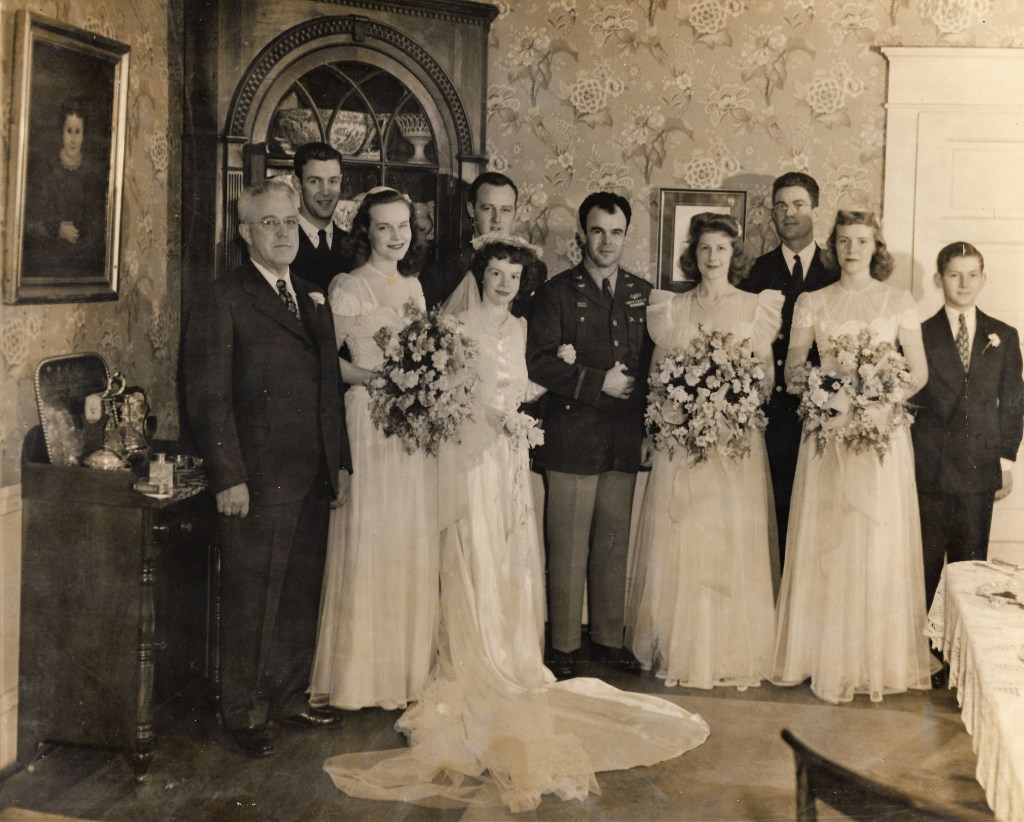
After their honeymoon, the couple moved to Aloe Army Airfield in Victoria, Texas. Shortly afterwards, the war ended and Billy got out of the military. Over the next year, Billy and Mary bounced a bit between Wilmington and Chapel Hill. While in Chapel Hill, Billy took some classes in business law. In the summer of 1946 they moved to Wilmington on a more permanent basis. For sometime, the young couple lived in a garage apartment behind the elder Broadfoot’s home on Forest Hills Dr. In December of 1949 they moved to a most unique cypress log home at 541 Wayne Dr. where they lived for the next 37 years.
Daughter Mary’s version of the housel – “Our house was a log house, very unique and no other house like it in Wilmington. People knew where I lived when I said the log house. That embarrassed me because I thought it meant we were poor. We had oriental rugs instead of carpet so that also meant we were poor. And none of our furniture matched and it was old furniture (called antiques) so that meant we were poor. It was built so that all main rooms on the first floor looked out onto the back yard. Only one bedroom/bathroom and the kitchen had no view of the back yard. We had a room and ¾ bathroom over the garage that was later used as a bedroom. The main house had a utility/laundry room, kitchen, breakfast room, dining room, half bathroom, front hall, den, sunken living room, back hall with 3 bedrooms and the master bedroom/bathroom/dressing room at the end of the hall. Two of the bedrooms had 2 closets and the two bedrooms on the left had a shared bathroom between them. My dad said he wanted a lot of bathrooms. There was a screened porch off the living room. The property had a large back yard with a creek running along the back and a stream through the yard. Daddy later put in a small pond. All rooms except the kitchen and breakfast had hardwood floors. The back hall did not have a rug, so it was thrilling to close all the doors, cut off the lights, and wearing my socks, I’d go running and sliding down the hall. Bet my Dad did not think about that when designing the house.”
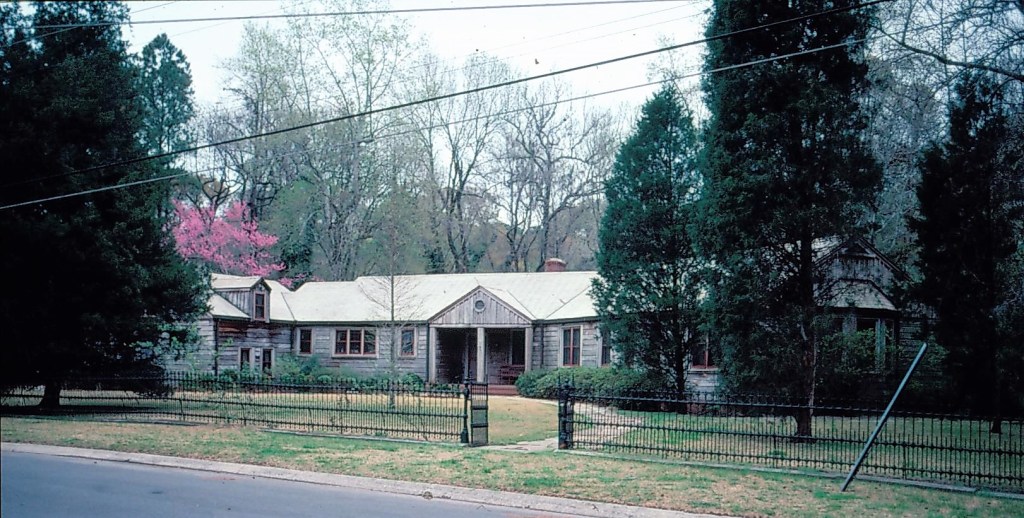
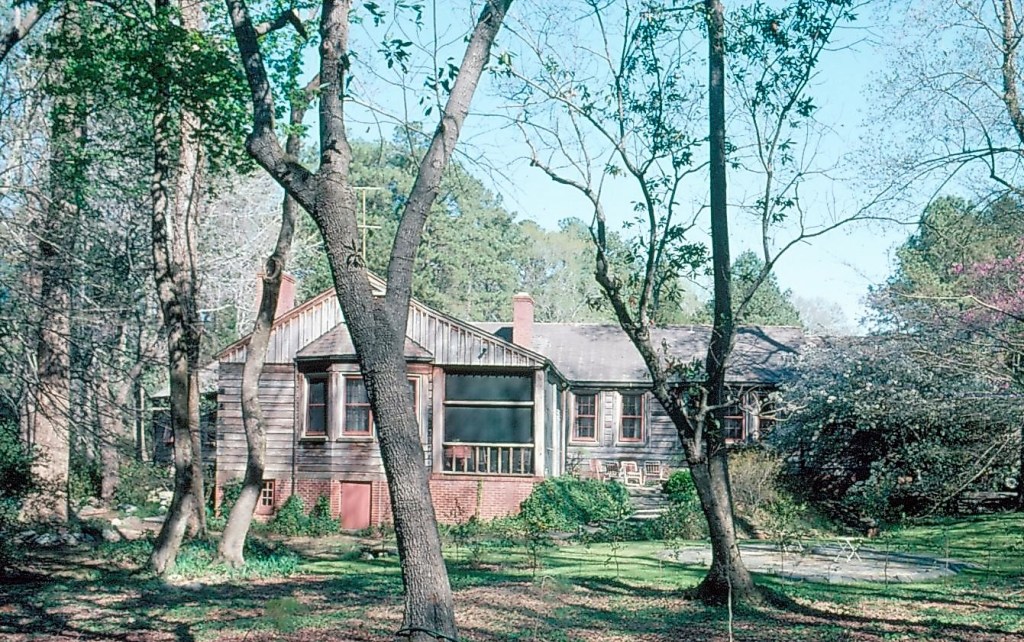
In the summers, the family stayed in their Wrightsville Beach home, 213 S. Lumina Avenue at Wrightsville Beach. Later, Billy and Mary moved to the beach year-round. Mary recalls the aftermath of Hurricane Hazel (1954)
“Hazel was the big one and the only one that really stands out. I remember the calm during the eye and how we walked out to survey the damage in our yard. Initially no one was allowed back on Wrightsville Beach. When we did go, there was a long line of cars waiting to cross the bridge. We had to prove residency before we were allowed on the beach. I remember houses that had stood on our street – gone. Cars buried under the sand. The side of our house with the bedrooms was damaged but we still had a house. Then there was the cleanup in our yard, and we all pitched in to help. I think a family whose home was either lost or badly damaged stayed with us for a while, but I can’t remember who they were. With every hurricane, there was the yard cleanup. I can remember school being cancelled when the warning came for a hurricane.”
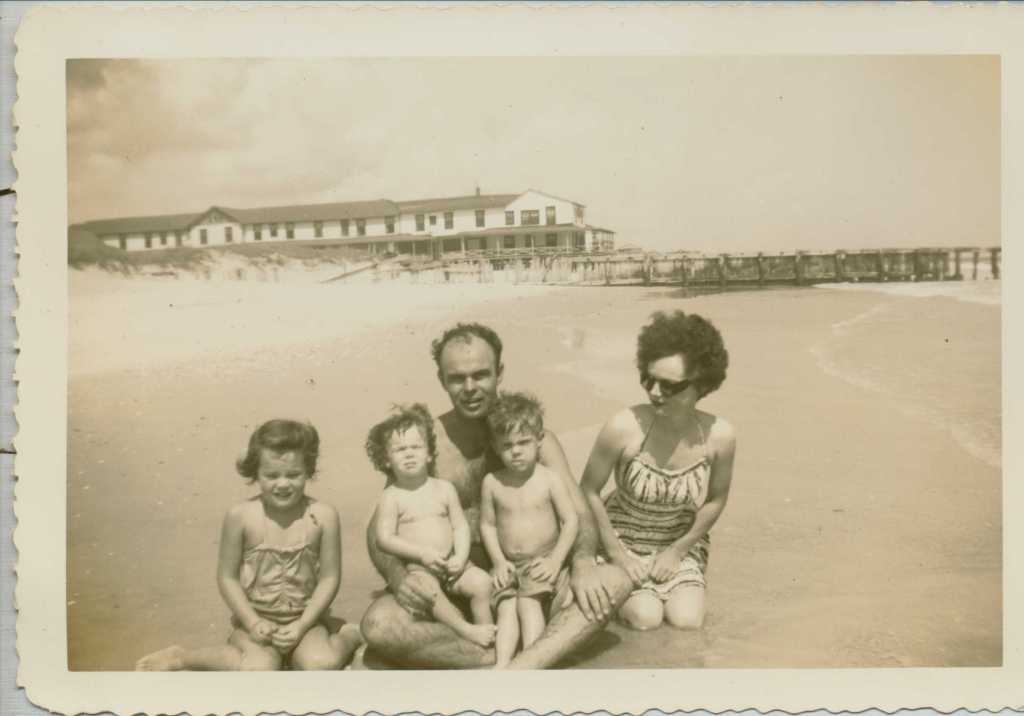
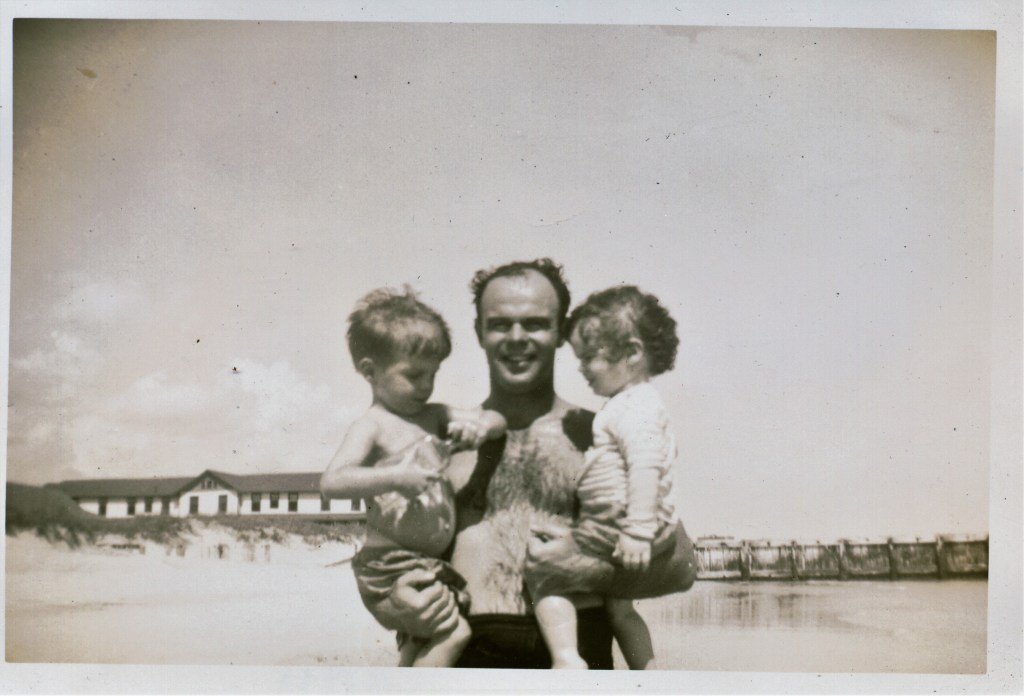
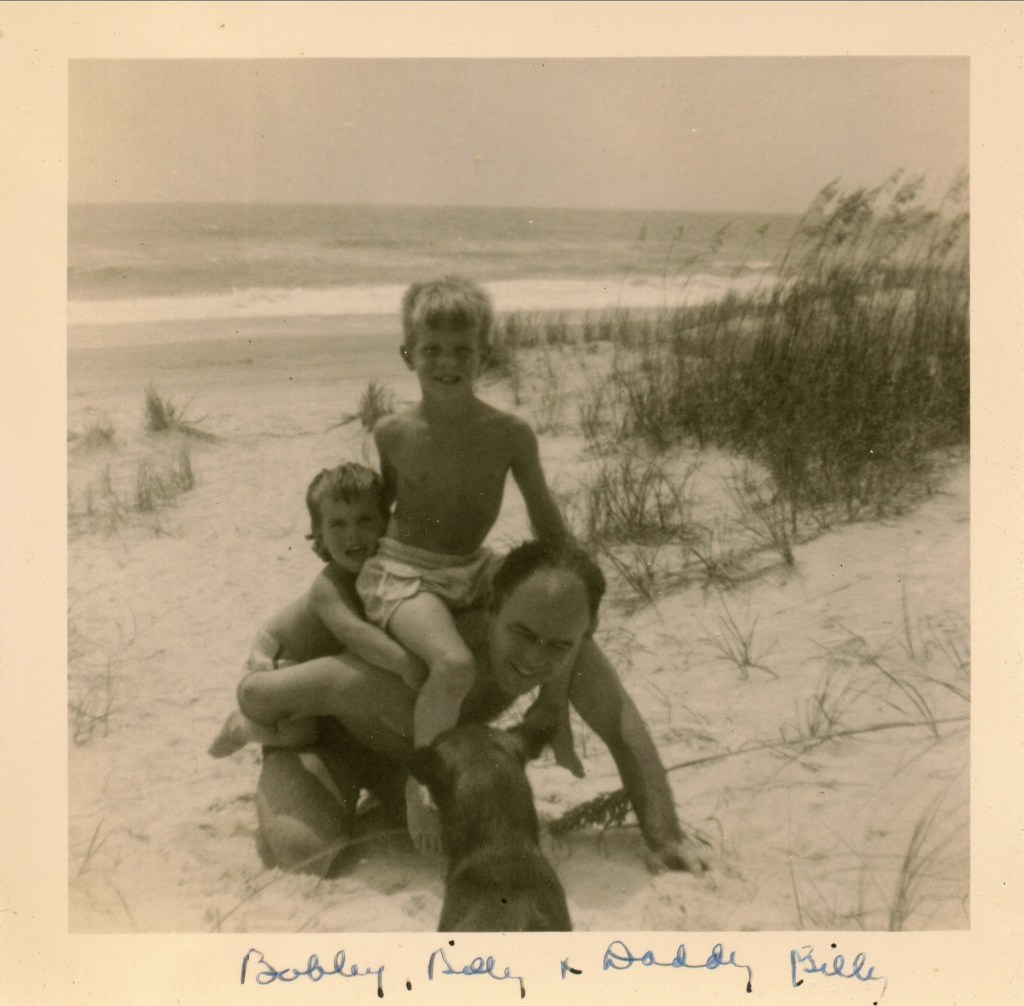

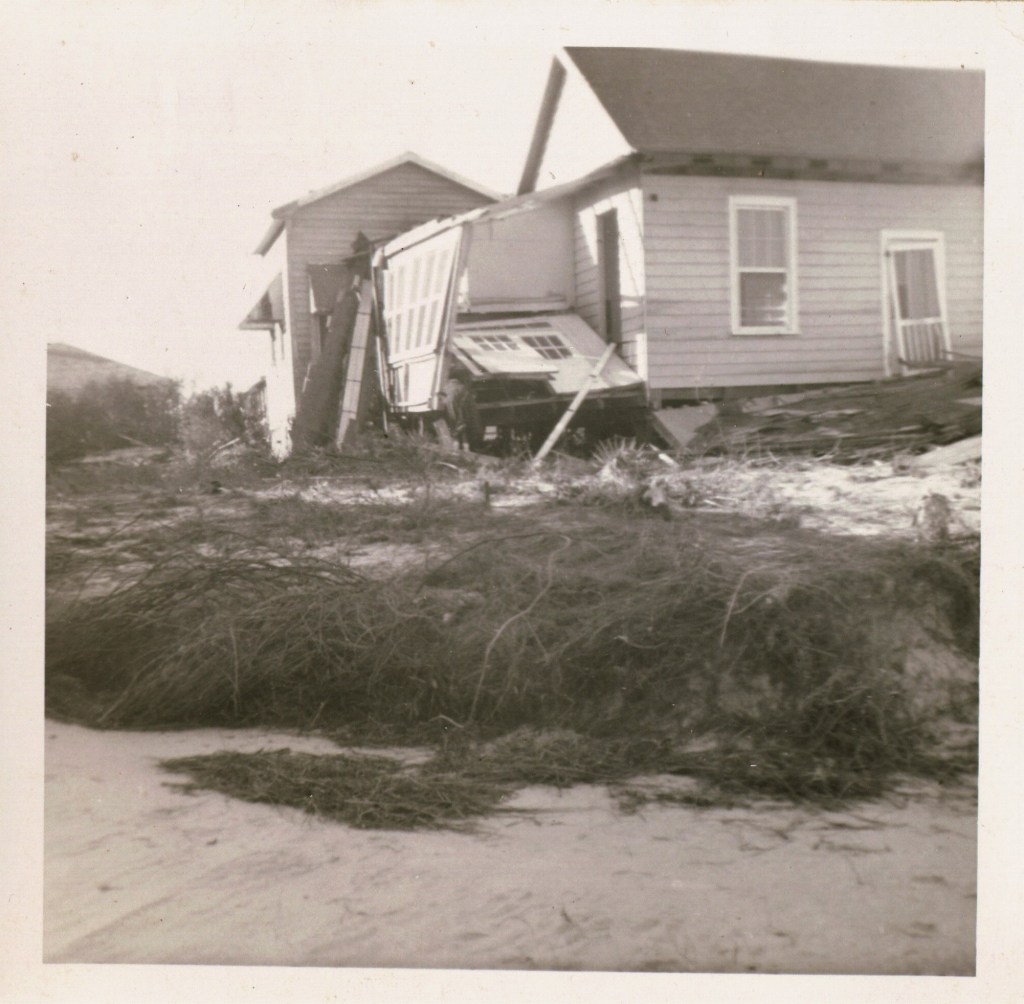
On April 8, 1947, Billy started his business, Building Management, Inc., a North Carolina branch of Builders Owners and Managers. He earned his North Carolina Brokers License in 1958. In 1987, he was honored as a lifetime member of the Building Owners and Managers Association. He also dabbled in several other businesses including bringing ABC television (station WWAY) to Wilmington; and was a partner in the creation of The Bowling Center, Wilmington’s first bowling center.
Billy and Mary welcomed four children into their lives: William Gillies III – 1946, Mary – 1947, Robert (Bobby) – 1951, and Frances – 1952. The couple celebrated their 50th wedding anniversary, surrounded by their children, on April 1, 1995.

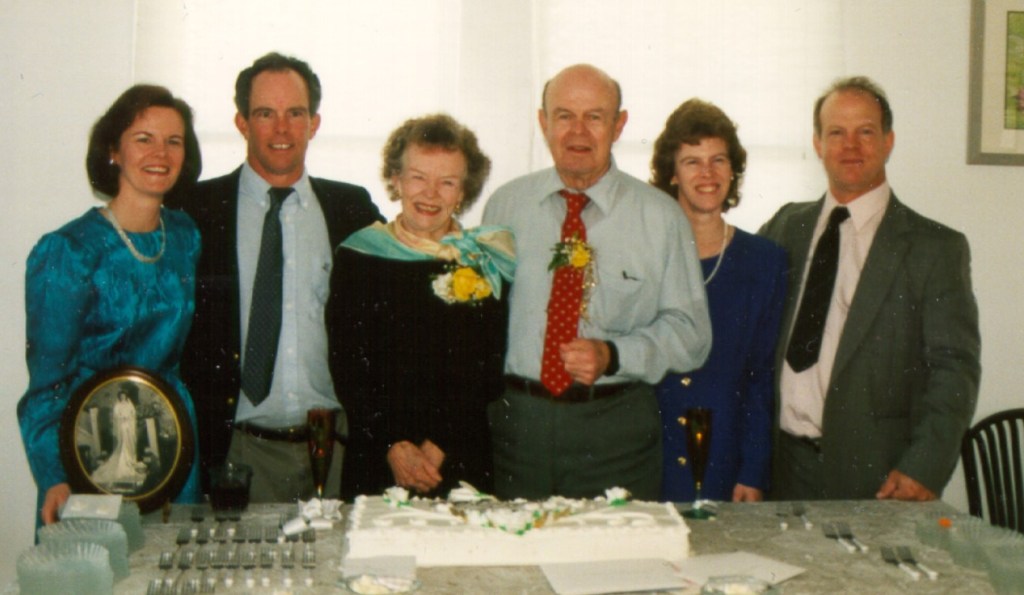
Throughout his life, Billy was active community member. Based on his obituary, his volunteer activities include past president of the Wilmington Jaycees, the Chamber of Commerce, the Community Chest (United Fund), President of the Azalea Festival (1957), and was a recipient of the Jaycee and Civitan Man of the Year Award. He was treasurer and financial consultant of the North Carolina PTA for more than 30 years, and recipient of the Honorary Life Vice-President Award from the North Carolina PTA. He served as an active member of the Wilmington Rotary Club since 1947. In late 2000, he was posthumously honored by the Rotary Foundation of Rotary International with the Paul Harris Fellow lifetime award. Billy was also a lifelong member of St. James Episcopal Church.
Billy and Mary’s four children combined gave the couple 12 grandchildren. Here are a few of the brood.
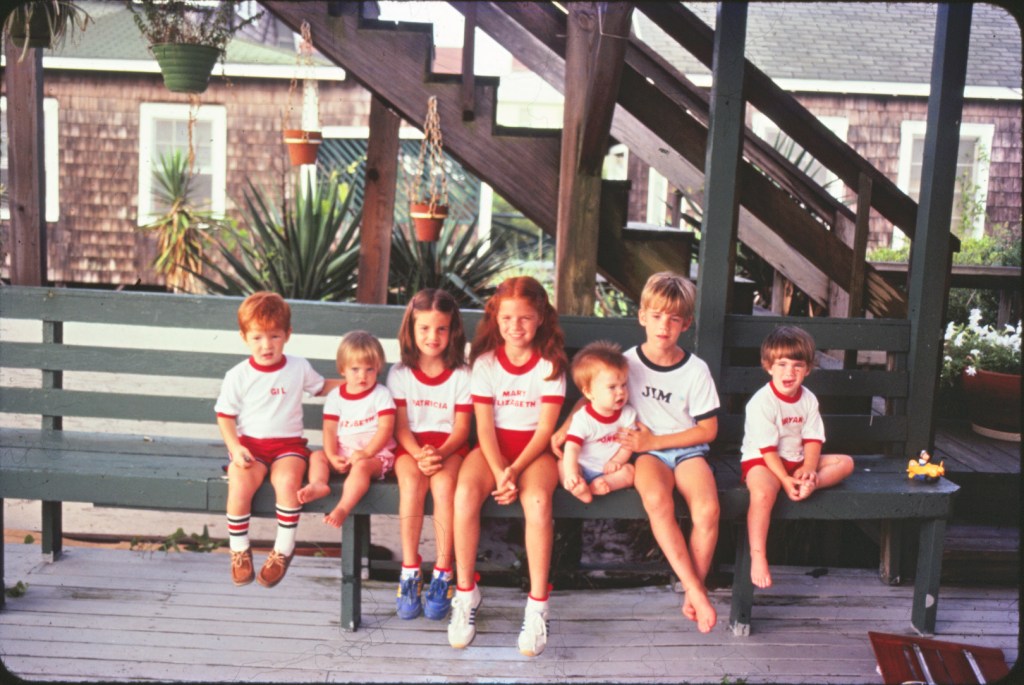
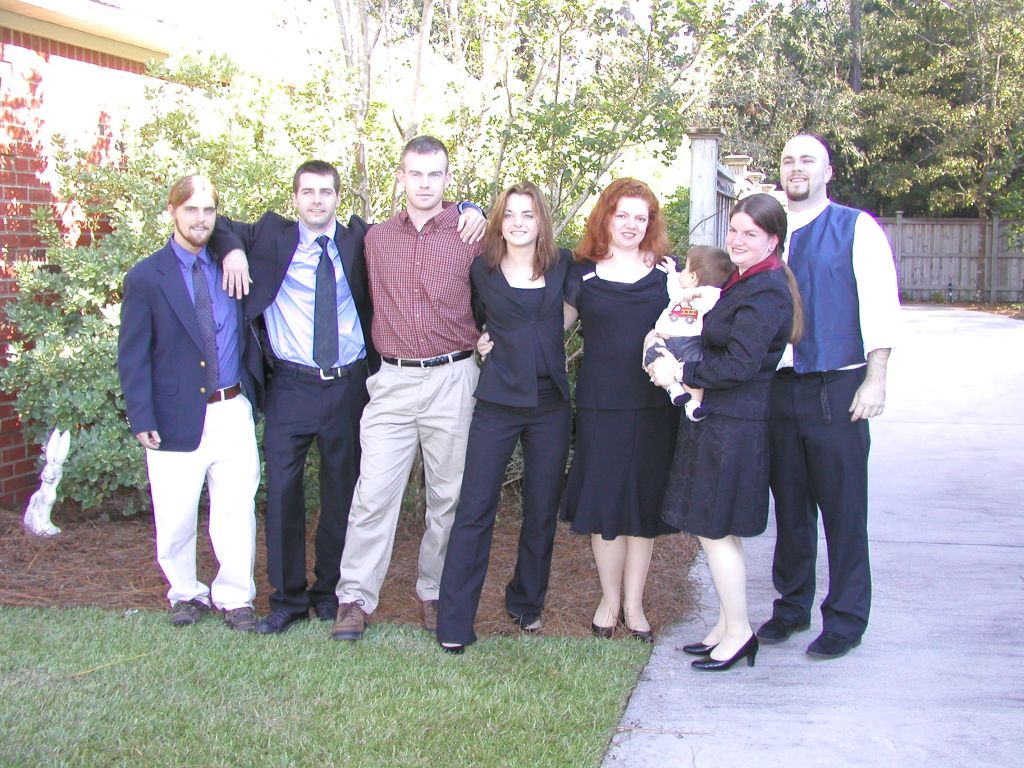
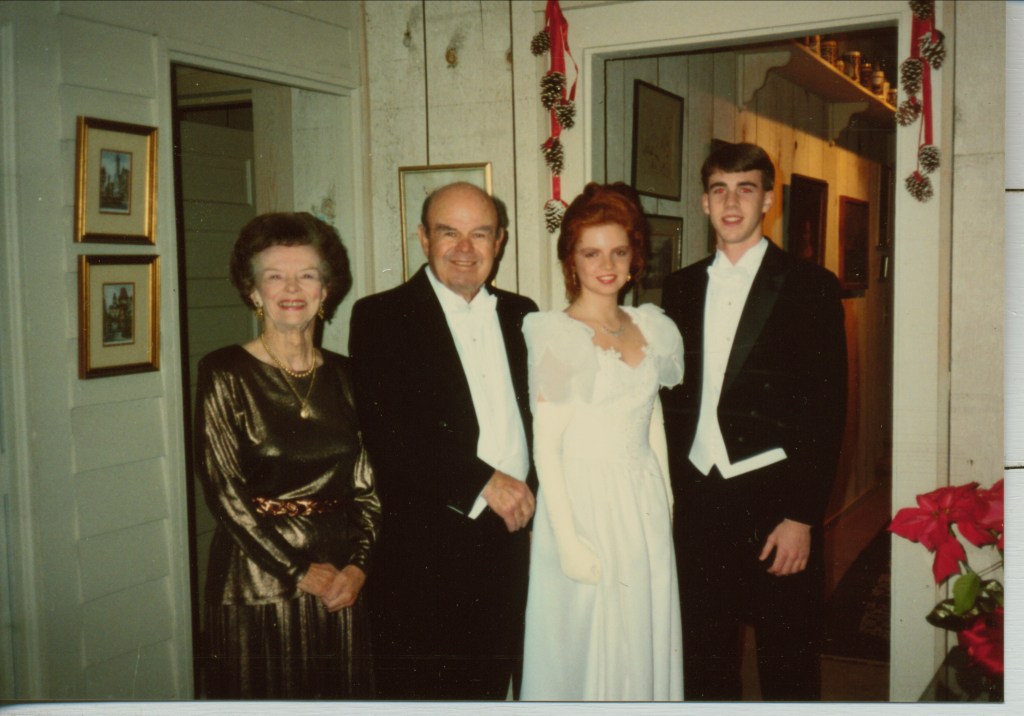
He passed away from esophageal cancer at the age of 82 on June 21, 2000.
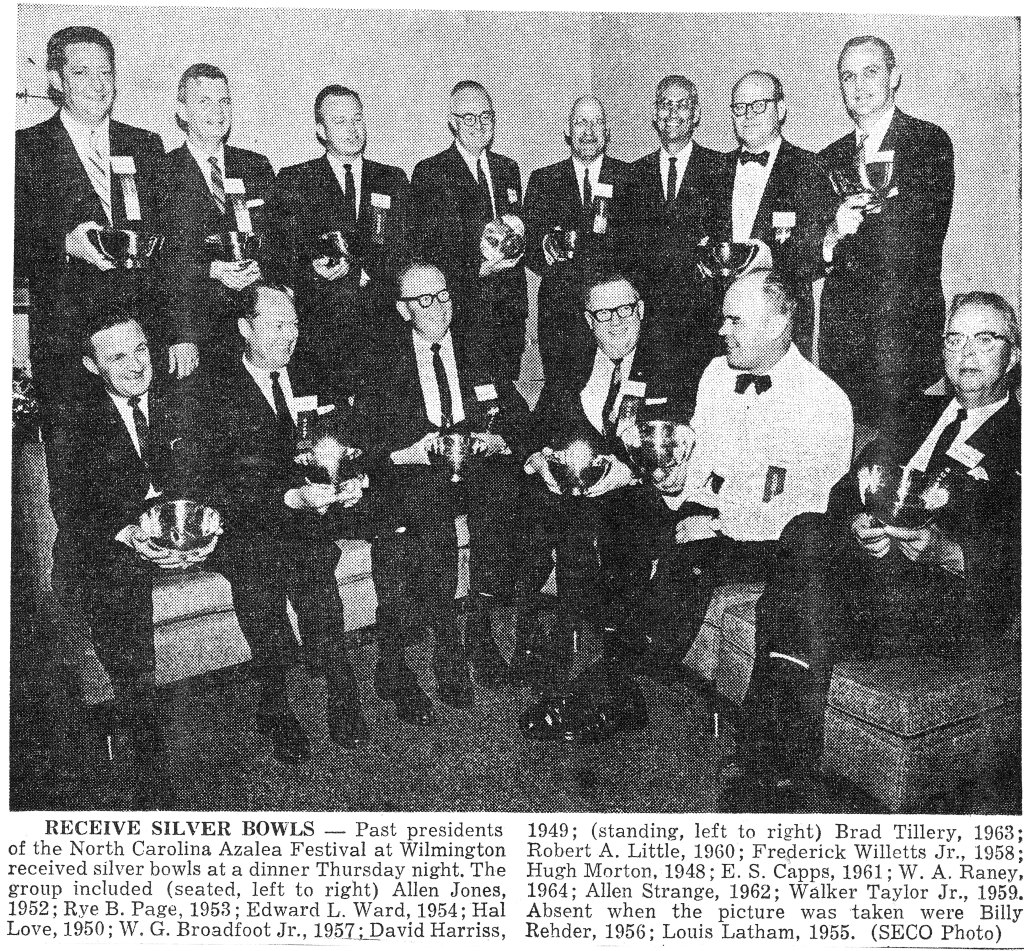
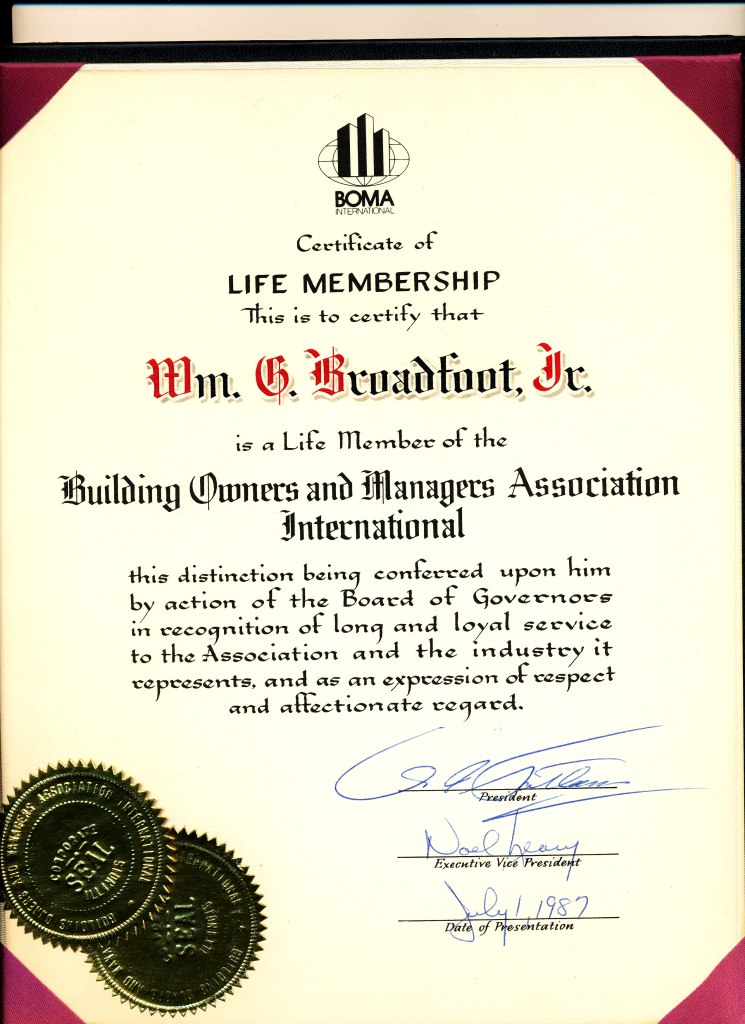

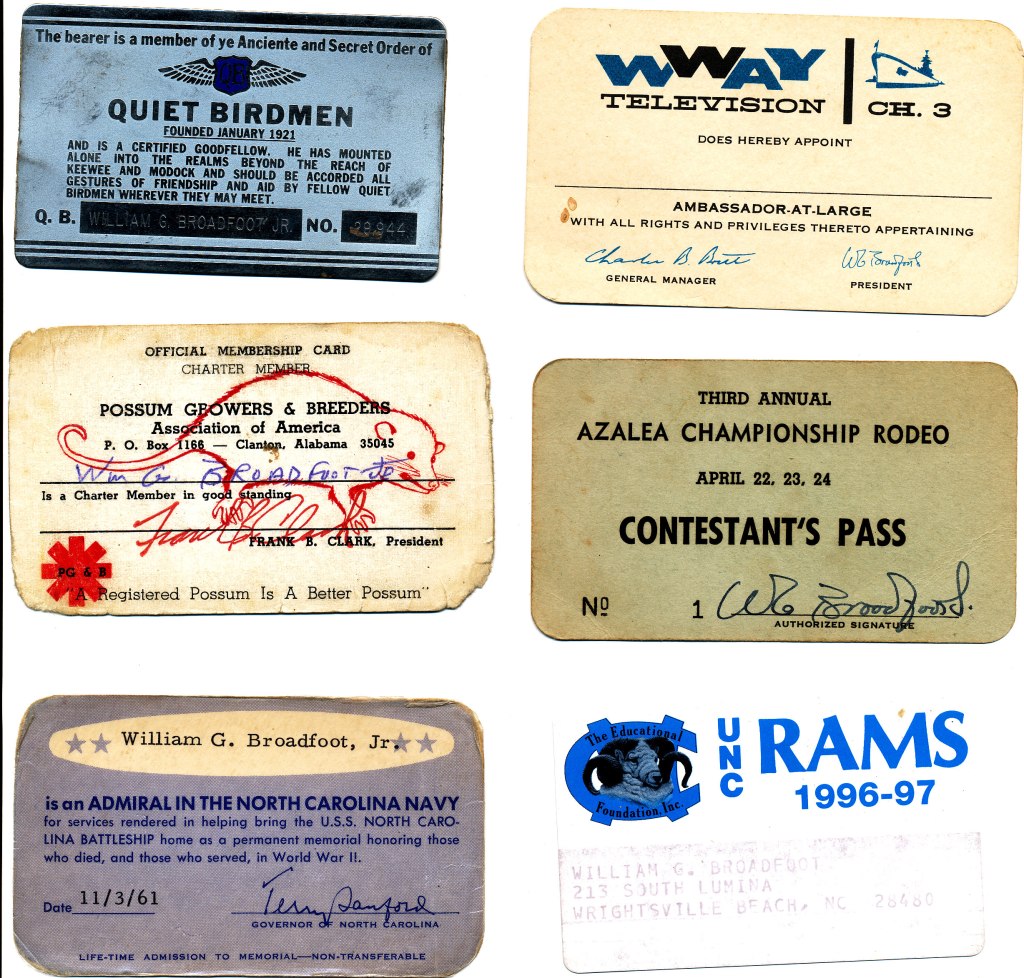
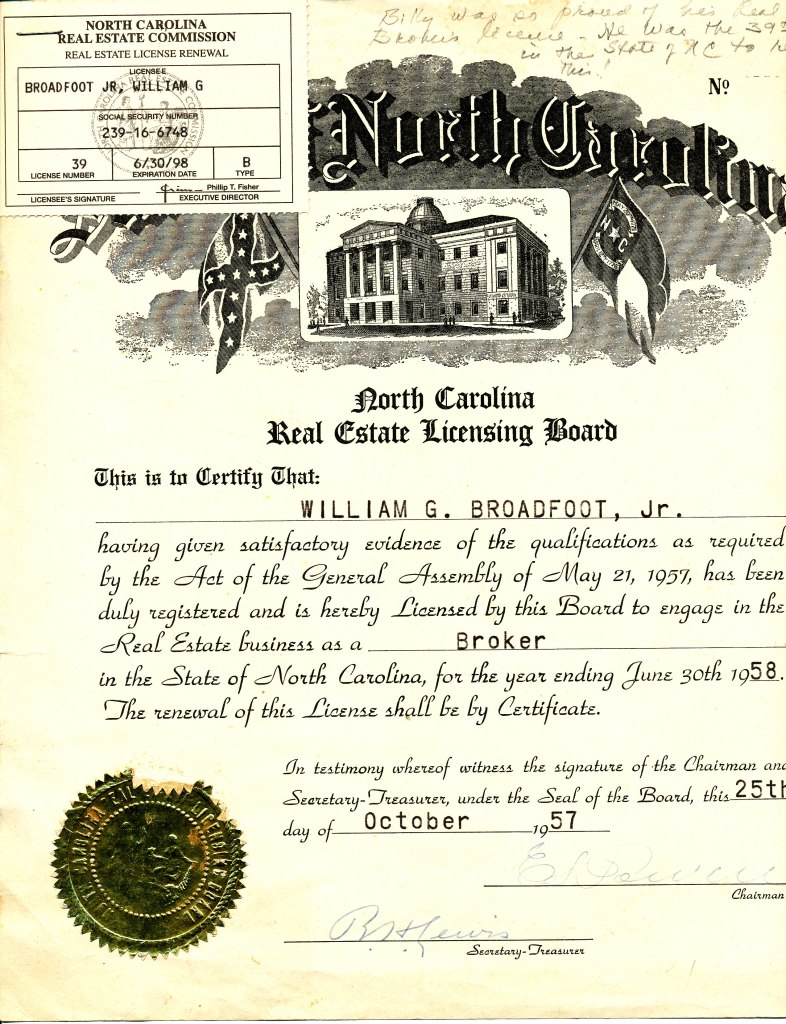
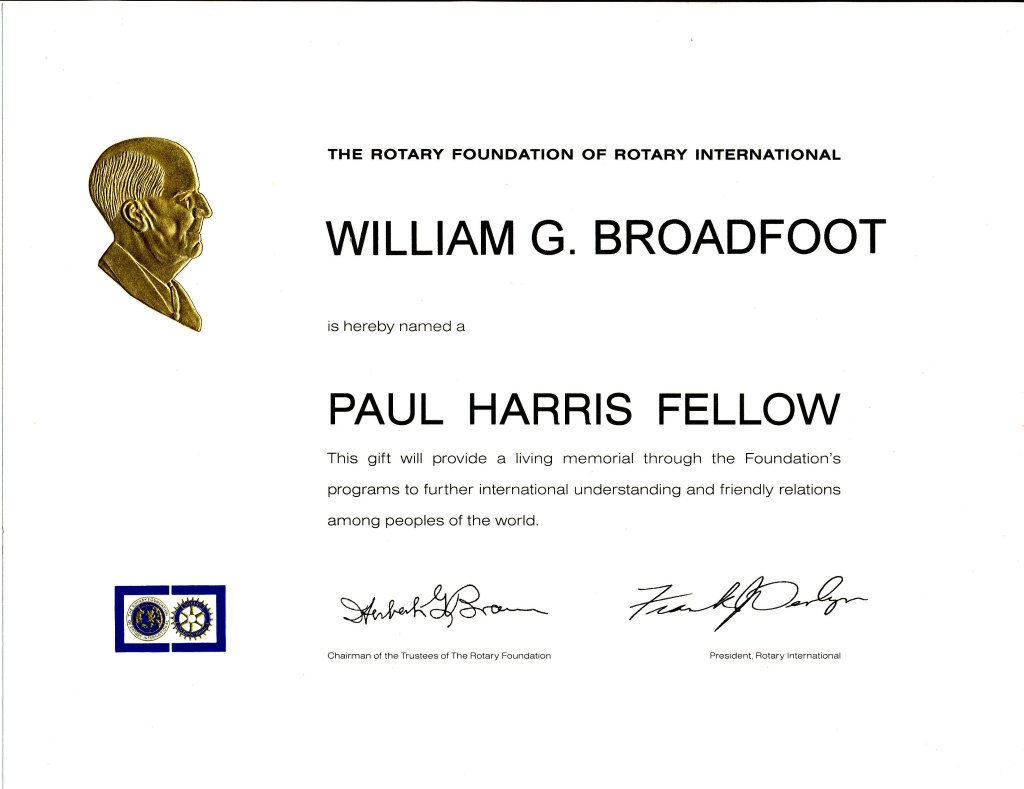

Socially Billy and Mary were regularly active. Daughter Frances added, “My parent’s closest friends were Pete and Betsy Fensel, Henry and Alice von Oesen, Fred and Helen Willetts, Dr. and Mrs. Ed Wells (Lou was the wife)) and in the much earlier days, the Echols. They really did have a big social life – and a LOT of friends – but these were the closest. My dad had his hunting buddies – but they were not always the same people with whom they socialized/partied (except the Willetts and Fensels). Oh – also the Lumbs. Once a year they had a party with the Lumbs at our house and it was cold the “Guy Fawkes party” on Guy Fawkes day. Since the Lumbs were English and from England, this was something they celebrated in England and brought to my parents. They actually created Guy in sheets stuffed with newspaper and had him on a pole!” and Frances added some of Billy’s favorite sayings included, “Get your education because that is something that no one can ever take away”. “Don’t pick up your fork until the hostess starts eating”.
Pets
Frances added “OH – AND HOW CAN I FORGET PIGUMS??? One year – back in the early 60’s, my dad was given a pig for his birthday as a joke. He was name “Pigums”. We built a pen for pigums and he was one of our pets. Mary came home from school one day in the early fall and could not find pigums. No one could tell Mary what happened to Pigums. She was really upset. That night (or shortly thereafter) we had pork for dinner. Mary refused to eat her dinner because she knew it was Pigums. I remember the expression on my dad’s face……and I knew it was Pigums too!!!”
Mary wrote, usually we had a Black Lab or Weimaraner (had to be a good hunting dog). Star, Barky (I named that dog because dogs bark), Blackie (probably because he was black). Susie was a dog I had later (Got that dog in HS because I hit and killed a dog while driving home from a friend’s house, and the lady who owned the dog wanted me to get her another dog. When I showed up with a puppy, she said she did not want a puppy and that is how I ended up with a puppy that I did not want. After I went off to college, Mama got the puppy – now a dog and she and Susie got along very well) Teak Hi (not sure about that spelling) was a Golden Retriever that Mama and Daddy had later, their last dog. Any stories you remember about them? One of the dogs (I think it was Barky) would try to rescue us every time we went swimming. He would swim out and wait for me to hold his collar and he would pull me to shore (safety). I think this was also the dog that got hit by a car and got himself to the vet (the vet found him on his front steps).
Mary on travel:
Black Mountain, Wrightsville Beach, New Bern, Fayetteville, Wendell, Buena Vista, etc. Although I know we spent some summers in Black Mountain, I only remember one time and that memory is not good which may be why it is all I remember. I was walking to the mailbox with Mama and decided to take a short cut through the brush (to cut off the curve of the driveway) and I stepped on a nest of hornets. I stood there screaming and trying to fight them off and Mama yelled for me to run. She took me to the neighbors (a poor mountain family whom we knew) and the lady doctored me with some homemade remedy. I was stung all over my arms and legs. Wrightsville Beach was where we spent every summer and a kid could not ask for a better life (I just did not know it or appreciate it at the time). There was always something to do and someone to play with. Cousin Betty was across the street and for one month every summer, Trudy Pomerantz was next door. We had the ocean out the front door and the sound out Betty’s front door. There always seemed to be an adult who would watch us go swimming. Almost everyone had a motor boat and/or a sailboat. Trudy’s family taught me how to water ski (2 skis, I never learned how to slalom). We had the Yacht Club in one direction and Newell’s in the other to buy our snacks. The movie theater (Crest) was just past Newells. We could not take our bikes to the beach because they would rust. For many years, the street was not paved and it was and still is a one-way street, so not much traffic. The Catholic Church was next door and at one time the lower level was open and it was a great place to play hide and seek. We played ball games by throwing the ball against the Marshall’s house (next door to Betty, I bet they loved that!) or card games in bad weather. We ran bare foot all the time and our feet were so tough that we could walk on the hot pavement or sand. I was about 10 years old (this is a guess) when Betty and I went swimming and I got caught in the undertow. Betty was able to reach shore and ran back to her house screaming for help and all the while I was screaming help and “Don’t leave me!”. Our neighbor Herbert Bluethenthal heard Betty and came out to rescue me. In the meantime, Betty’s maid, Daisy, called Daddy at work (downtown Wilmington) to tell him “I was drowning” and he called the Rescue Squad. After much effort Mr. Bluethenthal got me to safety after two attempts. He got me to shore and then I was swept back out. After a bit of a struggle, he was also able to get back to shore. The Rescue Squad arrived and checked me out, Daddy got home next and then Mama. They tried to get me to throw up the salt water I had swallowed and then I was put to bed. To this day it still remains a very emotional event in my life and it is difficult to talk about. While at the beach during the summer, I missed my Wilmington friends. I could not call them because it would be a long-distance call. So each summer I had a party and invited my Wilmington friends down for the day.
Frances describes of her dad, Billy:
“My dad – William G Broadfoot, Jr., was a very intelligent man and what I considered highly successful in his business. He was such a good provider, giving us a beautiful home, a place at the beach and later a place in the mountains. He had an incredible sense of humor. My friends who knew him always wished that he was their dad – because they always saw that funny side of him. So – the best adjectives would be – great provider, funny and intelligent. However, when my dad was unhappy or disappointed, he had a way of letting us know that changed the behavior. Getting back to smoking, when I again decided I wanted to give it a try, we were at the Surf Club and I was sitting with my parent’s friends and decided to light a cigarette. After all, at that time, that was what all of the adults did! I wanted to be a “grown up” too. My dad saw me, and said to his friends, “wow – doesn’t she look tough! Look at her smoking – she looks so grown up and tough, doesn’t she?” I could not wait to put that cigarette out!!! I never lit up another cigarette in front of him and that was near the end of the smoking era!
All my friends loved my dad. Children of his friends called him “Uncle Billy” not “Mr. Broadfoot”.”
Mary’s thoughts on Billy
Daddy: He was very outgoing, the life of the party and always had something to say that would make others laugh. He loved his country and the men who fought with him in WWII. He loved things from his past: Camp Carolina, Phillips Exeter Academy, UNC-CH. He loved to tell stories. He could embarrass me in a heartbeat. He kept up with everything young people were doing and I could get by with nothing. He expected others to work hard. I got nothing for “free”. It took me about a month working odd jobs to earn enough money to buy a pocket book that I wanted so badly (it was in the local gift shop at the beach) After a hurricane or bad storm, it was child labor (as in his children) who cleaned up the yard. It was any and all children who gathered buckets of shells from the beach to be used to build the berm in front of the beach cottage. We were paid by the bucket (I think it was a nickel). He loved hunting and one time the girls were allowed to go. He brought the birds home for the kids to pluck. And when he arrived home, he had a rough stubble on his face and would chase me until he caught me and rubbed that stubble on my cheek. Oh, how I hated that. Daddy loved to play jokes. We were in church and as usual I had taken off my shoes. When I was not looking, he hid one. When I could not find the shoe later after trying to look and not draw attention to myself, he pulled out my shoe grinning and trying to muffle a laugh. Daddy understand about my broad feet and how awful it was to find shoes for my feet. Like so many young girls, I took ballet dancing. The year I was required to wear toe shoes in the recital, I felt trapped knowing that I would never be able to do dance in those shoes. When Mama went away on one of her many trips, I explained to Daddy my problem and he pulled me out of dance. I have the letter he wrote Mama explaining to her why he did that. Since no one in the family was allowed to be a quitter, that decision was highly unusual. I was embarrassed that we owned a hearse, a vehicle Daddy used for hunting, I did not want to be caught dead (no pun intended) in that thing. He and some of friends started a bowling center and I loved to bowl and to be a part of the girls’ team (and to travel with the boys’ team). He bought me my own bowling shoes and ball but I had to pay for my own games (nothing free). When in high school and later home from college, I wanted to get a job and Daddy said I was responsible for my own transportation to and from work. He was not going to be driving me. So I got a job at the Blockage Runner Hotel just down the street from our beach cottage. He would also spoil me. Once when Mama took me shopping for a new dress, we brought several home on approval and Daddy told me I could have them all. He knew I wanted my own sail boat so he bought me a Sunfish. I had to prove to him that “all” the girls wore stockings before he would allow me to wear stockings to school. He knew more about the boys I dated than I did. That made me mad when I found out! He took me to college (Centenary College in Hackettstown, NJ) but first we stopped in NYC. There we shopped for some new clothes: mini skirts and a warm winter coat. There was dinner at the Playboy club (to educate me, I guess). He wanted me to get into NYC while I was in school to “get the hayseed out of me”. When I was failing biology, he made a trip to Centenary and met with the Dean and probably my instructor and told them he did not care if I knew which end of the worm the anus was on, he wanted me to be going to plays in New York City to get the hayseed out of me. How embarrassing. I passed biology. He came to Parents Weekend and we won the father-daughter look alike contest! He also won the craziest tie. Daddy was fun, embarrassing, tough, kind, loving, respected and I was his girl. {He sayings included} “You are a great big gummy mess.” “Toot! Toot” (That meant everything is OK.)
When Elizabeth “Lizzie” Avera Winston was born on August 29, 1895, in Raleigh, North Carolina, her father, Moses, was 41, and her mother, Mary, was 31. She spent her early years in Selma, NC. At age 10, her father named The Lizzie Cotton Mill in Raleigh, NC in her honor. Unfortunately, at age 16, Lizzie’s older sister, Ethel Winston Speight (age 24), passed away due to complications of childbirth. Lizzie attended Peace Institute in Raleigh, NC in 1911 and 1912. Mary Avera Winston (age 51), Lizzie’s mother, died of dysentery, on June 21, 1915 when Lizzie was 19 years old.
Much to the surprise of their friends, Lizzie and William Gillies Broadfoot were engaged at a special luncheon on September 10, 1917. She married William Gillies Broadfoot on October 11, 1917, in Selma, North Carolina.
On August 17th, 1918 , in Selma, NC, at the age of 22, Lizzie gave birth to William Gillies Broadfoot, Jr. Shortly afterwards, the young family moved to Wilmington, NC.
In 1919, together with her husband, Lizzie and William incorporated Broadfoot Iron Works located in downtown Wilmington.
Lizzie’s father, Moses Cameron Winston, was remarried to Norma Page in Guilford, North Carolina, on September 24, 1919, when he was 65 years old. It is told, Lizzie was very upset about the union and refused to speak with her father afterwards.
Second son, Winston, was born in Wilmington on February 20th, 1920.
On August 29, 1921, Lizzie’s brother Randall Avera Winston died unexpectedly at the age of 29 from malaria.
During this time, the Broadfoot family moved to Atlanta, Georgia due to the fact William had many businesses he was running in the deeper south. Lizzie and William welcomed their third son, Shepard Bryan Broadfoot, on December 24, 1924 in Atlanta.
Lizzie’s father, Moses Cameron Winston passed away on August 13, 1929 in Warrenton, NC.
Around 1930. the Broadfoot family moved back to Wilmington and Lizzie remained in Wilmington for the rest of her life.
Lizzie took her role as a societal matriarch very seriously. She became extremely active in the Colonial Dames and and over her 62 years of service she served in a variety of positions: Registrar, Vice-President, and 12 year chair of the Garden at the Burgwin-Wright House. She was placed on the Roll of Honor with the National Colonial Dames Society.
Lizzie took writing correspondence to a whole new level. She wrote thousands of letters to friends and family and most importantly to service members serving in the war. In fact, Lizzie made it her personal responsibility to write as many of “her boys” during World War II. Maybe it was out of patriotism or because her three sons were serving, but Lizzie was a faithful servant to our military and kept morale high. She also hosted many soldiers in her home when they were on leave. She provided them a home cooked meal and good entertainment. In return, the men showed their appreciation in many floral deliveries and countless letters.
One special soldier by the name of John Huehnergarth, was a regular on LIzzie’s writing circuit and also visited the Broadfoot’s while on R&R. He documented his visits with some playful drawings. With encouragement from Lizzie, Huehnergarth did pursue art and became a highly successful illustrator, gracing the covers of magazines such as Newsweek, Saturday Evening Post, Sports Illustrated, and Time to name just a few. I was able to track him down in Princeton, NJ and sent him copies of all the correspondence between he and Lizzie. He was very appreciative of the memories and sent a nice letter and article back.
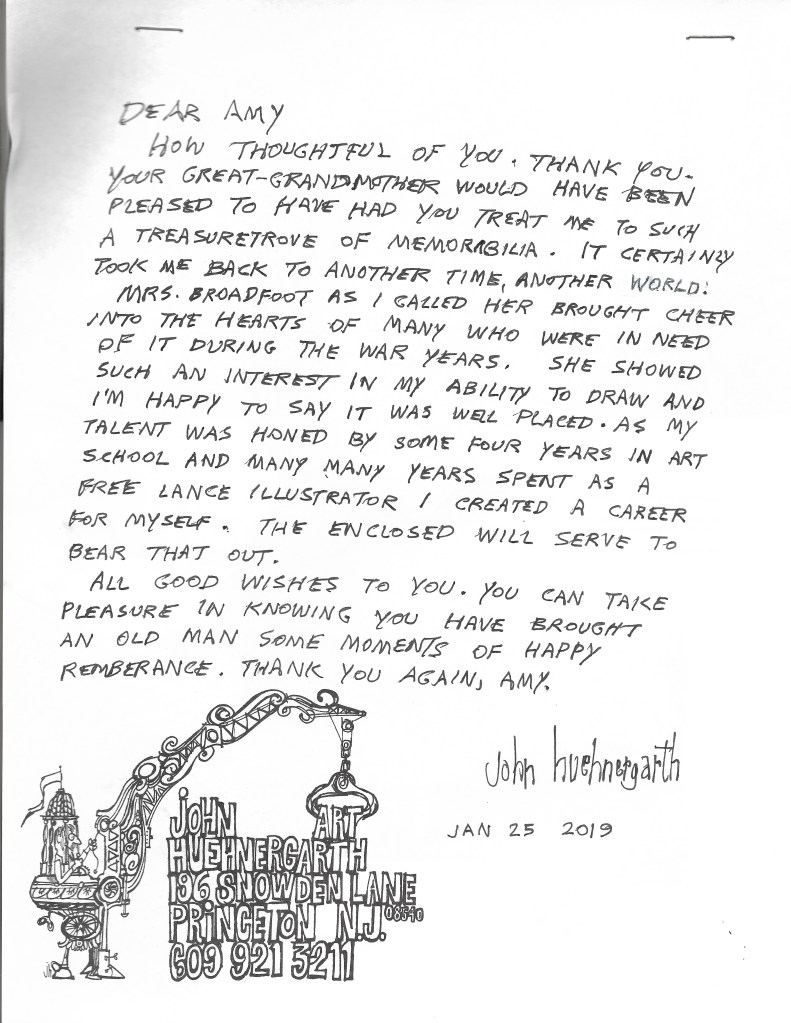
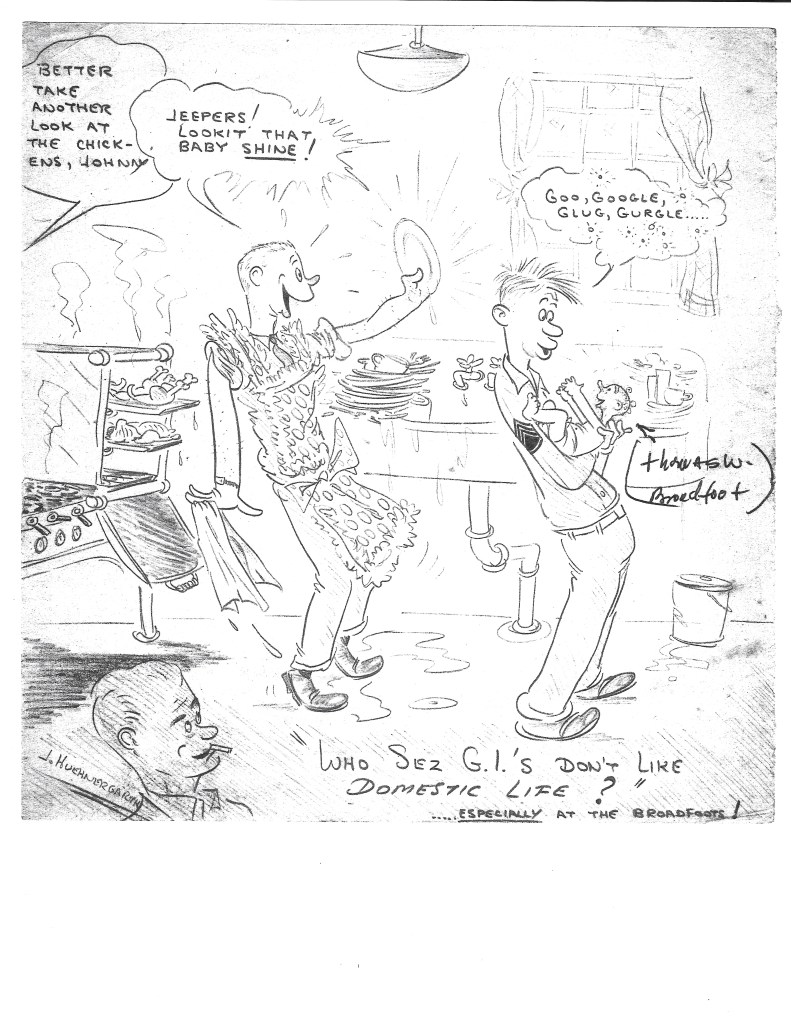
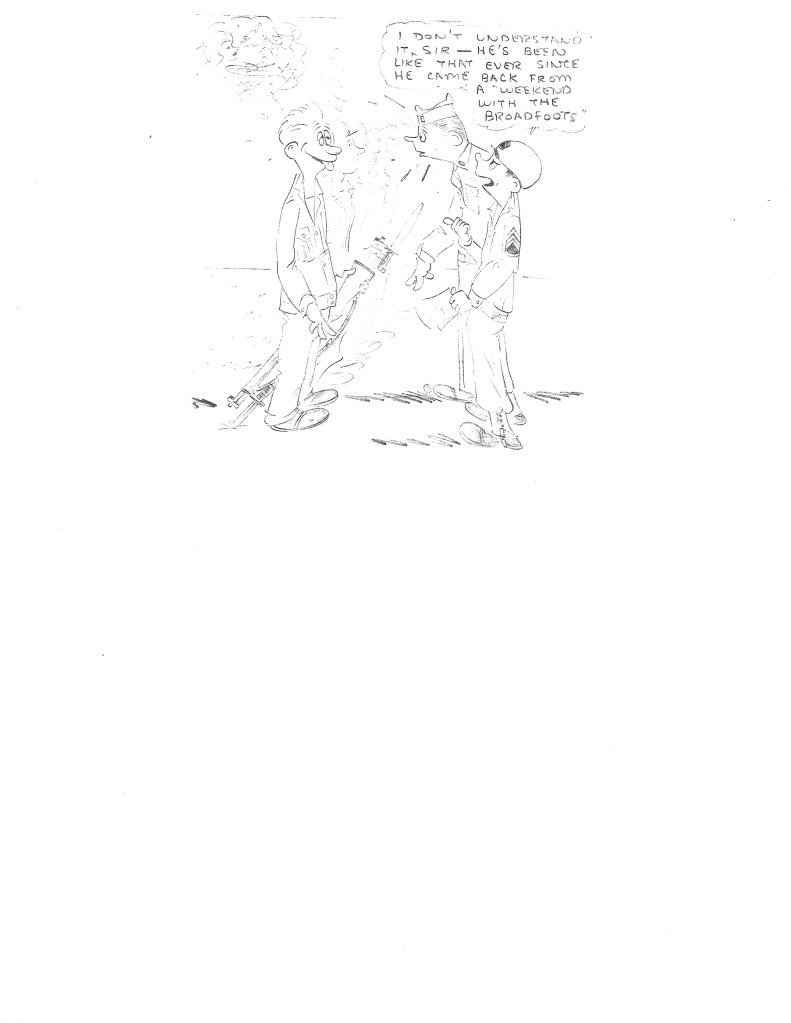


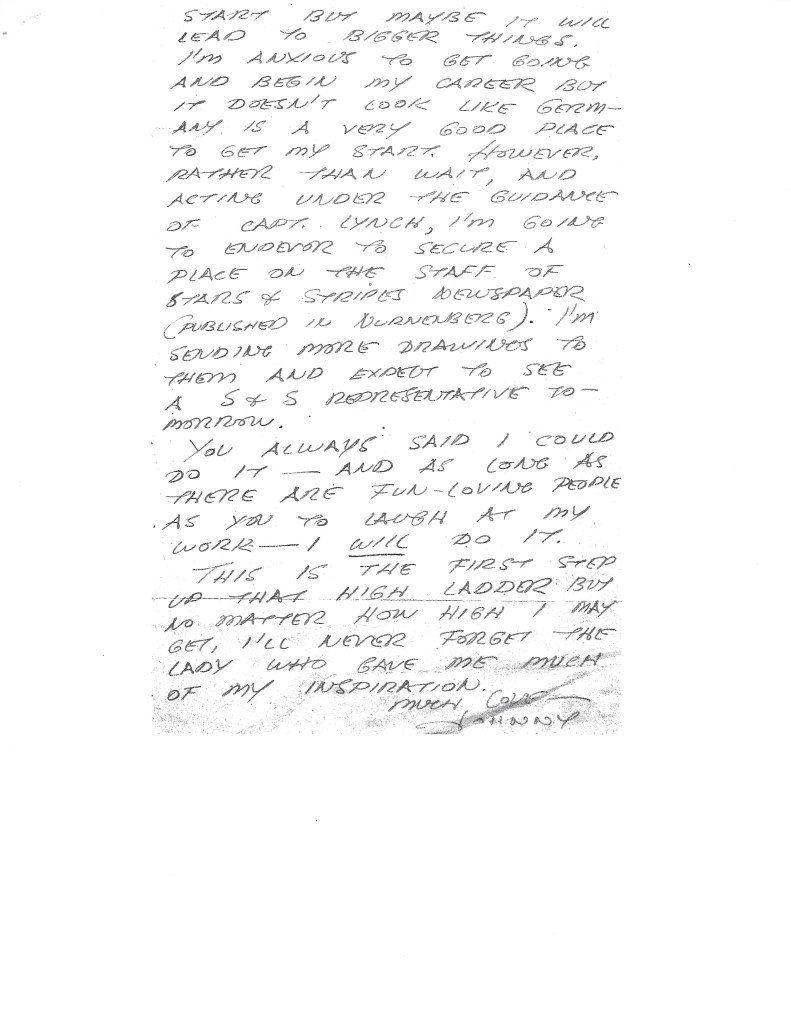
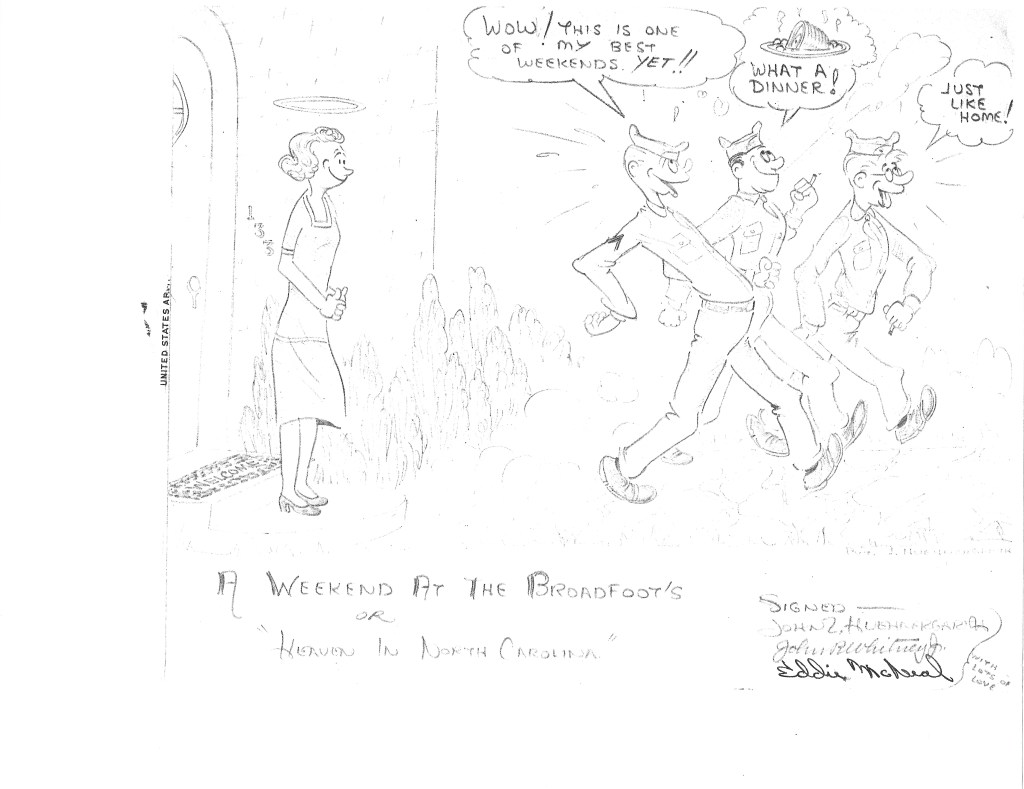
In talking to many of Lizzie’s grandchildren, it seems Dih, as she was fondly called, was a stickler for the rules and provided a lot of tough love and didn’t overly care for young children. As the grandkids got older she became the person to whom they could turn to talk about anything or who helped them when needed.
Lizzie’s granddaughter, Mary Ivie, remembers, “Dih was the go to person to talk to about anything and everything. I spent many an hour in her living room sitting across from her in front of the fireplace sharing whatever was on my mind. She listened and listened. She was a devout Christian. You could always find her in church on Sunday morning and at the weekly services in Lent. She was the one who worked hard to restore the old cemetery at St. James. She also loved the Colonial Dames and she was the one who began the work to restore the gardens at the Burgwin-Wright House, the Headquarters for Colonial Dames. She was so strong and so independent and such a no nonsense person. One time she fell when leaving our house on Wayne Drive and refused any help from me. She drove herself home and later to the doctor. She loved her family especially her wild and crazy 12 grandchildren as noted when she started the cousin parties after we were all “adults” living on our own and starting our own families. She was a modern grandmother and so up on everything current. I remember when she bought this cool sports car (I think it was a convertible). She was the coolest grandmother. Everyone loved her, including my friends who also called her Dih!”
She died on December 22, 1991, in Wilmington, North Carolina, at the age of 96, and was buried locally in Oakdale Cemetery.
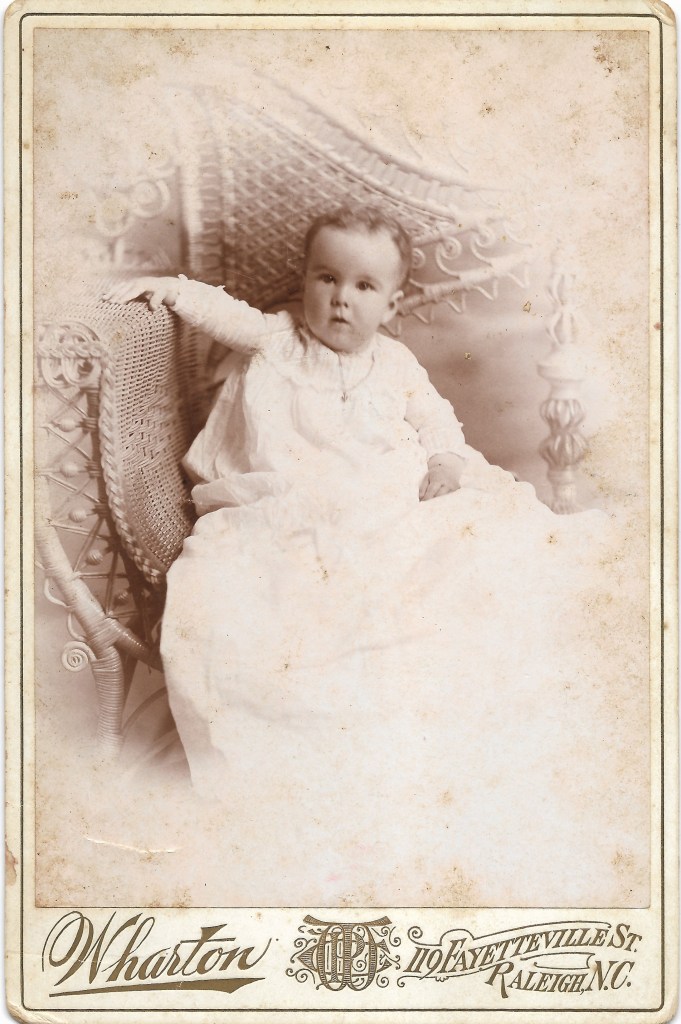


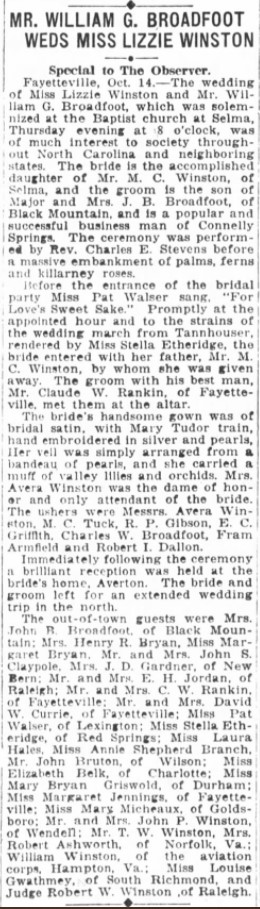
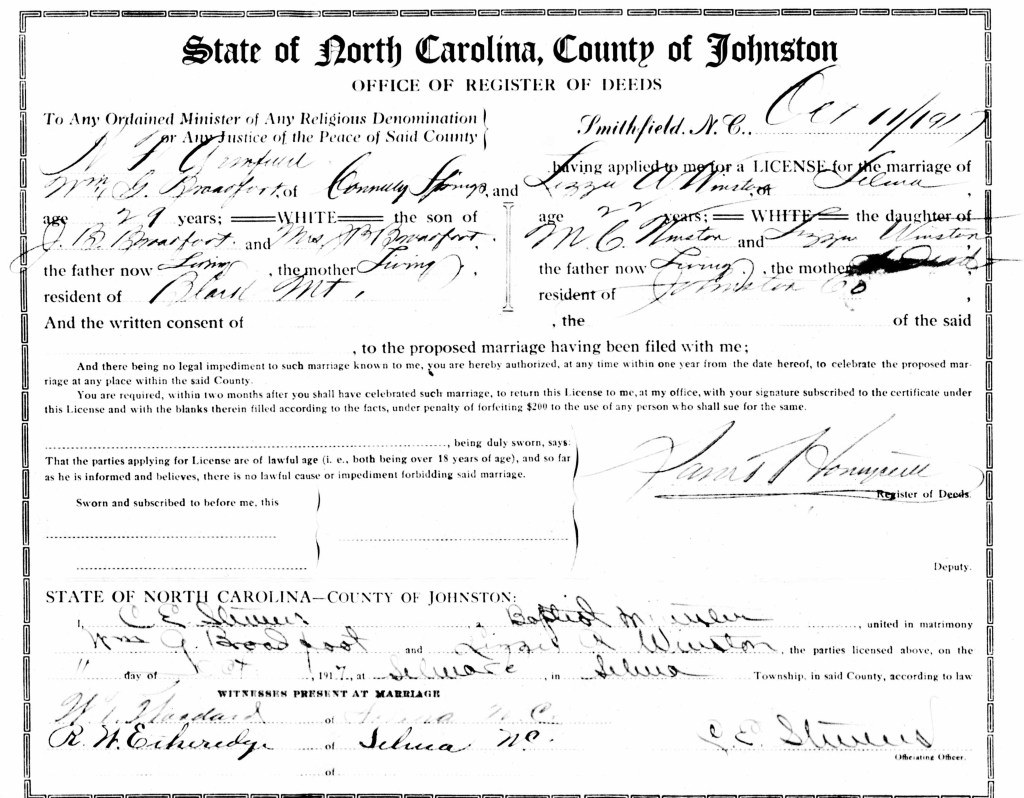
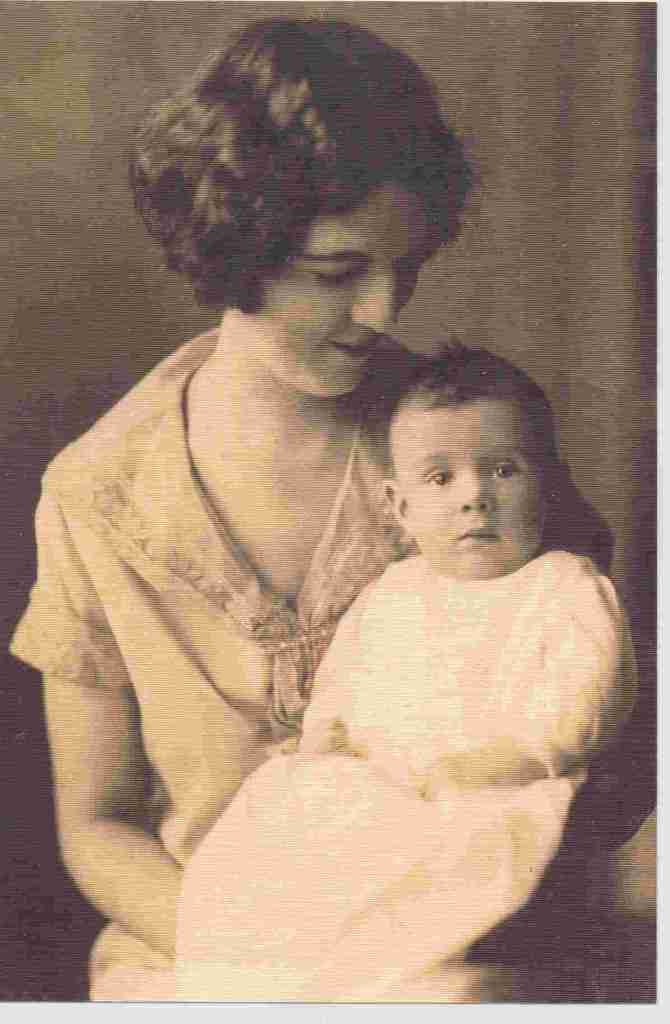
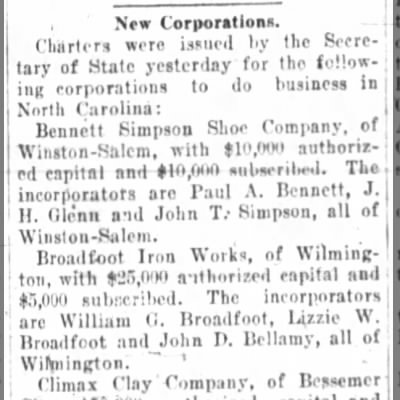

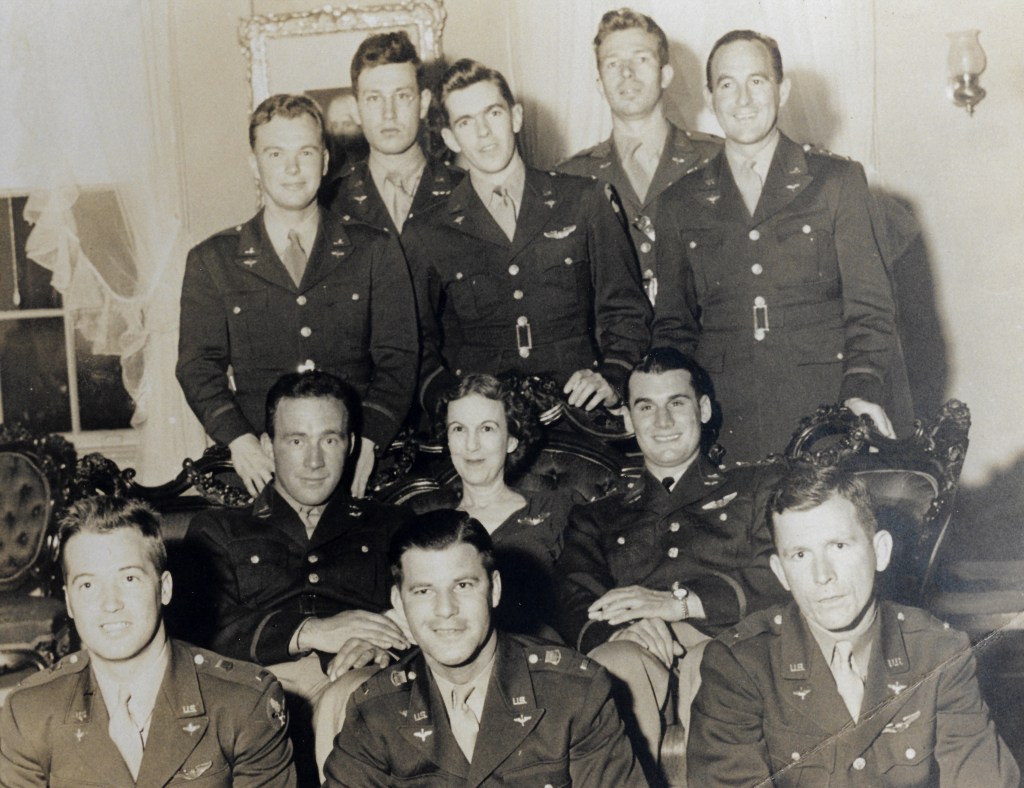
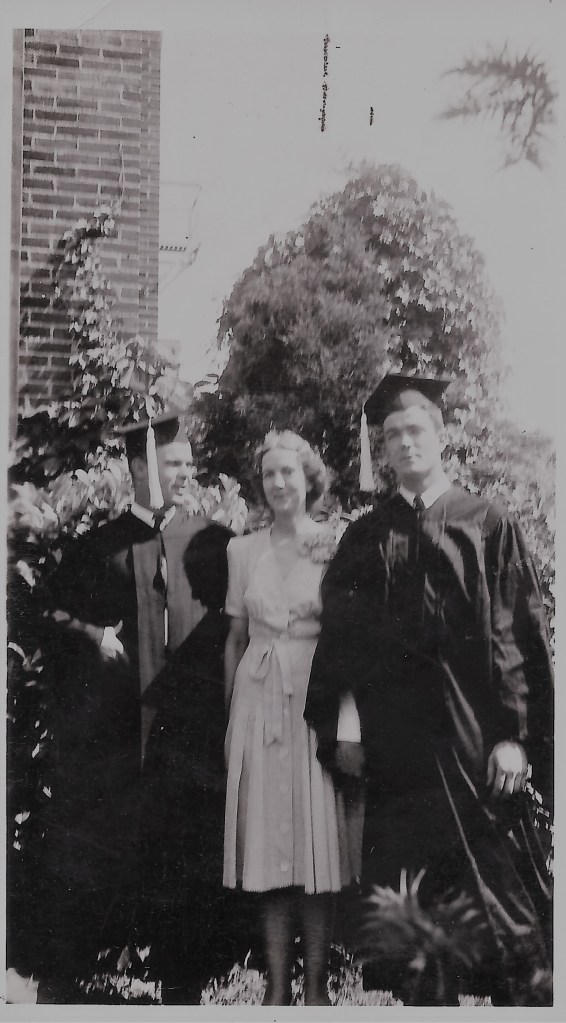


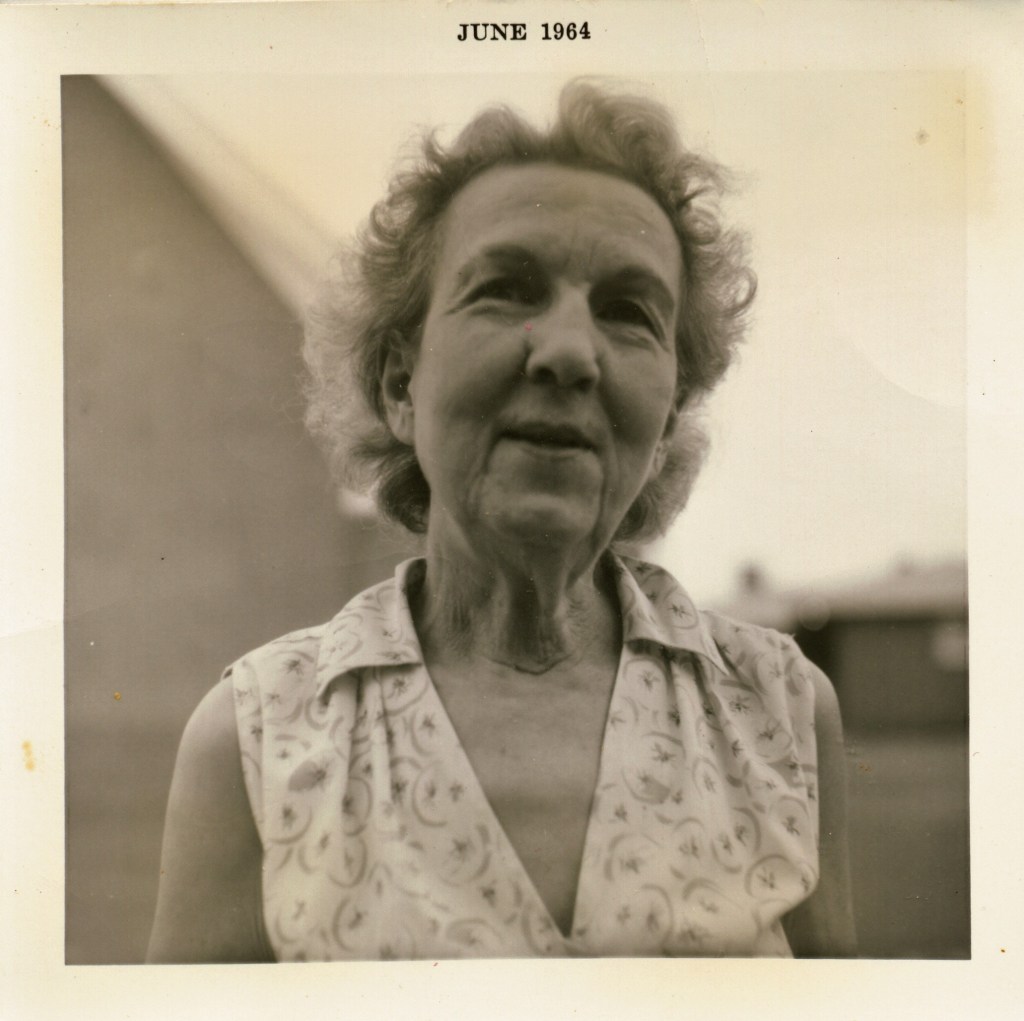
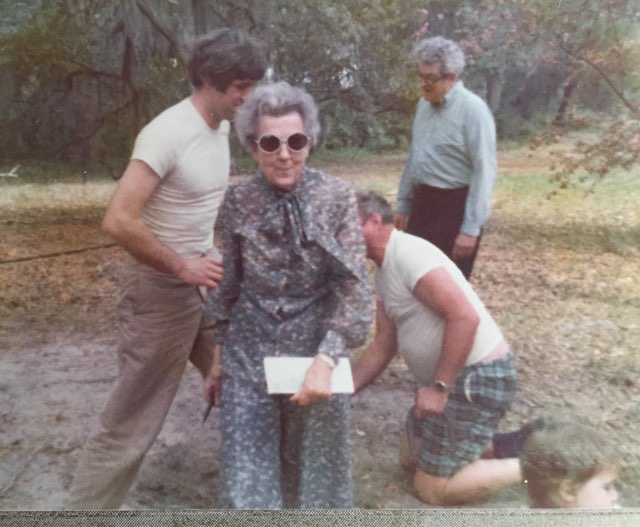
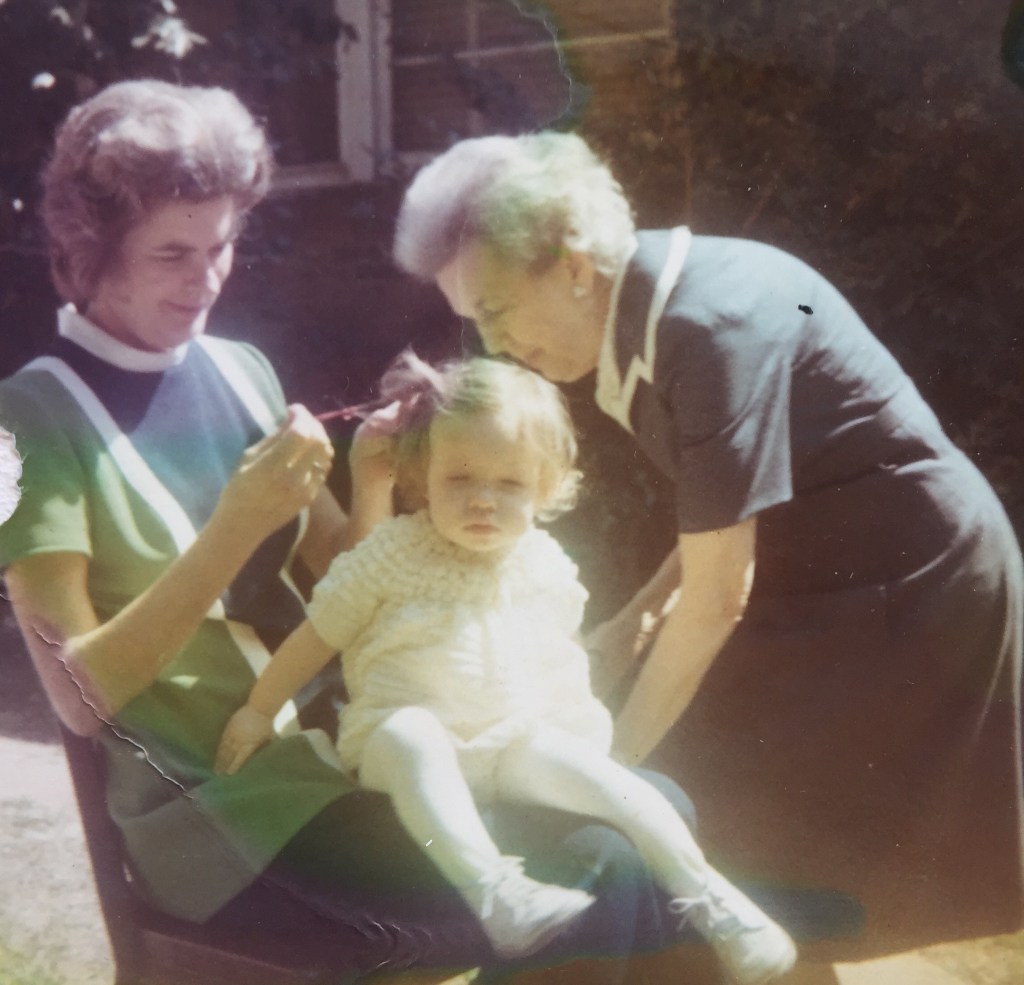
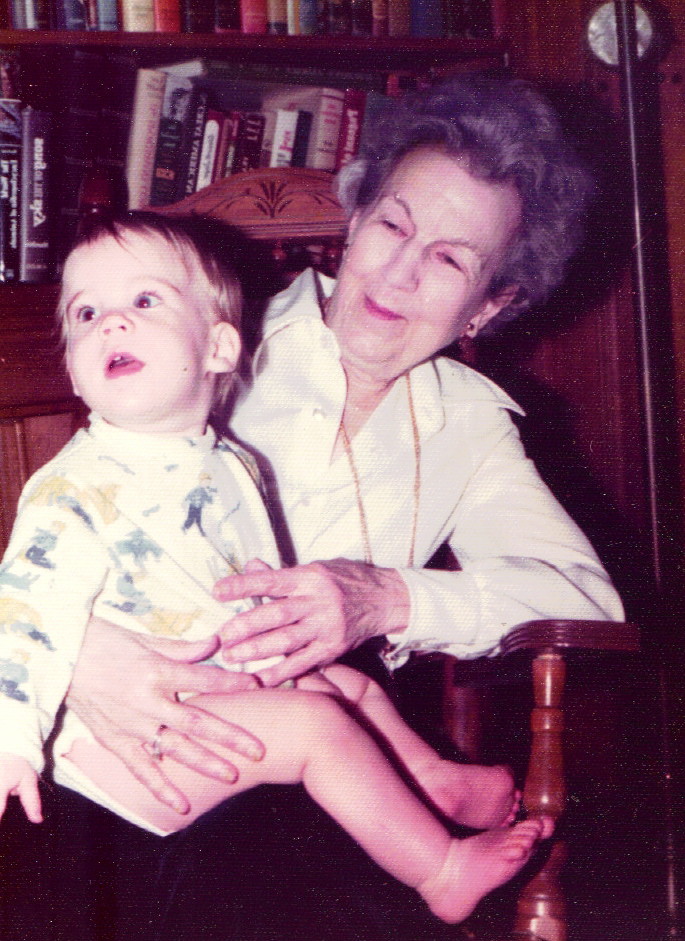
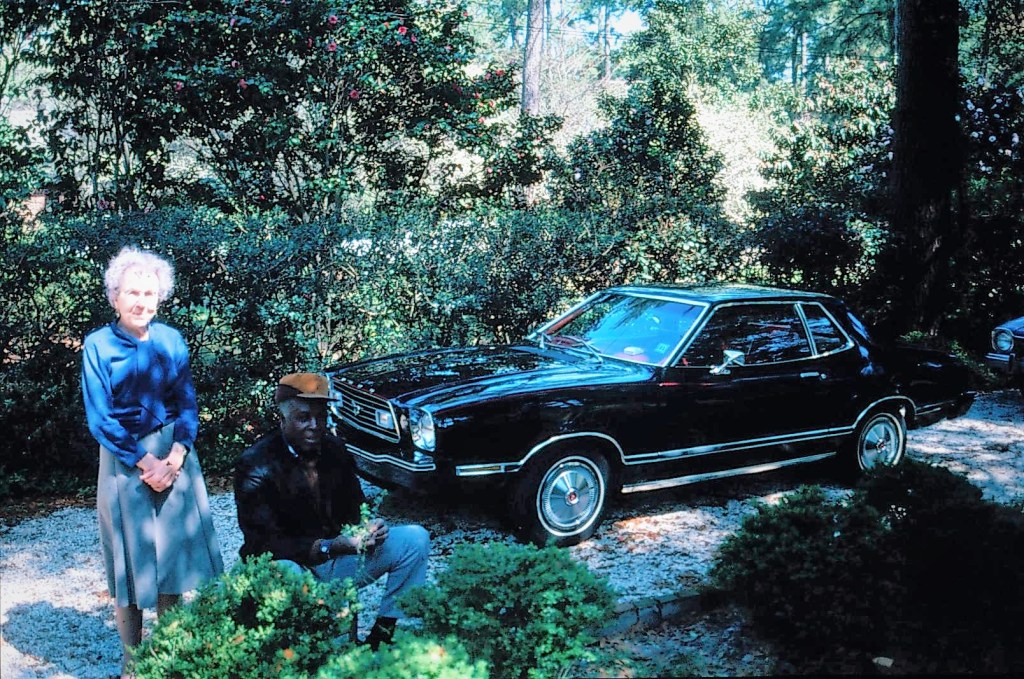
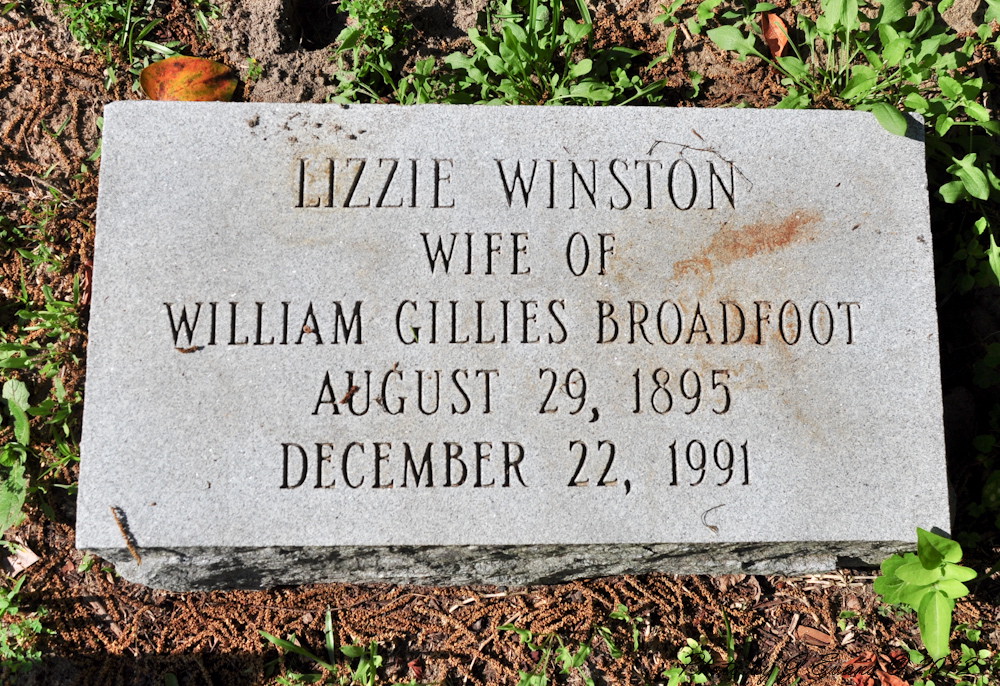

When William Gillies Broadfoot was born on December 27, 1887, in Fayetteville, North Carolina, his father, Major John Barrett Broadfoot, was 27 and his mother, Sarah Frances Bryan, was 25. WGB attended North Carolina Agricultural and Mechanic Arts College and graduated in the class of 1907 at the age of 20. From there, he moved to Ithaca, New York to attended Cornell University where he was voted Freshman class president. He graduated in 1912. WGB became the New England salesman for the the Saco-Lowell Shops and he lived in Andover, Massachusetts for a time. In 1915, William moved to Concord, NC and helped open the Norcott Mill. He named the mill after his maternal grandmother, Mary Norcott. In 1916, WGB moved back to New York to join the firm of Diccks, David, and Broadfoot, a textile company. The stay in New York was brief because in August of 1917, he moved back to North Carolina to be a partner in Klison Hosiery located in Connelly Springs.
In September of 1917, members of a friendly luncheon were pleasantly surprised to find out of the engagement of WGB to Elizabeth “Lizzie” Avera Winston. They were married on October 11, 1917, in Selma, Johnston County, North Carolina. They had three children during their marriage: William Gillies Broadfoot, Jr. born August 17, 1918 in Selma, NC, Winston Broadfoot born February 20, 1920 in Wilmington, NC and Shepard Bryan Broadfoot born December 19, 1924 in Atlanta, GA. On March 4, 1919, Broadfoot Iron Works was incorporated in Wilmington, NC with William Gillies at the helm. William was also heavily involved in the textile industry. While living in Atlanta, Georgia, he was vice president and textile director of the Textile Mills Company in Marble Falls, TX. In 1925, he served as president of the Marcelle Cotton Mills in Eufaula, Alabama, all while concurrently being vice president of the Roswell Mill in Roswell, GA.
By 1928, the couple had moved back to Wilmington, NC. WGB and Lizzie Broadfoot bought Buena Vista in 1935. For the next 20 or so years, WGB stayed busy as the owner of Broadfoot Iron Works. During World War II, Broadfoot Iron Works was greatly involved in the war effort providing essential war material. In 1942, WGB was named vice consul to Norway and was later honored with the Order of the St. Olav for coming to the rescue of a young Norwegian sailor.
In July of 1950, Broadfoot Iron Works was up for auction. Life changed dramatically for WGB in 1951, when a legal case was formed against WGB for not paying income taxes. While vehemently denying any wrong-doing, WGB fled the state of North Carolina so he could not be brought to court. He ended up in St. Petersburg, FL and became a real estate broker. While Lizzie and WGB were never legally divorced, they both led independent lives for the remainder of the their time. WGB kept up rigorous correspondence with family through letters and occasional visits. He always cared deeply for the success and happiness of his progeny. He had a special friend Martha, with whom he lived out his days.
He spent a great deal of time in Clayton, Georgia especially during the Georgia Mountain Festival. It is here he died on August 14, 1961 at the age of 73. He is buried in New Bern, North Carolina at the Cedar Grove Cemetery.
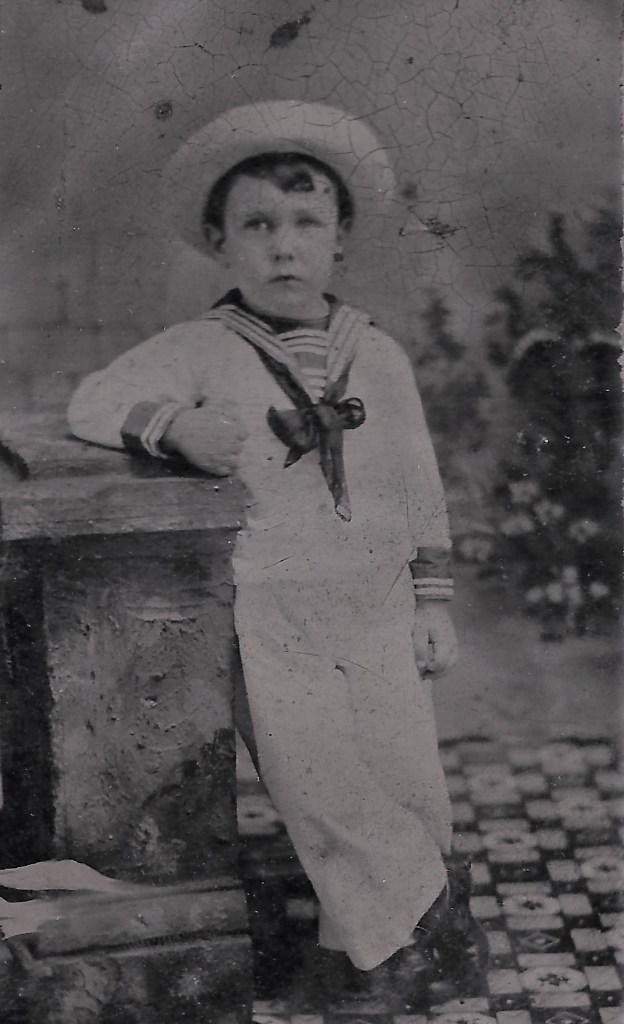
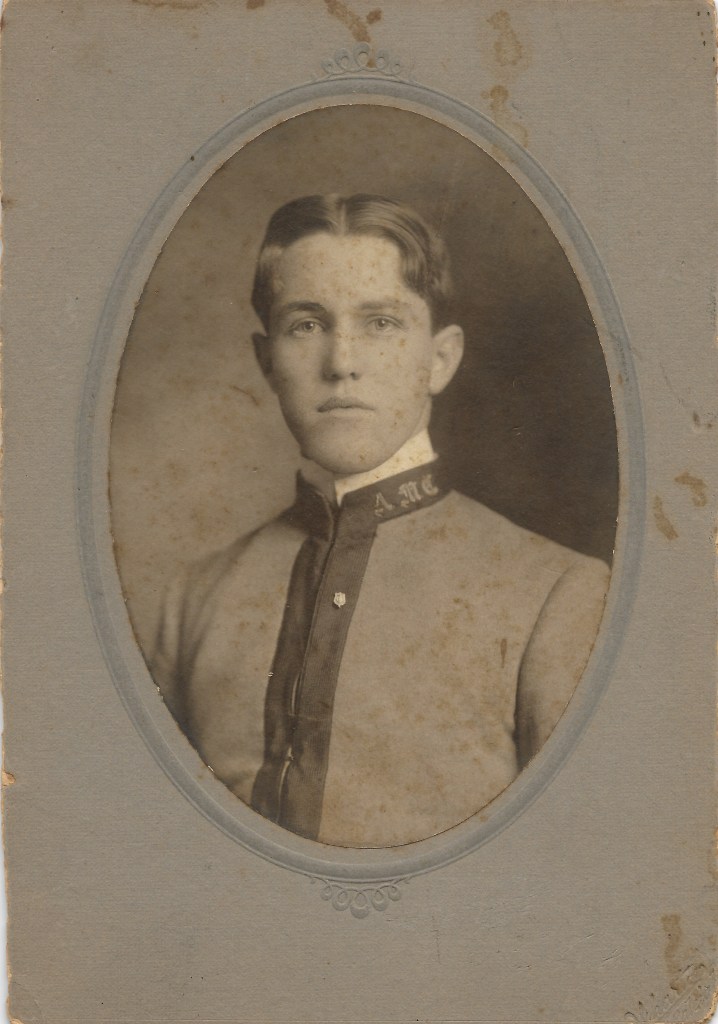
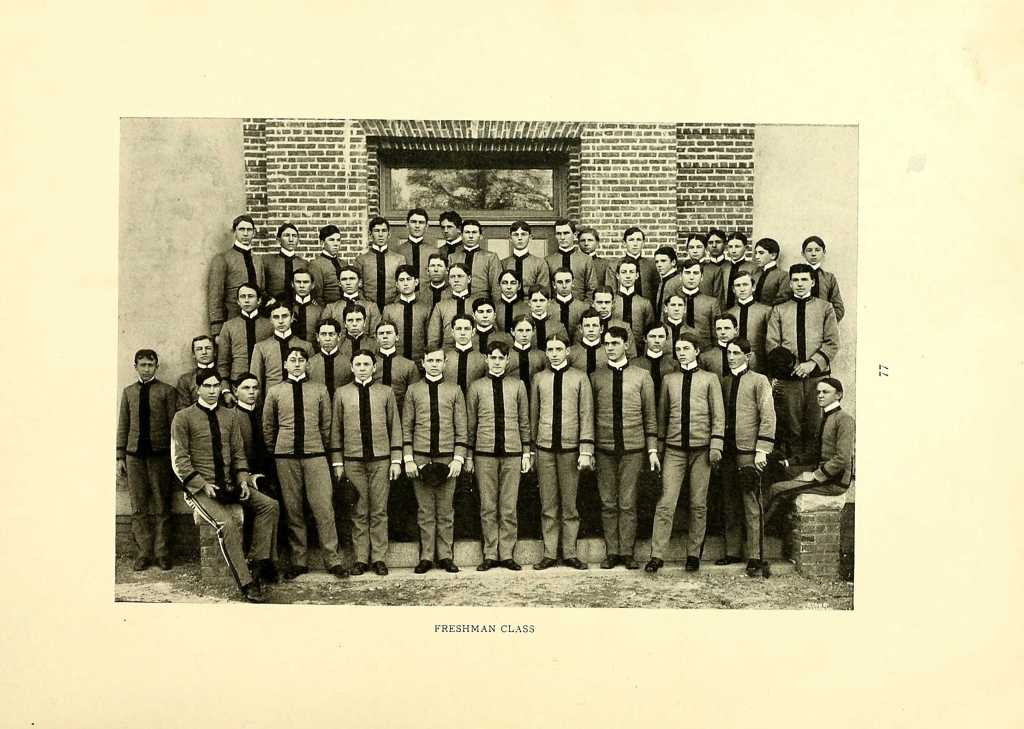
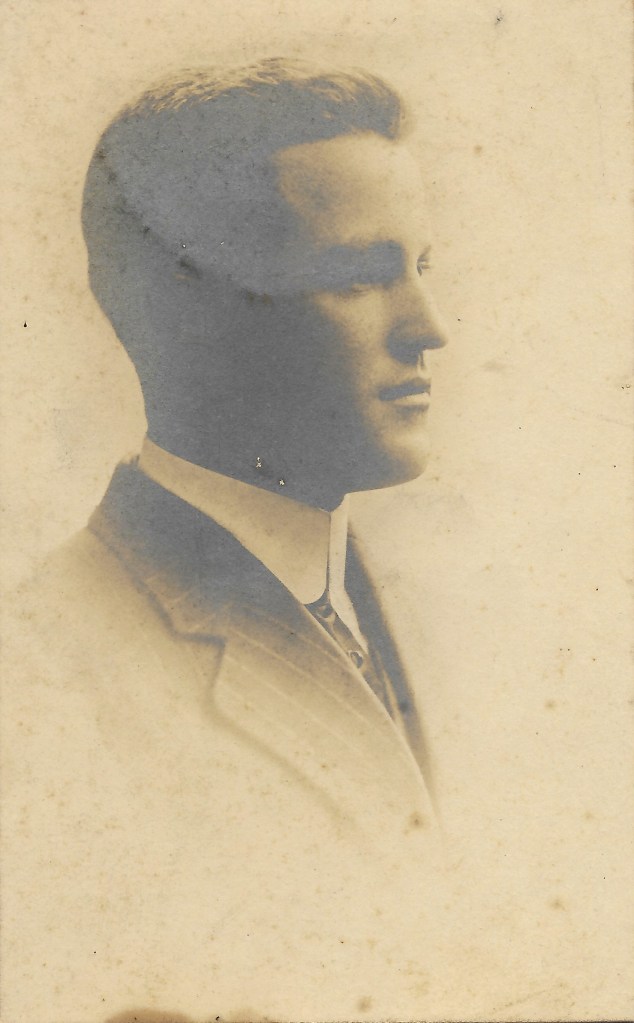
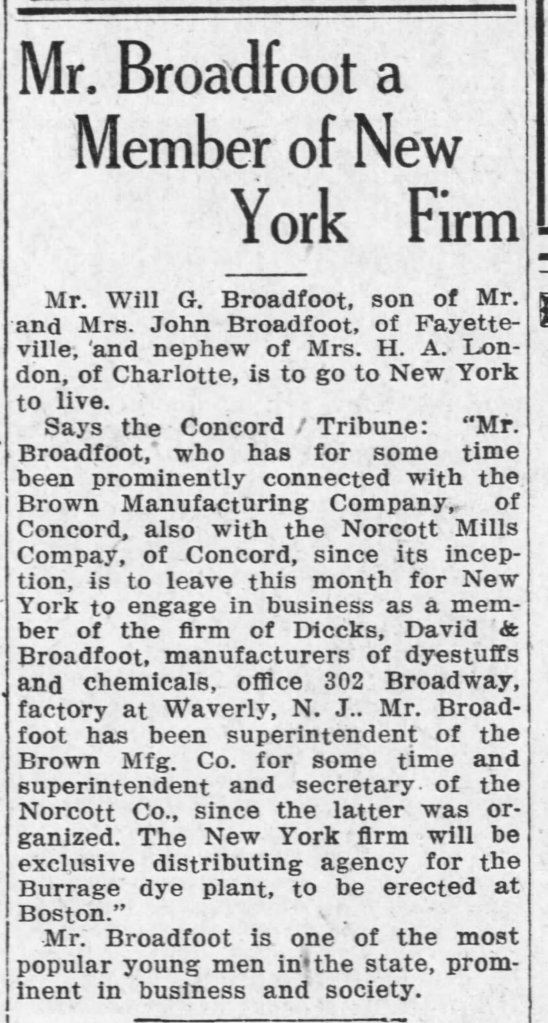

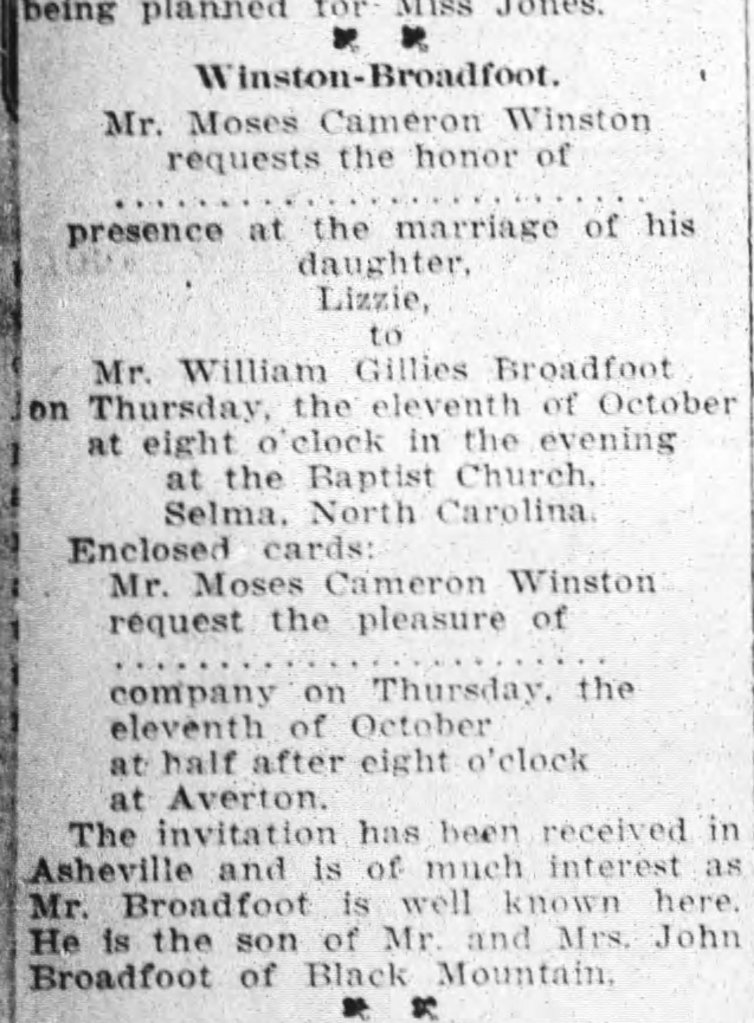
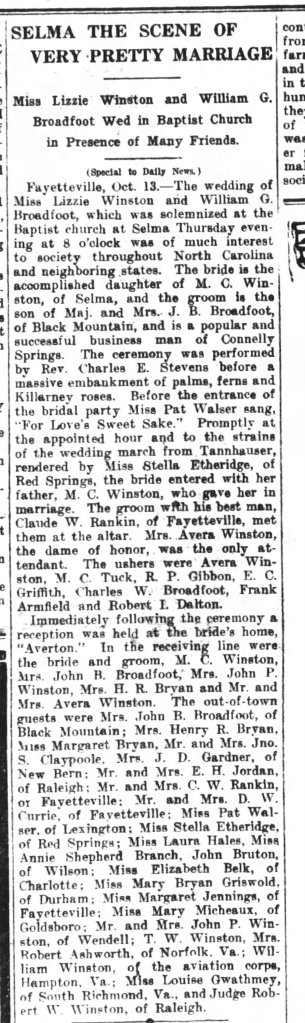



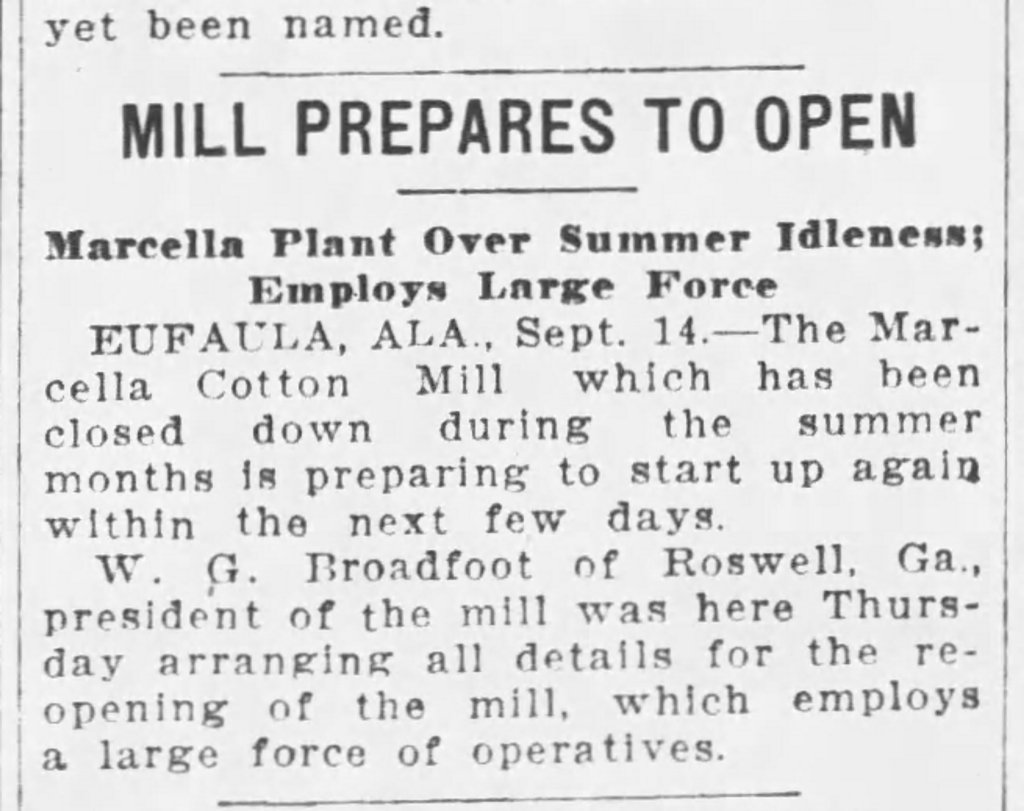
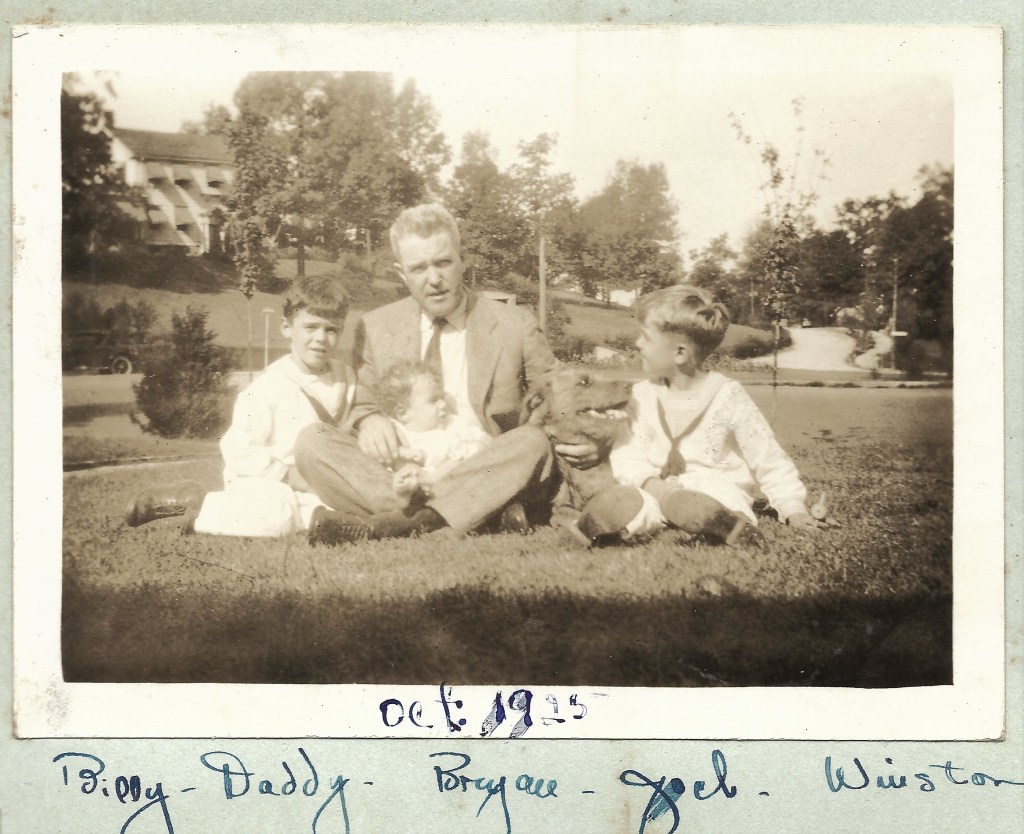
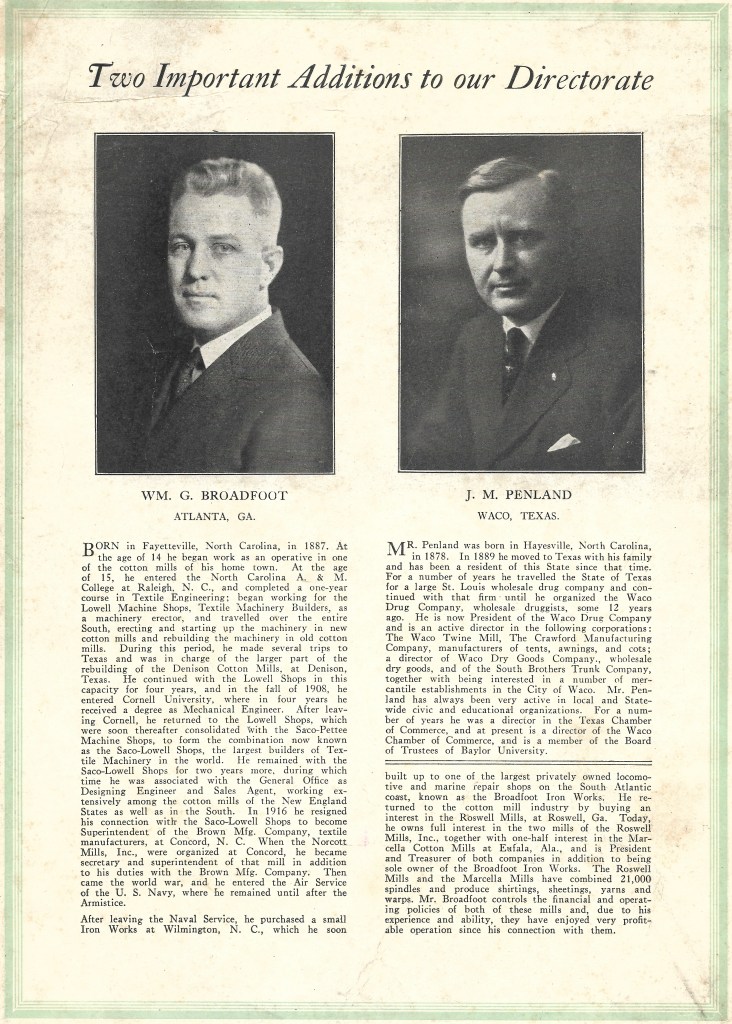
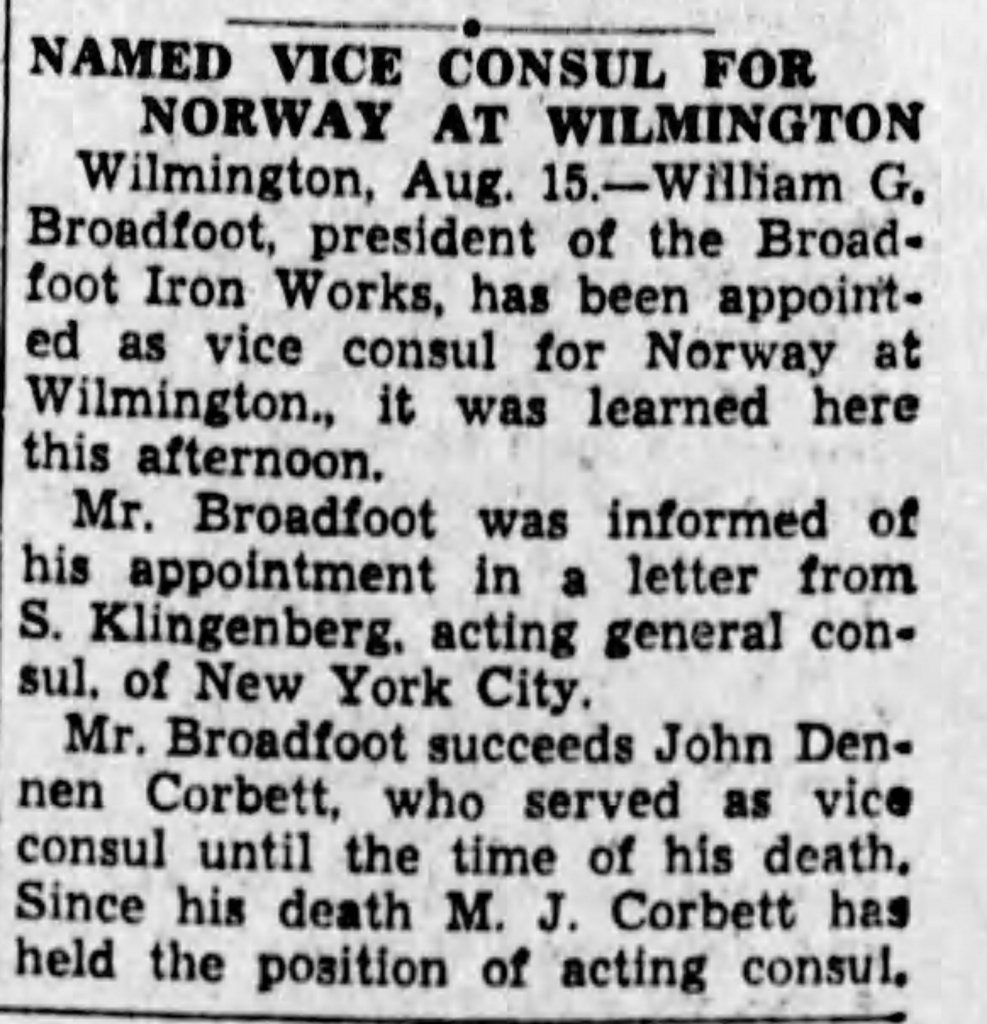
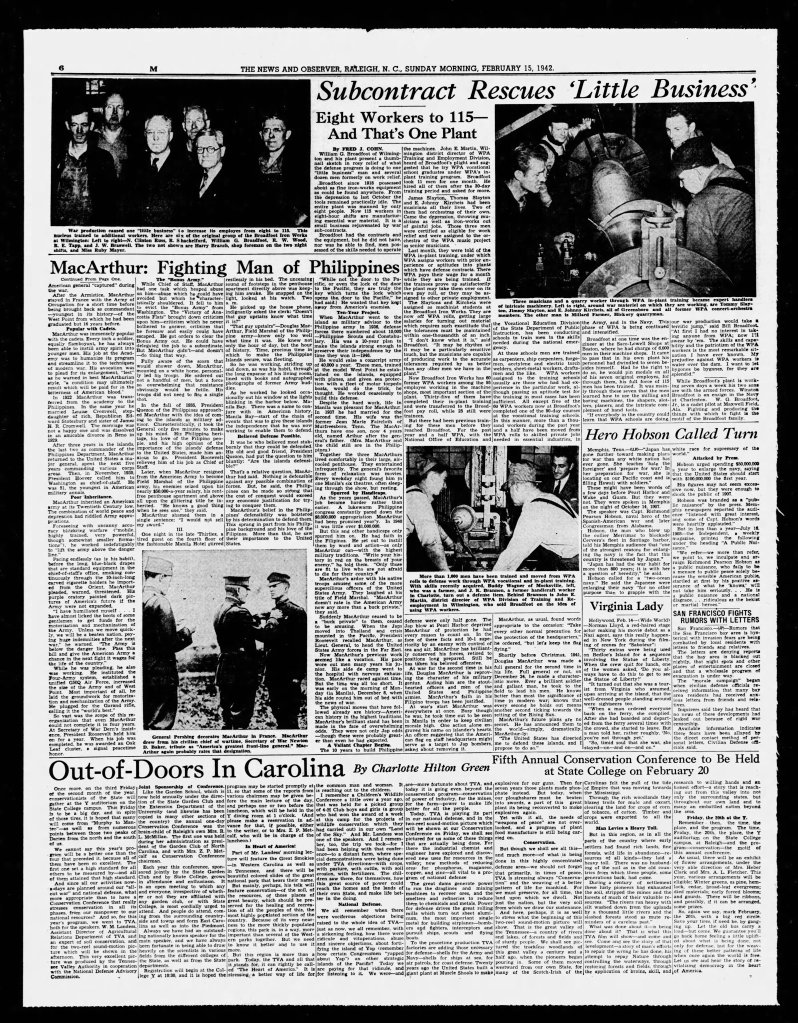

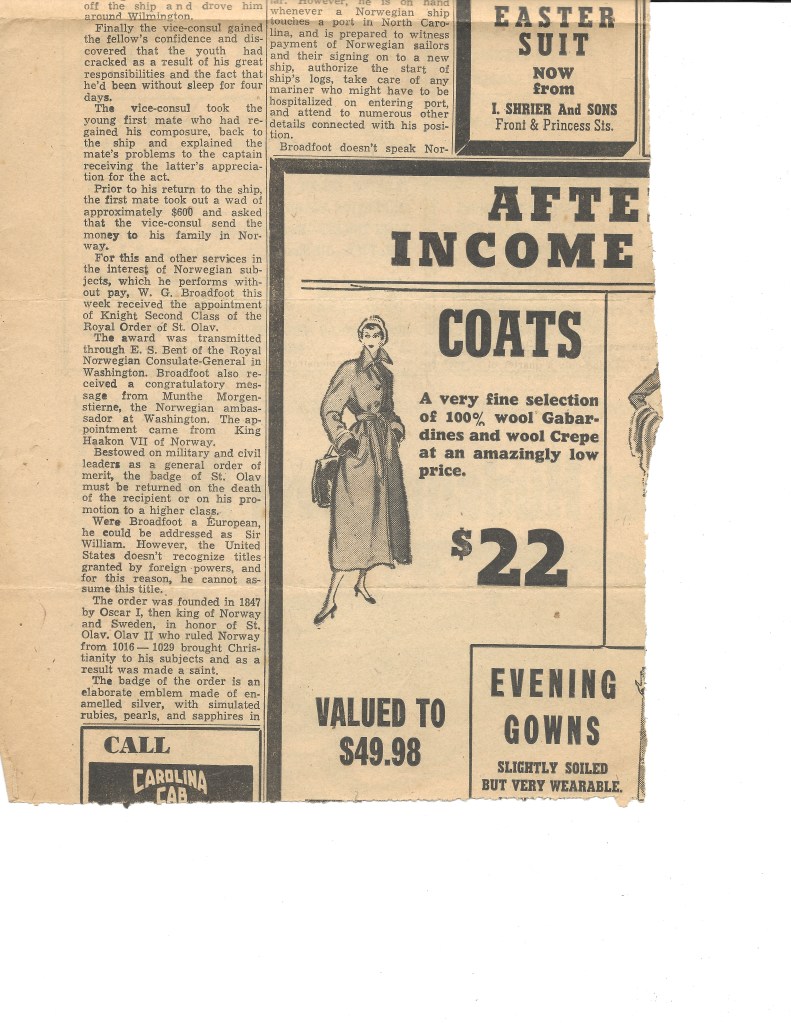

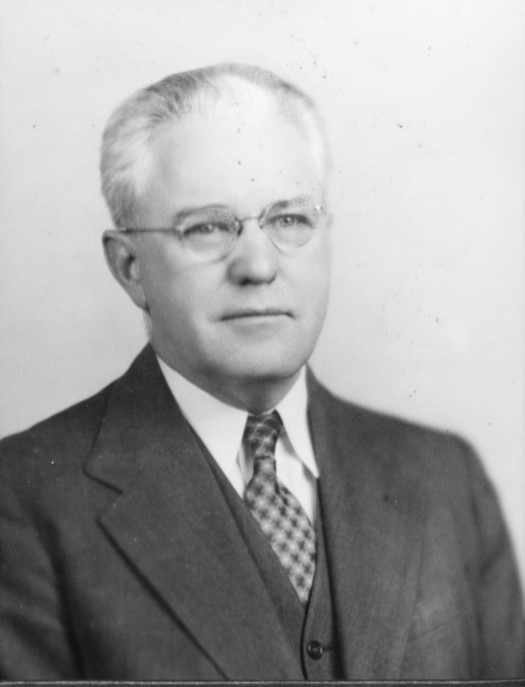

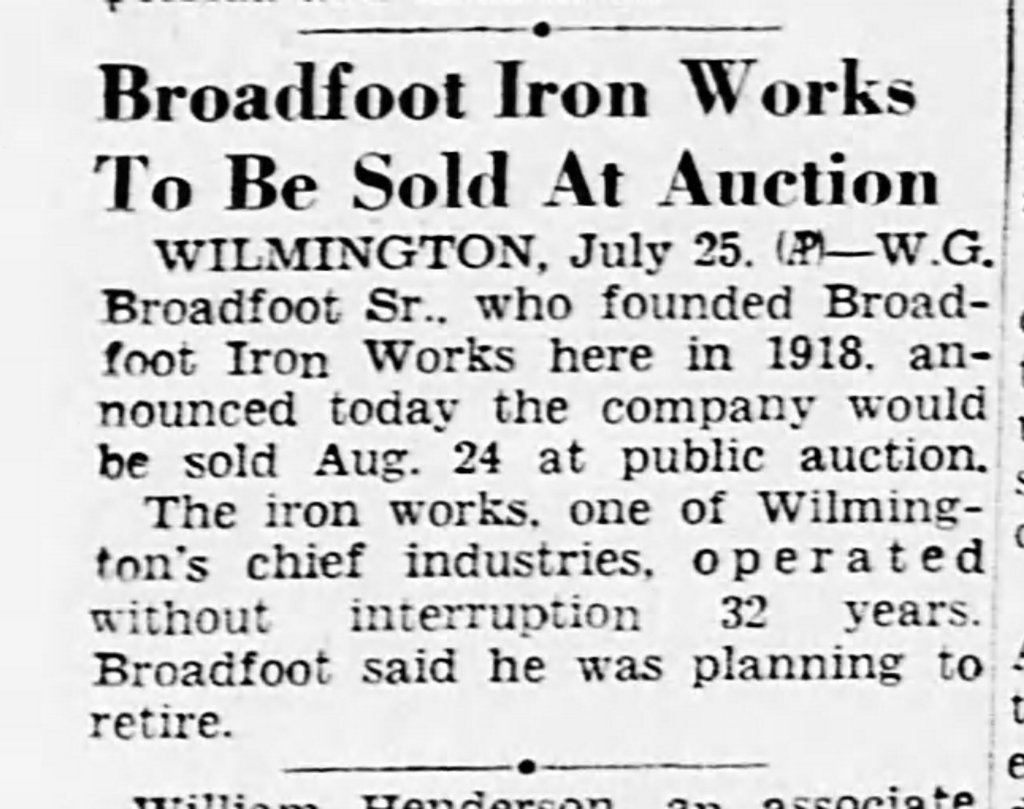
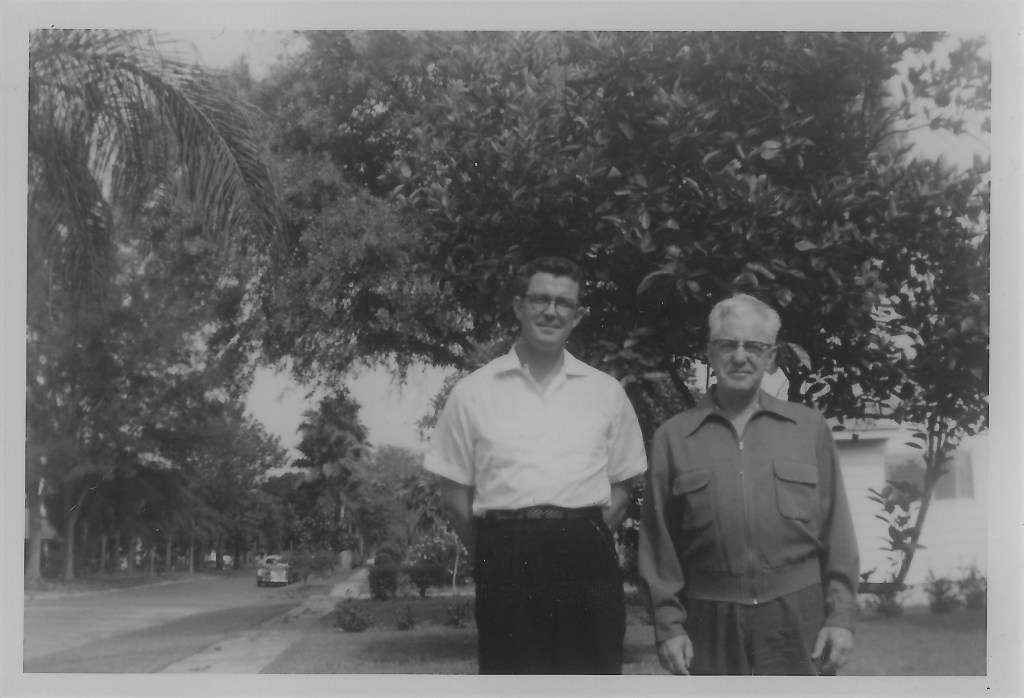
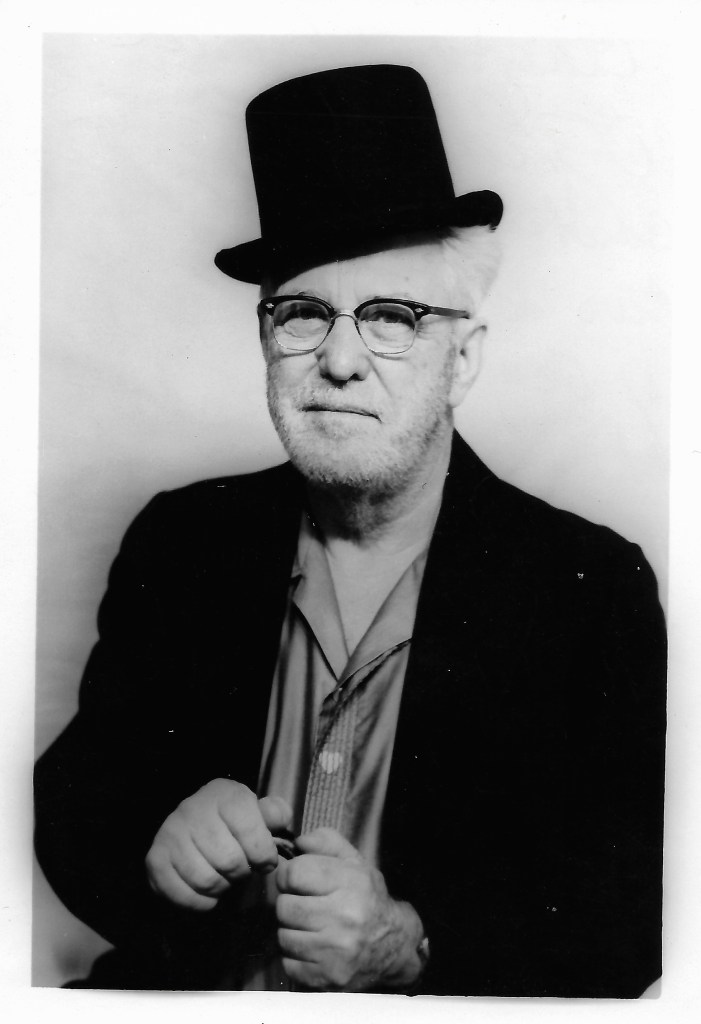
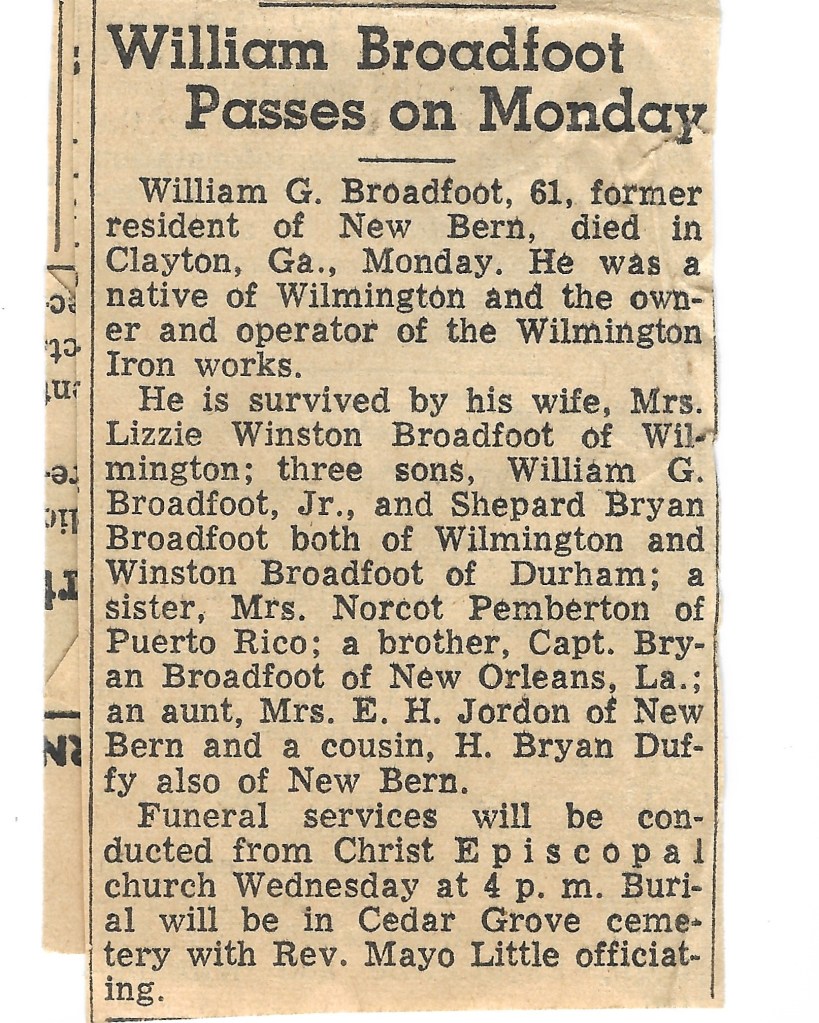

When Sarah Frances Bryan was born on March 29, 1862, her father, Henry, was 26, and her mother, Mary, was 21. She married Major John Barrett Broadfoot on October 15, 1885, in New Bern, North Carolina. They had four children during their marriage: Mary Norcott, 1886-1972, William Gillies, 1887-1961, Frances Bryan, 1890-1960, and Henry Bryan, 1893-1980. During their marriage, John and Frances moved to Black Mountain, NC and ran a boarding house. Frances was quite active in the surrounding community. Many friends and relatives escaped the heat of NC summers visiting with the Broadfoots in Black Mountain. She died on January 17, 1950, in New Bern, North Carolina, at the age of 87, and was buried there.
In 1924, Sarah “Fannie” Bryan traveled by herself to Europe on what she called “My Great Adventure.” Her journal the trip has since been published. During her travels, she chose to visit her husbands family the Broadfoots in Wigtonshire, Scotland. Here is some of her narrative:

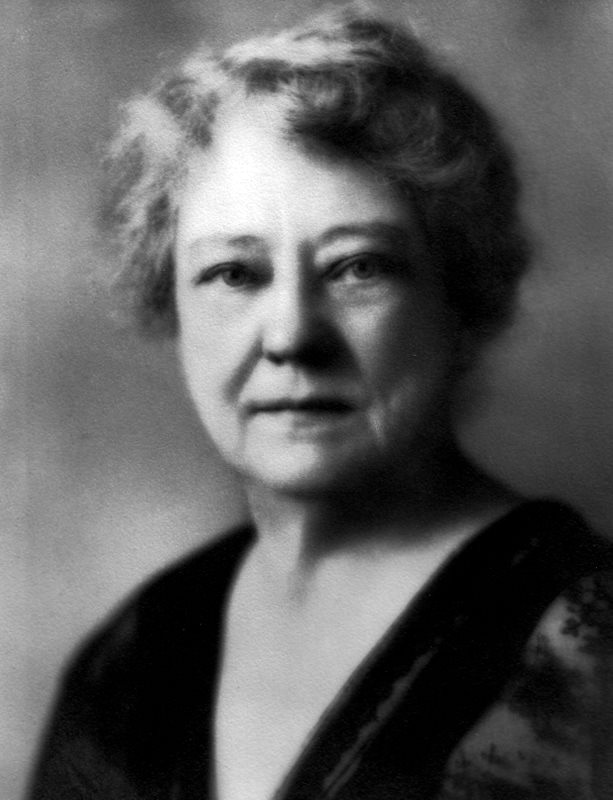
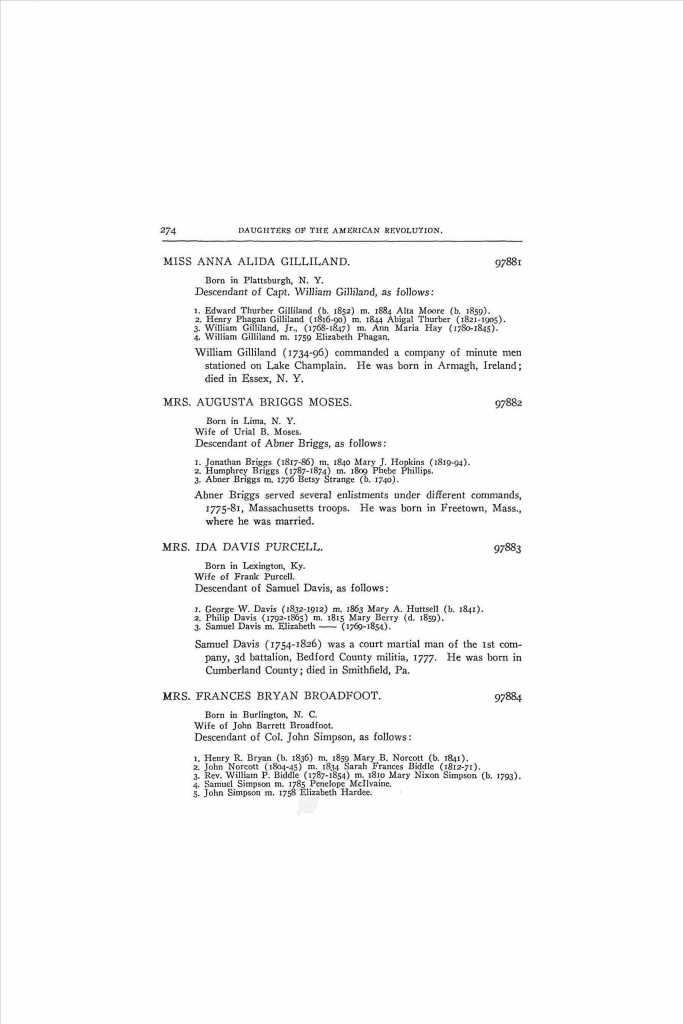
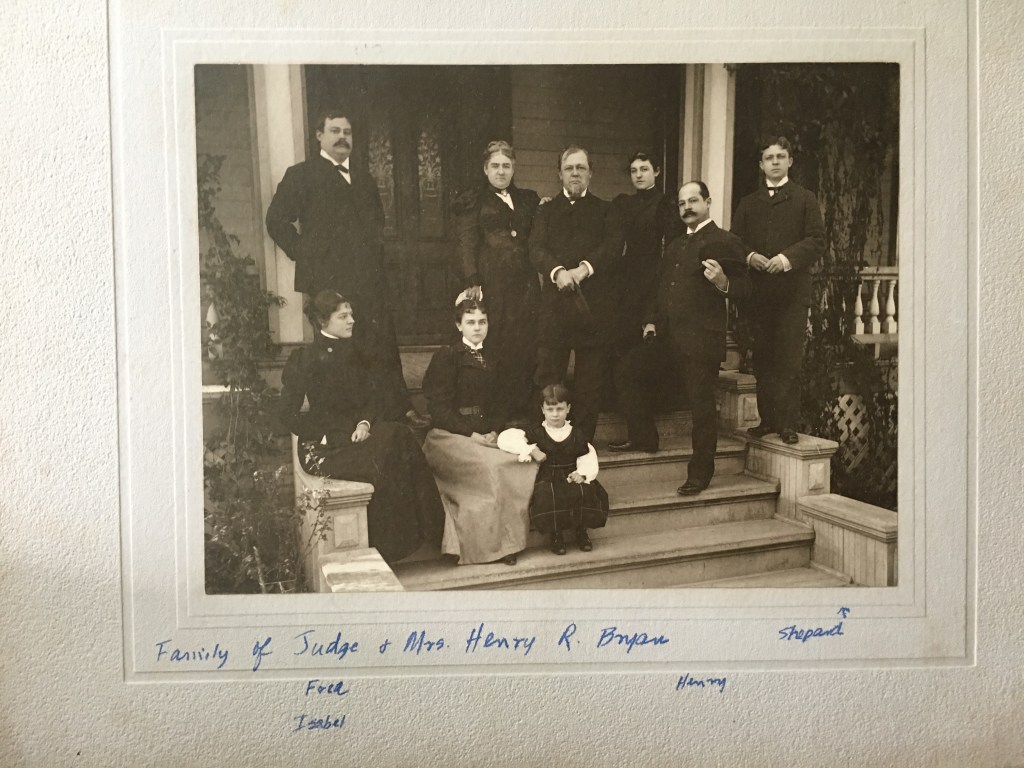
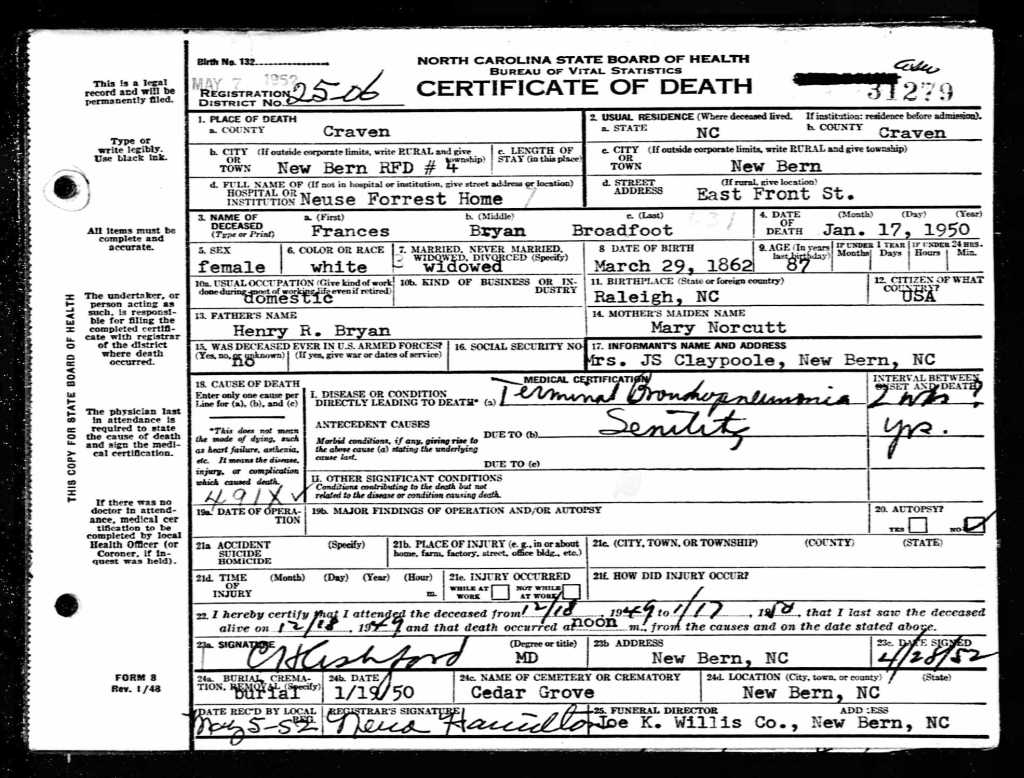
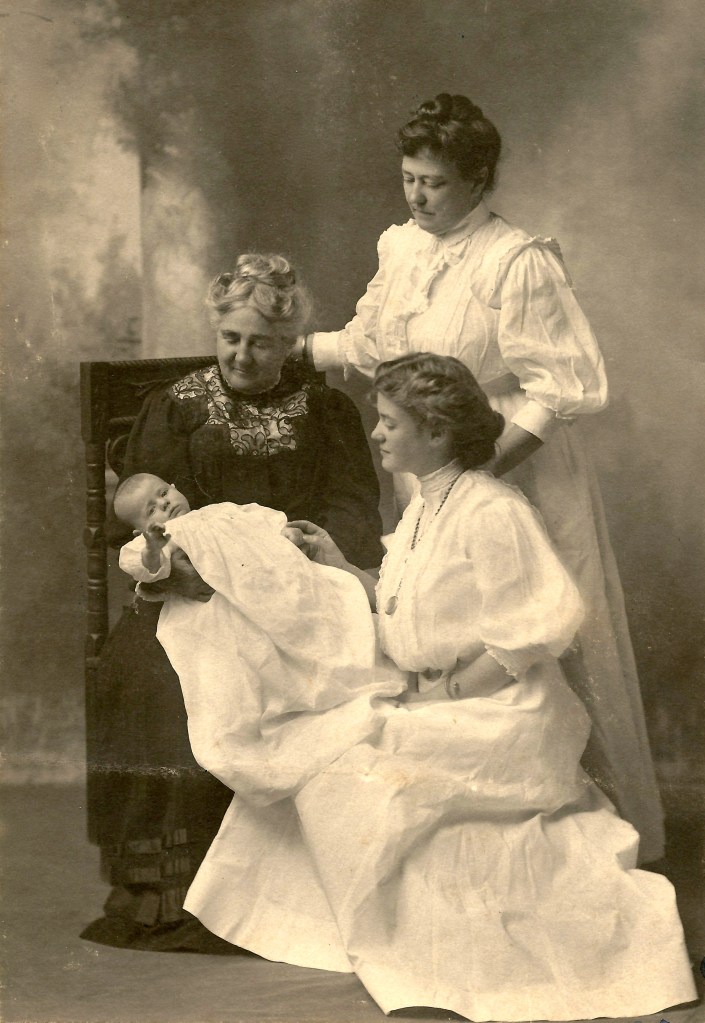
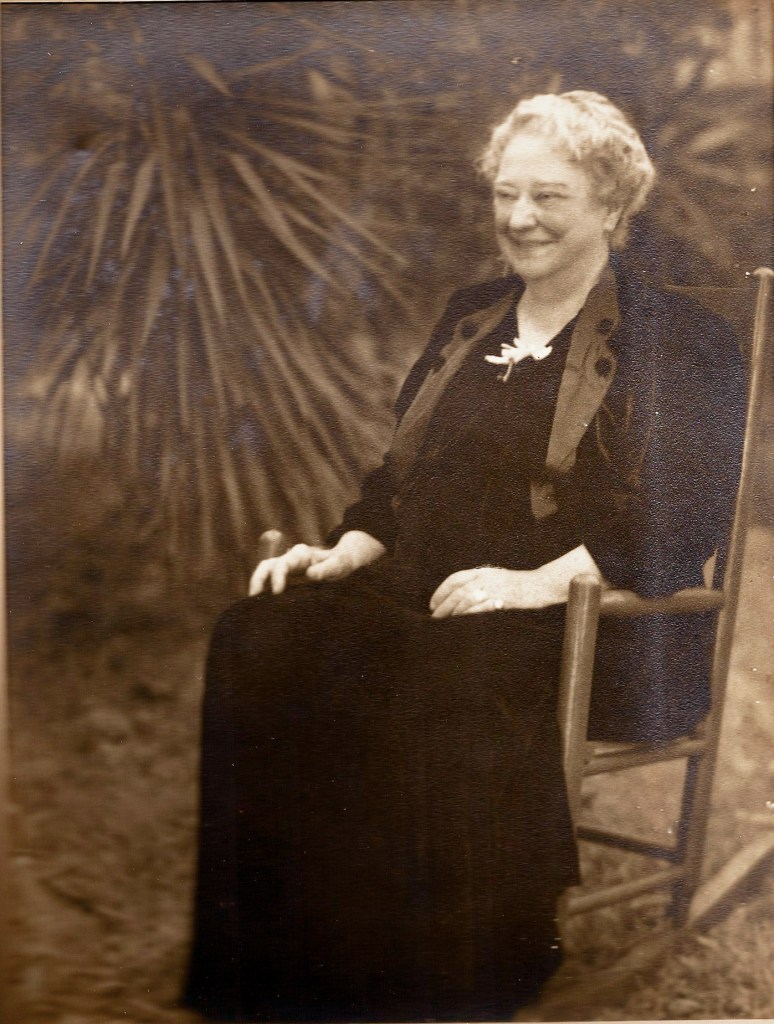
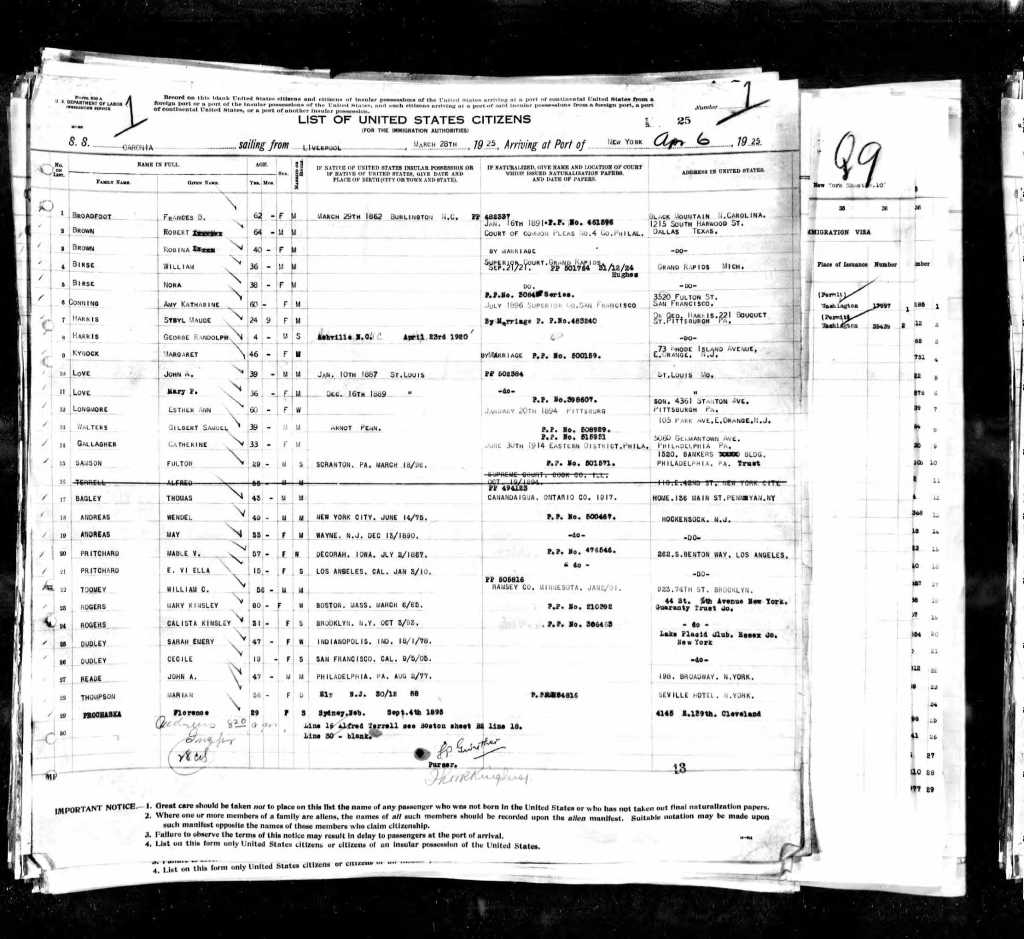
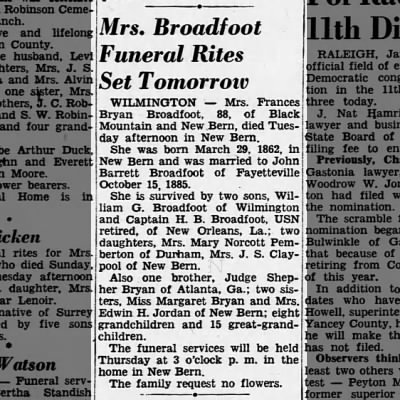

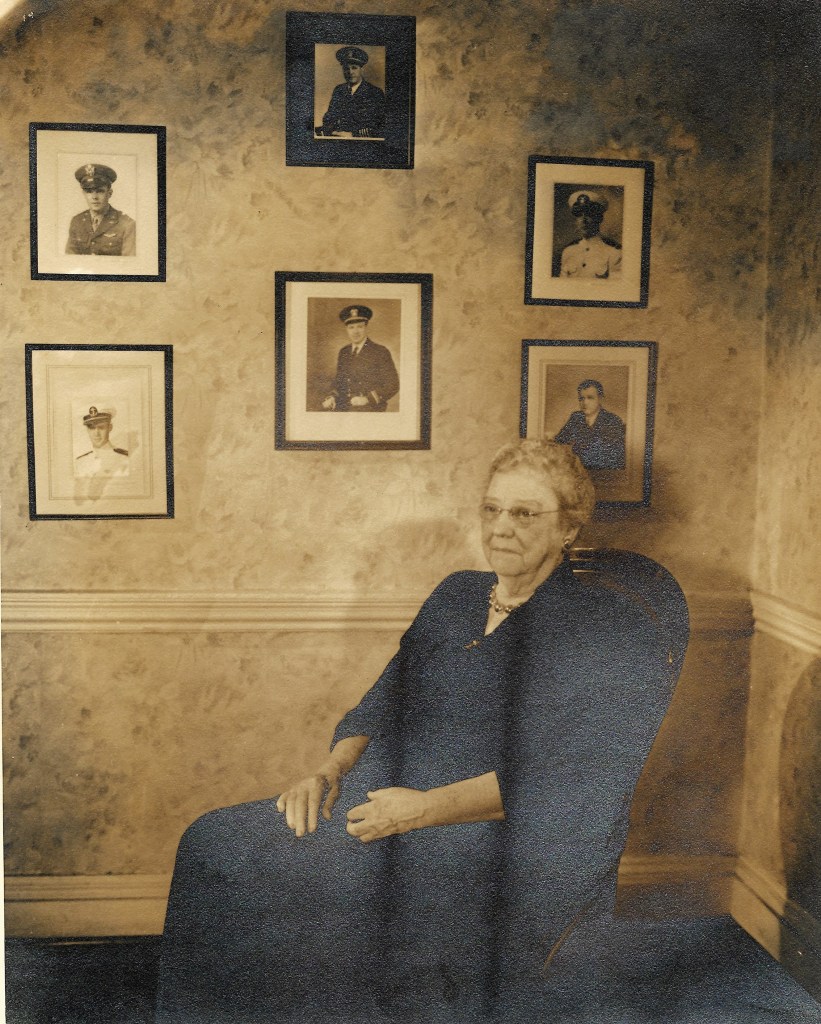
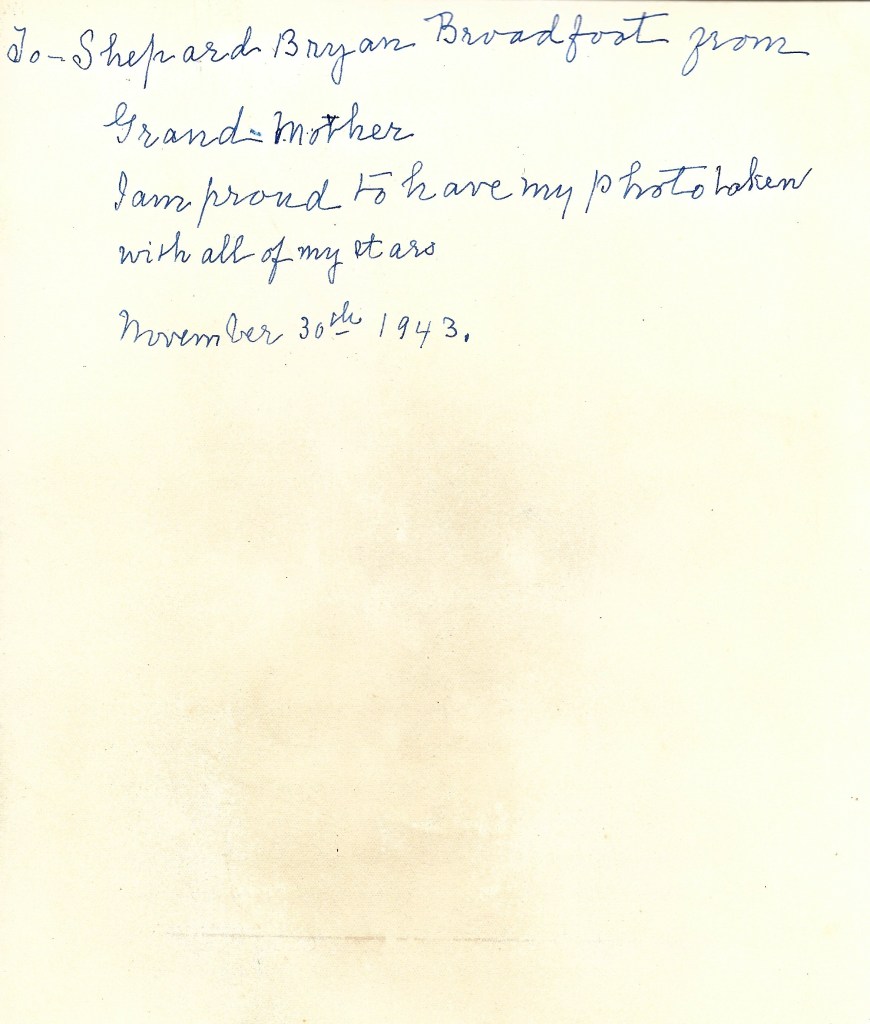
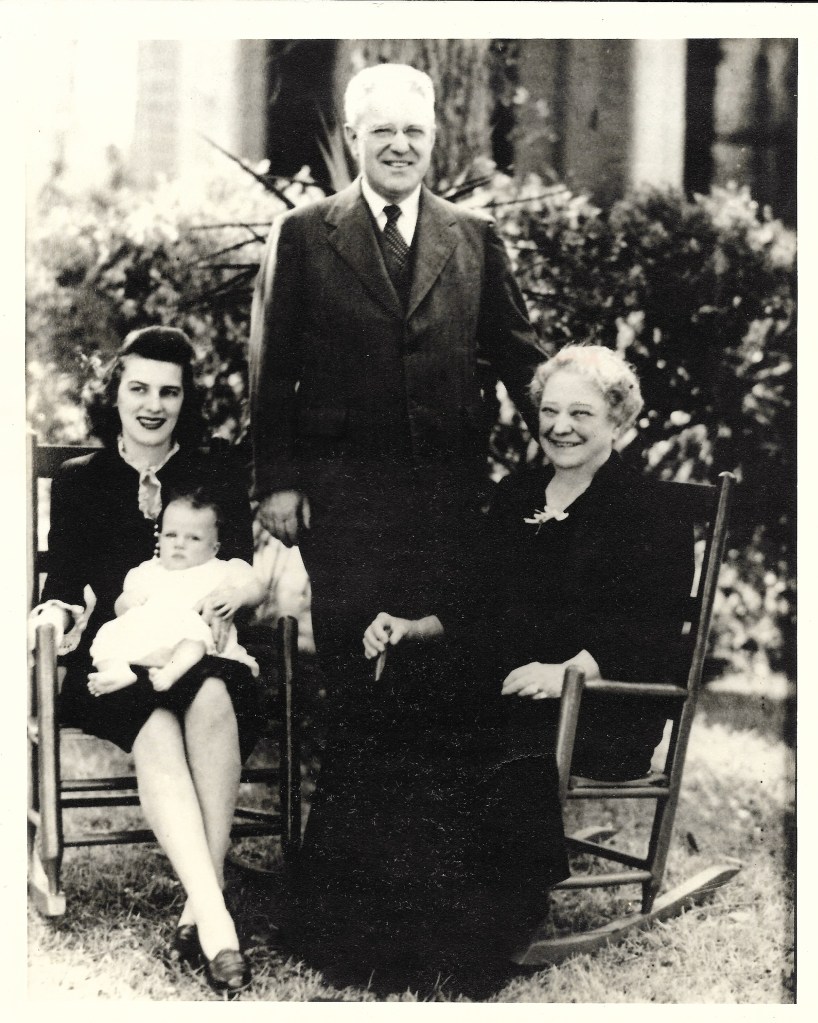
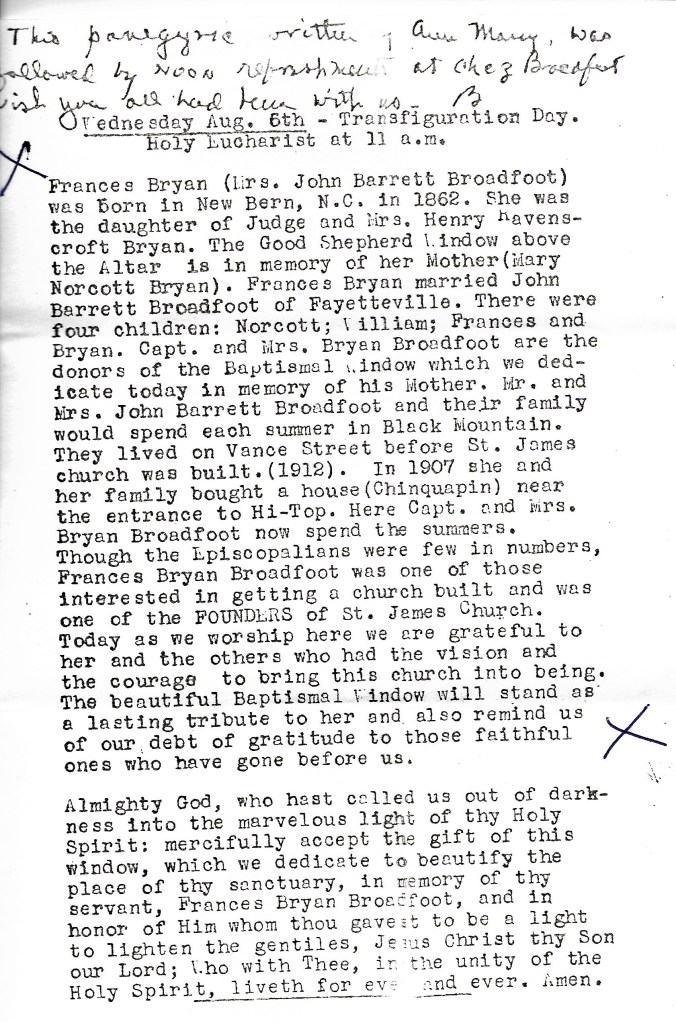
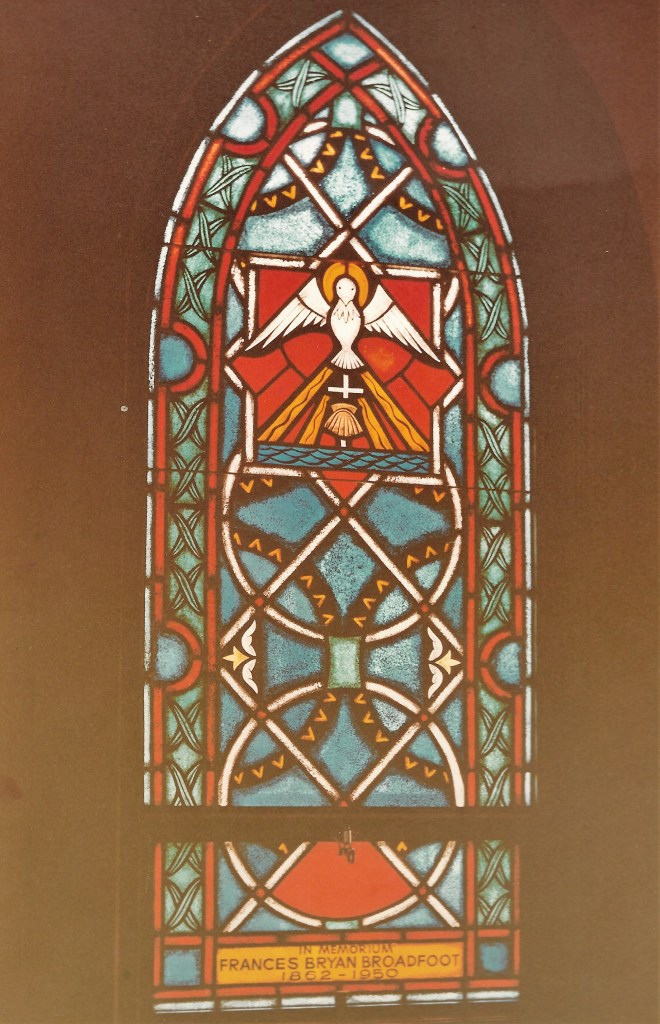
When Major John Barrett Broadfoot was born on August 31, 1860, in Fayetteville, North Carolina, his father, William, was 54 and his mother, Frances, was 35. He married Sarah Frances Bryan (1862-1950) on October 15, 1885, in New Bern, North Carolina. They had four children during their marriage: Mary Norcott, 1866-1972, William Gillies, 1887-1961, Frances Bryan, 1890-1960, and Henry Bryan, 1893-1980.
In 1886, John, age 26, was the President of the 24th Annual Fayetteville Fair. He seemed to try his hand at a variety of occupations and organizational positions. He was the VP of Cape Fear Canning, then managed Poe & Co.s Brick and Tile Company, served as President of the NC Insane Asylum, and tried his hand as a general insurance agent.
Major John Barrett Broadfoot commanded the Fayetteville Light Infantry from 1890-1893. As a side note, Andrew Broadfoot, a cousin, was a charter member of the Fayetteville Light Infantry in 1793. To learn more about this historic military command go to: https://www.fili1793.com/
Later, JBB and wife, “Fannie”, moved to Black Mountain. He started a supply store but it unfortunately burned to the ground and there was no insurance. For many years, the couple ran a boarding house as a means of making money.
He died on May 10, 1931, in Asheville, North Carolina, at the age of 70, and was buried in New Bern, North Carolina.
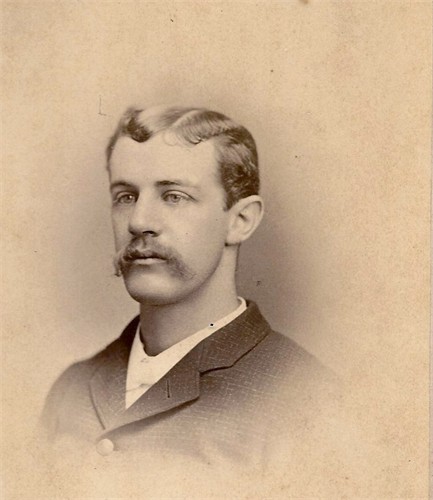
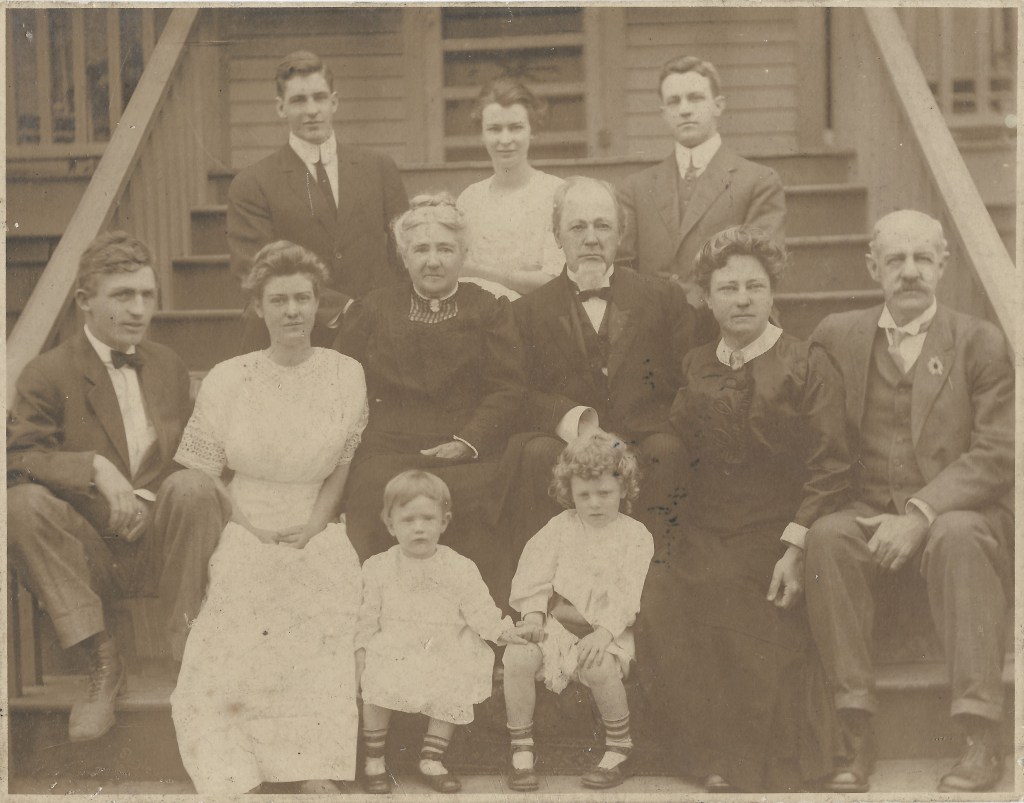
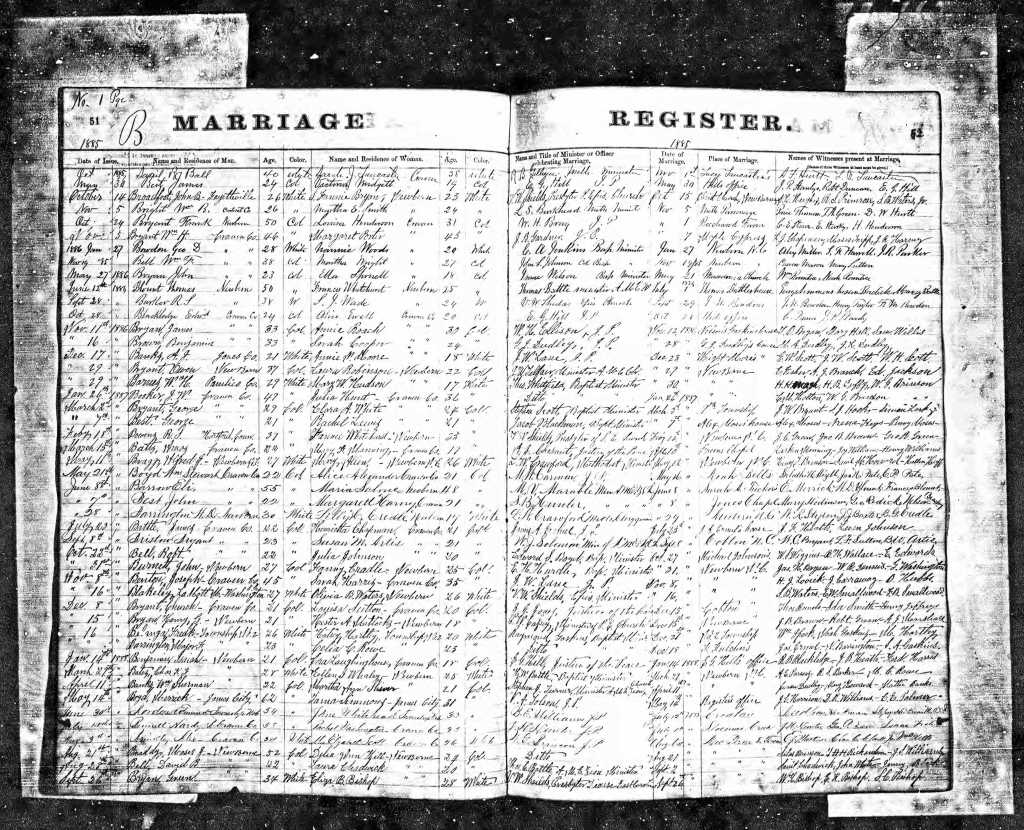
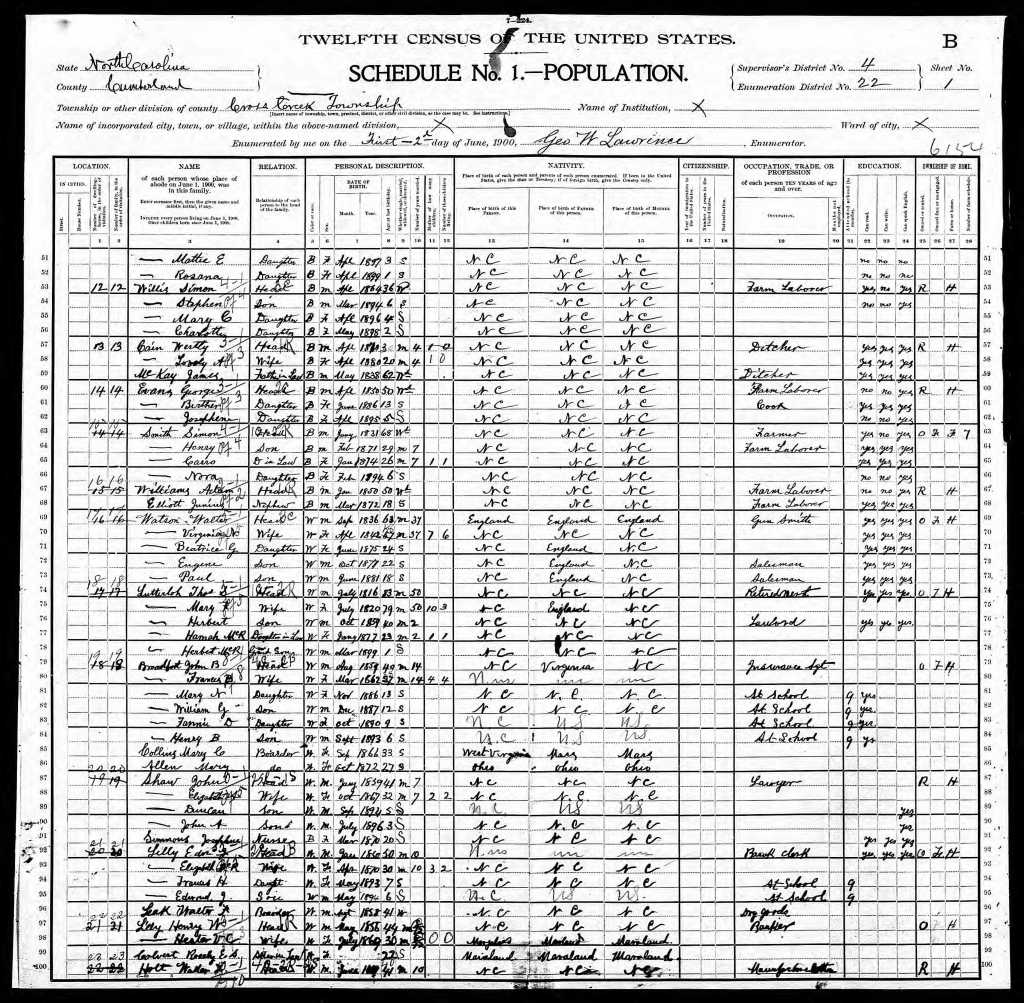
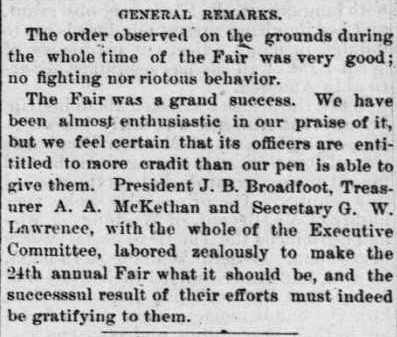

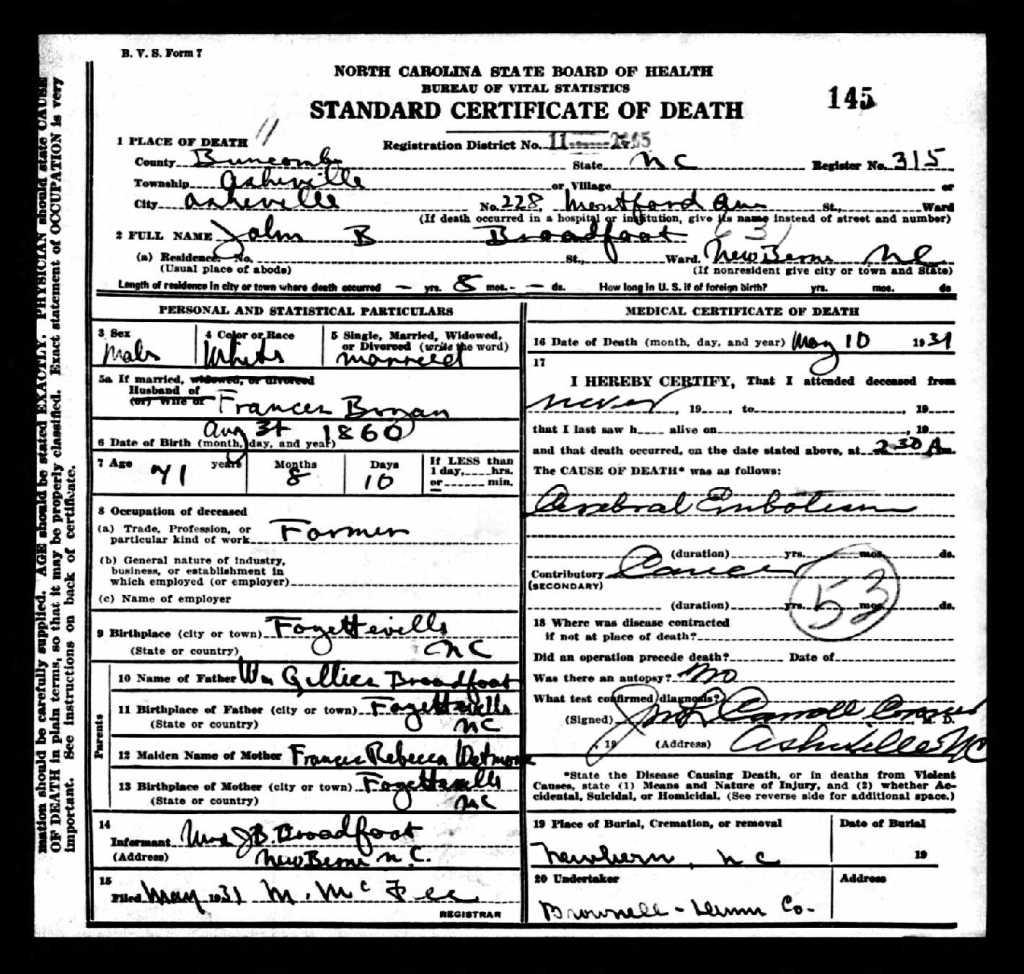
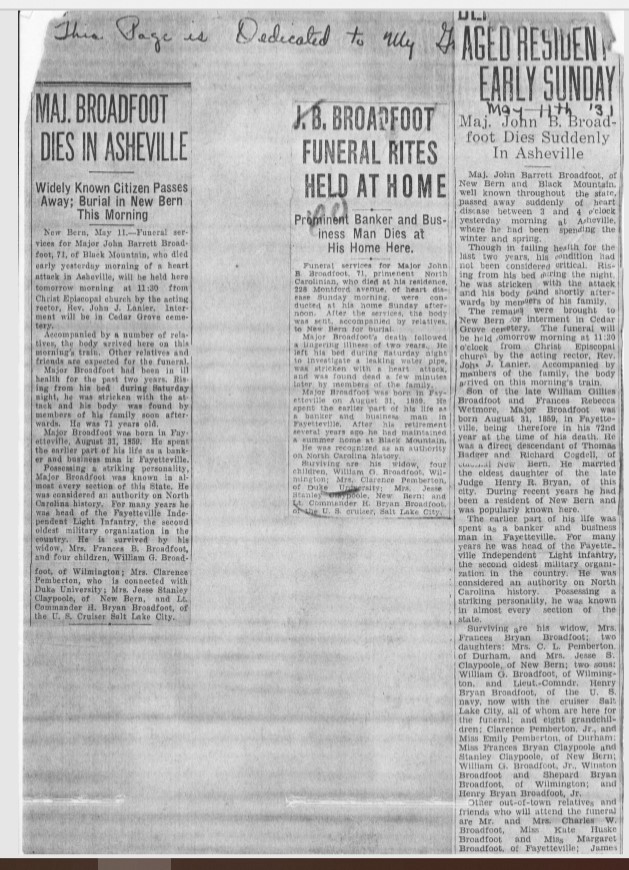
When William Gillies Broadfoot was born on March 5, 1806, in Amelia, Virginia, his father, Charles, was 31 and his mother, Purify, was 26. He married Frances Rebecca Wetmore on February 3, 1842, in Cumberland, North Carolina. They had ten children in 23 years.
Charles Wetmore 1842-1919, William Wilson 1843-1864, George Badger 1844-1885, Thomas Wetmore 1850-1890, James Baker 1853-1882, Andrew 1855-1930, Francis (Frank) Hinsdale 1857-?, John Barrett 1860-1931, May Catherine 1861-1875, Elizabeth Hinsdale 1866-1866.
He died on March 18, 1872, in Fayetteville, North Carolina, at the age of 66, and was buried in Cross Creek Cemetary. Based on his obituary, he was in the banking business for around 40 years. He served as a teller, a cashier, and a United States Pension agent. During the Civil War he was a worked as a depository for the Confederate States. In 1866, WGB received a presidential pardon from Andrew Johnson for his involvement in “the Rebellion against the government of the United States.”
His son Charles Wetmore Broadfoot served in the Civil War and some of his correspondence has been documented by another historian on the blog “The Charles Wetmore Broadfoot Letters, Aide de Camp to gen. Theophilus H. Holmes.” Contained within are descriptions of the Broadfoot family home as well as notes from both William Gillies Broadfoot and Frances Wetmore Broadfoot.
Please refer to the site here: https://broadfootletters.wordpress.com/about/


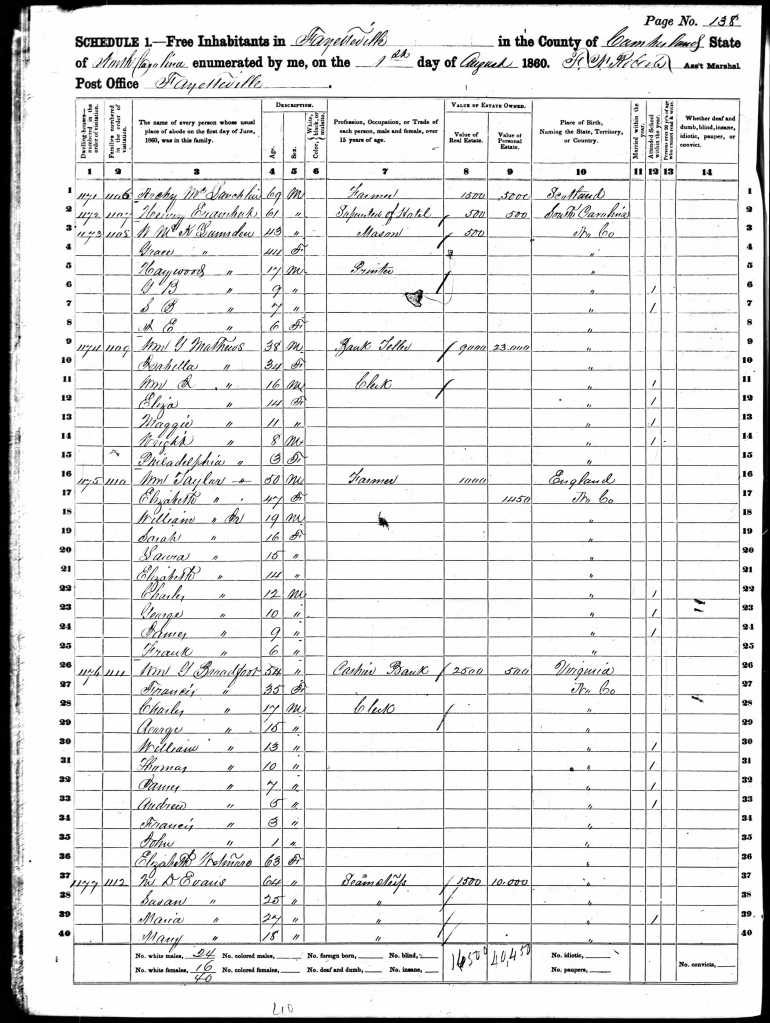
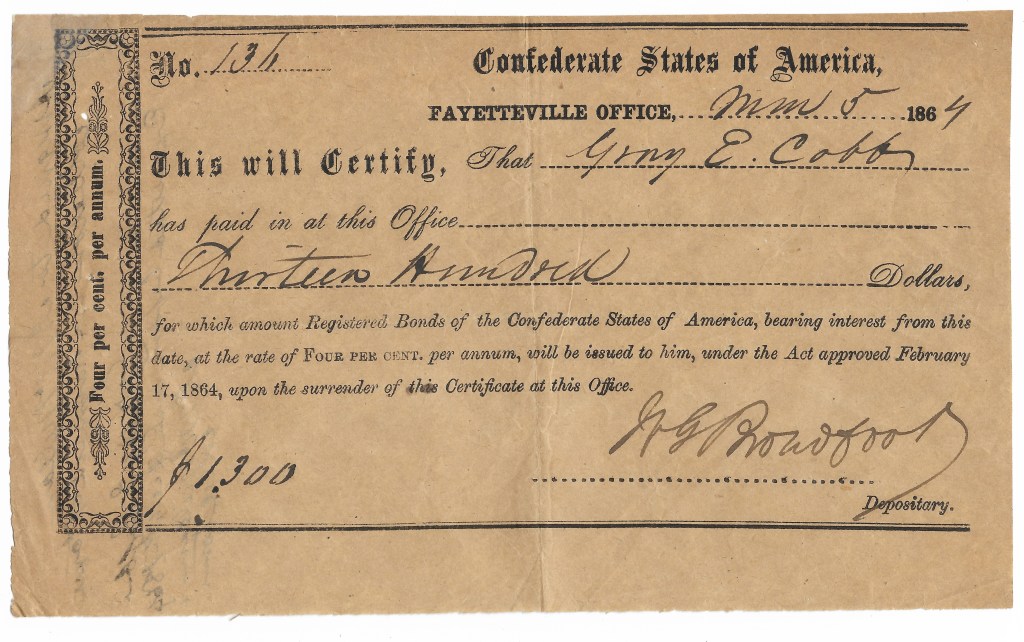
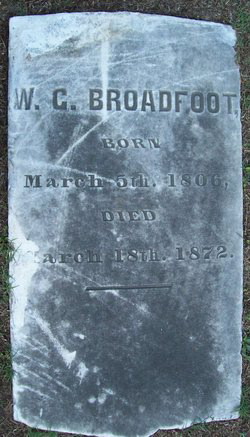

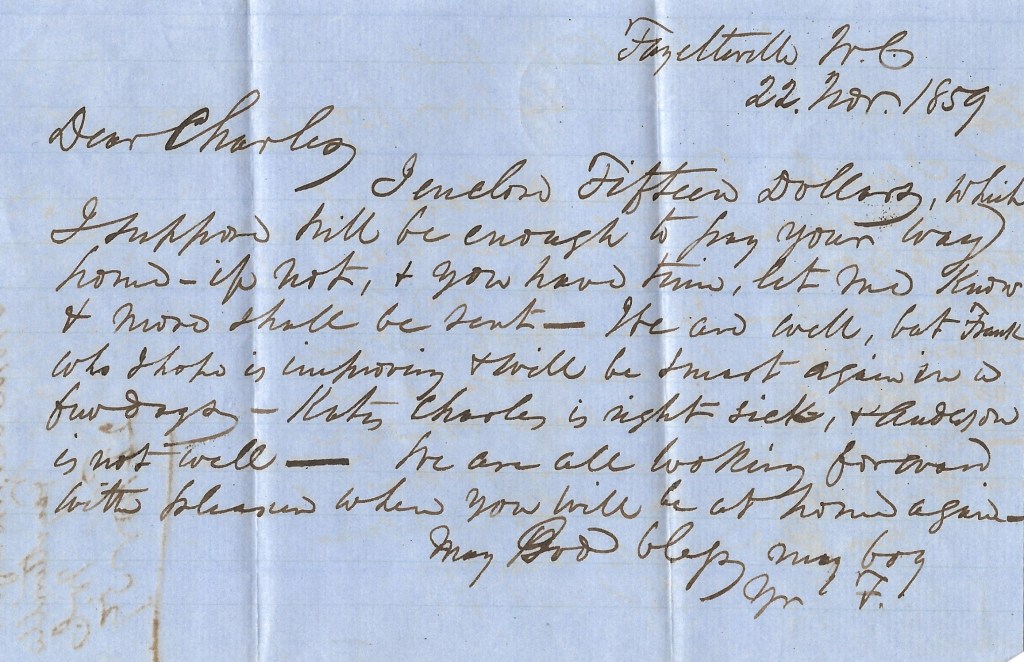
Charles Broadfoot was born on AUGUST 17, 1774 in Pustrie, Wigtownshire, Scotland. Based on information from Hometown Heritage, by Lucille Johnson, Charles emigrated to the United States via Petersburg with two business friends, Freeland and Gillies in 1787. **Note: This is where the Gillies name becomes part of our family story. Charles settled in Amelia County, Virginia.
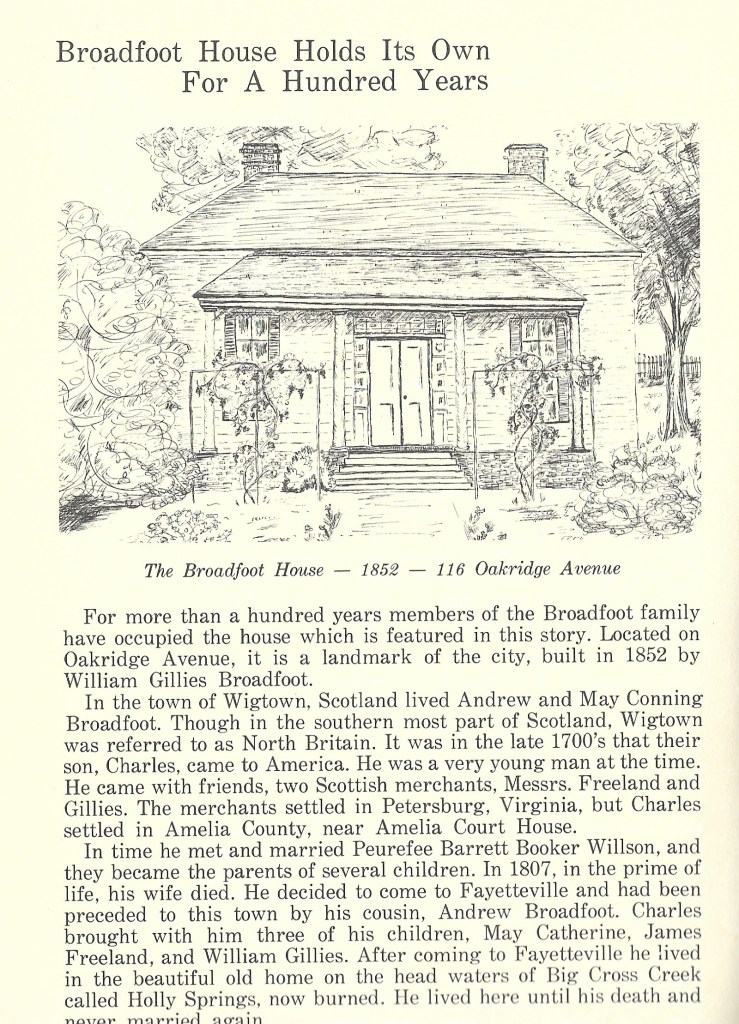
Based on the Virginia marriage records, Charles married Purify (Peurefee. Purefee, Purifee) Barrett Booker Wilson in November of 1796. She was born August 24, 1779. Her father was Major Tom B. Wilson and her mother was Puriffee Barrett. Together Charles and Purify had 8 children over the course of 10 years. Purify died on September 26, 1807, in Amelia, Virginia, at the age of 28.
Following his wife’s death, Charles moved to Fayetteville, North Carolina, joining his brother Andrew. Andrew was an active Fayetteville citizen and a Charter Member of the Fayetteville Independent Light Infantry.
Charles lived the rest of his life in Fayetteville. He died June 3, 1833.
When Andrew Broadfoot (Broadfute) was born on March 1, 1729, in Isle of Whithorn, Cutoloy, Wigtownshire, Scotland, his father, David, was 54 and his mother, Grizall, was 36. His baptism is recorded in the Parochial Register of Whithorn Parish. He married May Conning in 1750 in Wigtown, Wigtownshire, Scotland. They had ten children in 31 years. He died in 1802 in Wigtown, Wigtownshire, Scotland, at the age of 73. His eighth child, a son, Charles, is our direct descendent and first of our line emigrate to America.
Tom, John, and Charlie Broadfoot went to Wigtown, Scotland to visit their roots. They were well entertained by distant Scottish Broadfoot cousins, Ian and Julia. Charlie is posing beside the grave of Andrew Broadfoot, his 7th Great-grandfather.


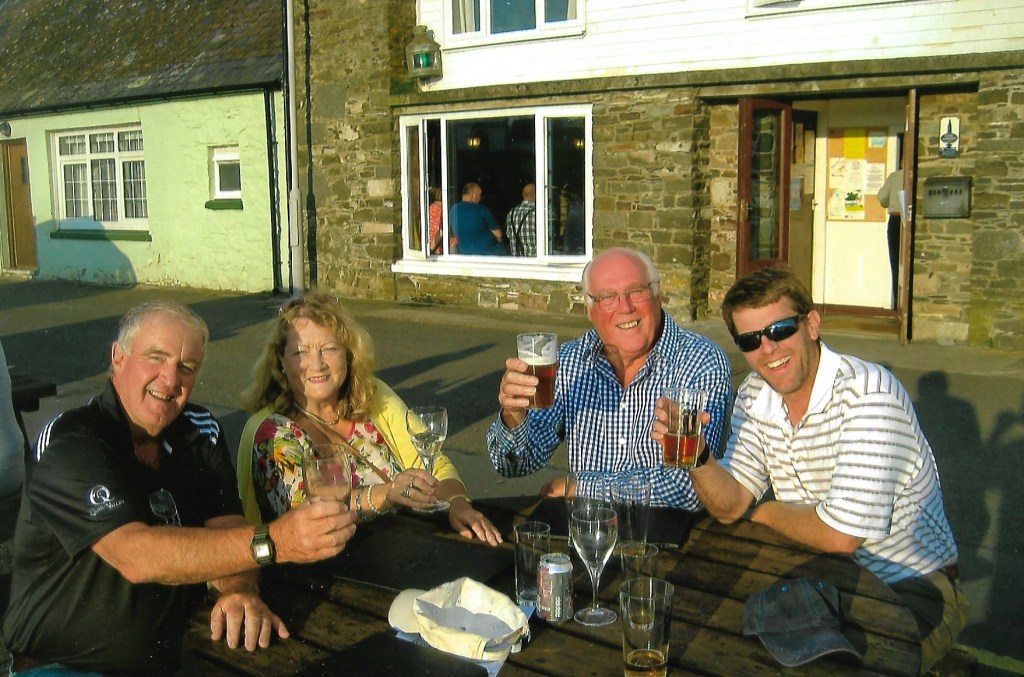
The Will of Andrew Broadfoot – 1802
I, Andrew Broadfoot, in Balsier being at present indisposed, in body but perfect in memory and judgment and being resolved to settle my worldly affairs in order to prevent all disputes amongst my spouse and children after my death do therefore make the following settlements:-
I nominate and appoint David Broadfoot of Balsier, my eldest son, Andrew Broadfoot in Barnharrow, my second son, and John Broadfoot -, my youngest son, my joint executors while in life and the survivors or survivor of them with full powers to them immediately after my decease to intromit with my whole movable goods and Gear debts and sums of money and everything pertaining or shall then pertain and belong or be due and addebted to me and to uplift all debts and sums of money that may be owing to me and if needful to prosecute therefore as accord of law. Declaring however that May CONNING my spouse and whose lifetime the Trustees for Mr. Murray of Broughtons children agreed should be granted and inserted in the Tack of my possessions of Balsier lately taken by our …………shall have the whole Stock Crop and farming, utensils that shall be in my said possession at the time of my death and use and continue to use the said Stock and Possessions and seal alter and dispose of the saidStocks and Annual Crops that shall arise therefrom during her lifetime. Also she is to have the use of the whole household furniture linen etc during her life and at her death the said Stock Crops and furniture that shall be on the said possession shall belong to my said executors survivors or survivor of them for the purpose thereafter mentioned. I also ordain my said executors to pay to the said May CONNING their mother the sum of twenty pounds Sterling yearly during all the days and the years that she shall live after my decease and that from a sum of four hundred Pounds contained in the Earl of Galloway’s bill to me and which sum is uplifted by me said Executors or the bill be renewed, the new bill on security shall be taken payable to the said May CONNING in Lifetime during all the days of her life, and to my said executors in fee at her decease for the ends and purposes after mentioned. And whereas the said Andrew Broadfoot has received from me One hundred pounds and the said John Broadfoot One hundred and fifteen pounds Sterling more than any of my other children have yet to receive from me, therefore, I require the said Andrew Broadfoot to pay to the said May CONNING his mother the sum of five pound’s fifteen shillings Sterling yearly during her life aforesaid and which Stock and Crop above left to her for the management of the said possession, the use of the household effects with the said Annuity of Twenty pounds and the said Annuities of five pounds andfive pounds fifteen shillings I declare to be in full of all that she can ask c1aim or demand by and through my decease as Jusrelictae or otherwise.
And whereas the said David Broadfoot has agreed to pay to my daughter Katherine Broadfoot spouse to Thomas Lennox Fifteen pounds Sterling out of the sum he has received already from me to make them equal with my other daughters therefore these payments I have already made to me [my?] children and including the sums to be paid by the said David Broadfoot are as follows viz:-
The said David Broadfoot will have received One hundred pounds. The said Andrew Broadfoot Two hundred pounds, and the said John Broadfoot- Two hundred and fifteen pounds sterling and each of my daughters Elizabeth Grissel, Katherine, Jane and May Broadfoot One hundred pounds sterling. And whereas it is my will and intention that all of my children should have an equal dividend of my said movable effects according what they have already received as above stated.
Therefore I ordain my said Executors immediately after the decease of their said Mother to convert the whole movables then on hand Stock Crop and household furniture etc,., in the said possession into money and therewith and with the other proceeds funds to pay to the said David Broadfoot One hundred and fifteen pounds sterling to the said Andrew Broadfoot and to each of my daughters above named the sum of One hundred and fifteen pounds sterling, so that the whole may then be equal to the sum my son John Broadfoot has already received, and as my son Charles Broadfoot who is at present abroad did receive the property of his brother George Broadfoot now deceased, to the amount of Two hundred and forty pounds sterling which belonged to me, and as he is also endebted to me in a considerable sum by bond, which forms a part of my executry funds and if not paid before my death will fail to be recoveredby my said executors, therefore I ordain my said executors, to allow the said Charles Broadfoot to retain for his own use the said sum of Two hundred and forty pounds sterling so received by him aforesaid, also to allow him the sum of sixty pounds sterling out of the money he is due to me by bond as aforesaid and which two sums are in full of all claims he has on my effects through my decease or the decease of his mother, and after my said executors or survivors or survivor shall have made payments aforesaid to my said sons David and Andrew, and to each of my daughters above mentioned, and shall have made the allowances aforesaid to me [my] son Charles if any sum remains over the sums to be equally divided among my whole children by my executors share and share alike.
And in the like manner in case of deficiency in my funds to make up the payments above specified either from bad debts or from my executors not being able to procure from the said Charles Broadfoot the amount of his debt, then the said Andrew and John Broadfoot shall payback to the executory fund such a sum out of the money they have already received as shall make my whole children alike, the said Charles always excepted.
I also ordain that the farming utensils in my possession at the time of the death of the said May Conning shall belong to my executors without accounting any value therein in settling with the other children above named before the death of their mother, or before the final division of my effects as aforesaid. Yet the children of such shall have the same right as their parent or parents would have had if in life. I also ordain and require my said executors to pay all my just and lawful debts deathbed charges and funeral expenses.
Declaring this to be my last Will and Testament revoking all former ones if any be but reserving always power to myself while in life or even on death bed to alter this Will and settlement in any manner I shall think proper and dispensing with the non delivery hereof I consent to the registration hereof in the books of Council and Sessions orother competent for preservation, and that all execution may pass hereon as affairs and that effect constitute.
In witness whereof I have subscribed these presents written on this and the preceding pages of stamped paper of James Nish in Garliestown Factor to the Earl of Galloway at Balsier the thirteenth day of January Eighteen hundred and two years before these witnesses
Peter Broadfoot, tenant in Whitehills, and William Beggs, weaver in Garliestown.
(Signed) Peter BroadFoot Witness,
(Signed) William Beggs Witness.
(Signed) Andrew Broadfoot.
Last Will of Andrew Broadfoot_ ……. 1802.
NOTES: This Will is in the possession of the Drape family – Broadfoot descendents – who reside in Isle of Whithorn, Wigtownshire, Scotland. It was shown to me, along with an old account book belonging to the same Andrew Broadfoot in July 1955. The copy was made for me by Mr. Patrick Broadfoot McMasters of Portwilliam, Wigtownshire, Scotland.
Mrs. Findlay (nee Broadfoot) allowed me to take the account to London and have it photostated.
(Signed) F. B. CLAYPOOLE.
++++++++++++++++

 Broadfoot Family

